Reading time: 3 min
Last updated: 04/01/2026

The textile sector aims to relocate part of its production to France. To be competitive, three specialists argue, the French industry must change its production model and invest in innovation.
"It will be necessary to convince decision-makers of the economic relevance of made in France and break down certain persistent preconceived ideas."
Relocation is gaining ground in the textile sector. Faced with pressure from consumers concerned about social and ecological issues, and to meet new regulatory constraints on the circular economy, the textile industry is taking action and initiating its greatest revolution: its reindustrialization closer to consumption points. But let's not be naive; the task is colossal. Because behind the ideal of regained industrial sovereignty lie major challenges—economic, technological, skills-related—that require acting quickly with comprehensive measures to win the bet on employment and competitiveness.
It will be necessary to convince decision-makers of the economic relevance of made in France and break down certain persistent preconceived ideas. In the crosshairs: the competitiveness of Asian production sites that mass-produce "fast fashion" at low cost, whose popularity still weighs heavily on strategic choices. This vision is reductive regarding clothing purchasing strategy, questionable from an ethical and ecological point of view, but also from an economic one! Because what about the profitability of a collection, produced blindly more than 6 months before its launch, of which half the clothes will be either sold at a discount, marked down, or destroyed?
The textile industry cannot afford to avoid changing its model. Short-loop, on-demand production, to be as close as possible to consumer expectations and consumption points, can be efficient and profitable.
CIRCULAR ECONOMY
One of the first challenges to achieve this is access to material resources. This is an essential issue for regaining our independence from Asian countries, laying the first stone of relocation, and initiating the green growth of the sector. France possesses a hidden treasure: 40% of the 640,000 tonnes of clothing thrown away and collected each year are recovered as rags, insulation, or energy, whereas they could be recycled into the textile industry.
The circular economy offers a path for this waste: collection, sorting, and recycling. A simple equation on paper but complex to execute: detecting clothes of the same composition, dismantling them, recreating material... This will require heavy investment in cutting-edge technologies. The government's recovery policy must consider these investments as a priority to develop new textile basins with a virtuous model.
TEXTILE 4.0
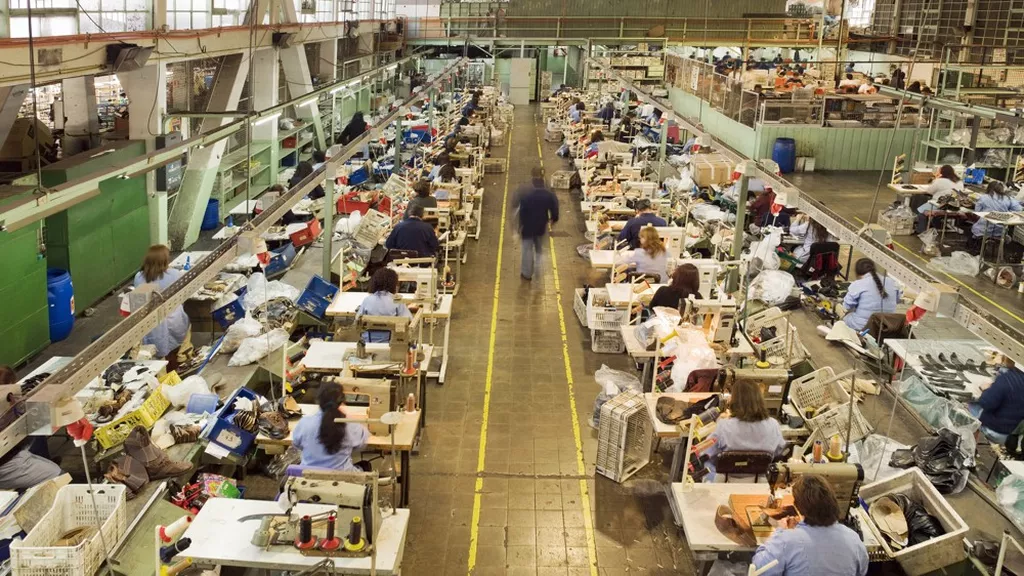
Here again, the task is immense to reconquer the power we have lost in manufacturing, even if we have preserved most of the know-how through the shift toward luxury. We need to build, with the support of local regions, the new generation of Textile 4.0 factories, more digitized, automated, and competitive, increasing the performance of a traditional textile industry that has shown resilience. The challenge of training and making jobs in fashion and textiles attractive, combined with a reduction in tax pressure, is also key to winning the competitiveness battle.
As the chapter of economic recovery opens, let us mobilize all fashion and textile stakeholders—brands, manufacturers, "textilians," professional organizations—and dare to invest, with the support of public authorities, in disruptive solutions to proudly reweave the thread of French textile history.