
Reading time: 4 min
Last updated: 15/12/2025

Born from the Febea's Plastic Act, the Pulp in Action consortium brings together 50 cosmetics industry stakeholders around a common challenge: developing sustainable alternatives to plastic. After three years of R&D, the first industrial prototypes demonstrate that cellulose fiber can revolutionize packaging.
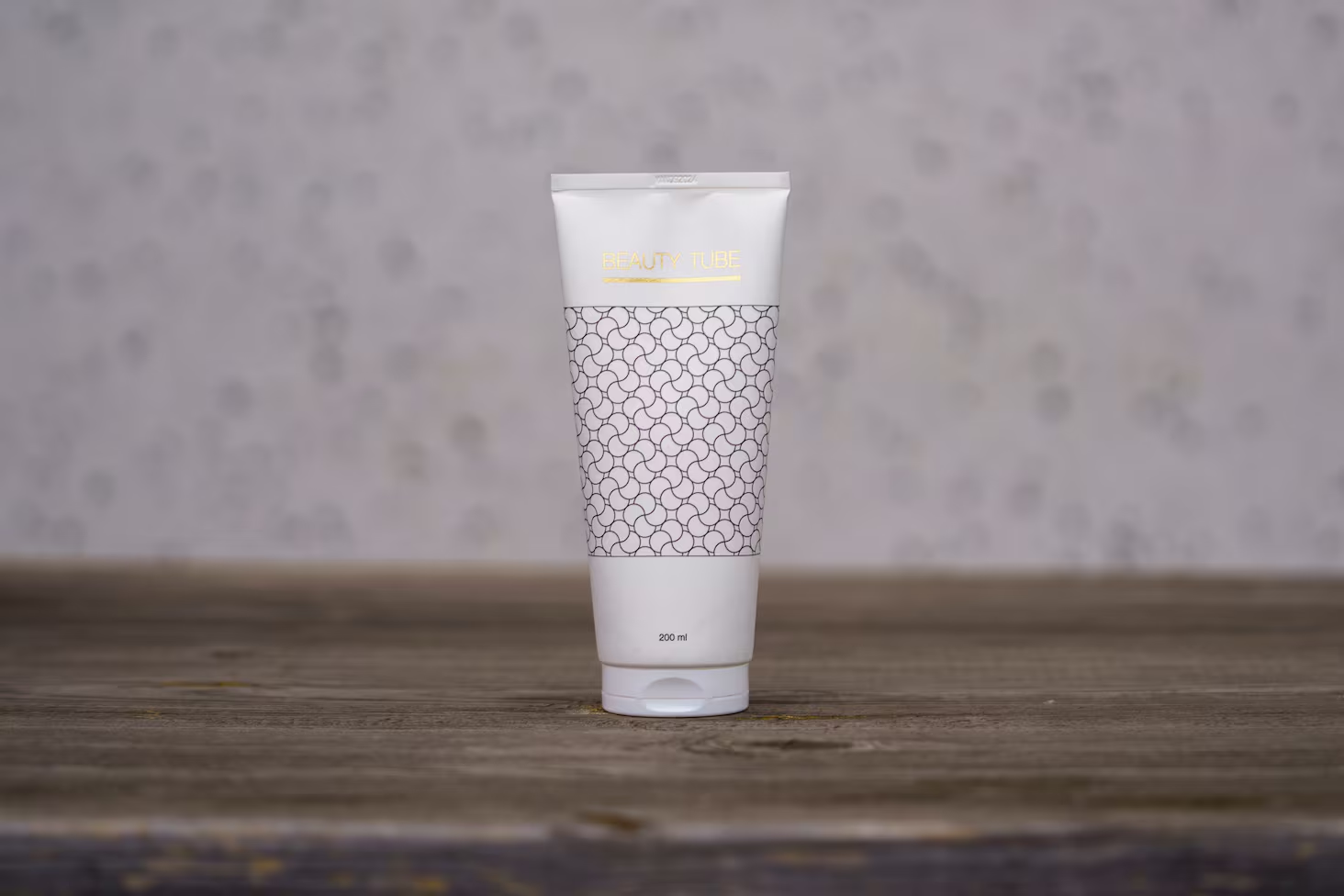
Functionalized paper tube, without an external plastic layer, moisture-resistant, and usable in the shower.
What if tomorrow, a large portion of cosmetic products were contained in packaging made mostly of paper? That is the very likely future revealed by the Pulp in Action consortium.
« Everything had to be rethought, even the packaging testing protocols we are supposed to rely on were designed for plastic and are not adapted to new materials », explains Géraldine Poivert, co-founder of (RE)SET, the firm supporting this unprecedented consortium. This statement alone summarizes the scale of the challenge: starting from a blank slate to imagine tomorrow's cosmetic packaging.
THE "COOPETITION"
Launched following the 2021 Plastic Act by the Federation of Beauty Industries (Febea), Pulp in Action now brings together 13 sponsors, including 11 cosmetic brands, alongside suppliers, laboratories, and startups. The ambition stated by Febea is clear: minus 15% plastic, 20% reuse, 10 to 25% recycled materials, and 100% recyclability by 2030. This goal positions France as a global leader in sustainable cosmetics, facing competitors like Korean K-Beauty, which is considered less advanced on these issues.
« If we truly want to drive a transition in consumer habits, it has to happen at scale. That's why it takes many to carry a project », emphasizes Nina Conforti, open innovation manager at Expanscience Laboratories. This pooling logic, or "coopetition," is at the heart of the initiative: competitors agree to share resources and expertise on pre-competitive topics, in compliance with competition law.
The technical challenge is significant. As Clémence Mazeron, R&D engineer at Gascogne Flexible, explains: "We started with a sheet of paper with the goal of making it resistant to various cosmetic formulations, in both wet and dry environments. The technological challenge was to turn paper into a barrier material." Because, unlike plastic, paper is naturally porous and absorbent and does not inherently possess these essential protective properties in cosmetics. At Pierre Fabre, Sophie Freissinet emphasizes the collective dimension of this research: « We had to share the same vision of the protocols and apply them in the same way. First victory: when we iterate with the same protocols, we go faster. »
PROTOTYPES
The unveiled results mark a major breakthrough. The consortium now presents functionalized paper tubes, without an external plastic layer, moisture-resistant, and usable in the shower. Five-hundred-milliliter pouches composed of over 70% paper, with a target of 80%, capable of withstanding drops of over one meter. Sachets containing 85% paper, and jars reaching 90% paper, with a target of 95%.
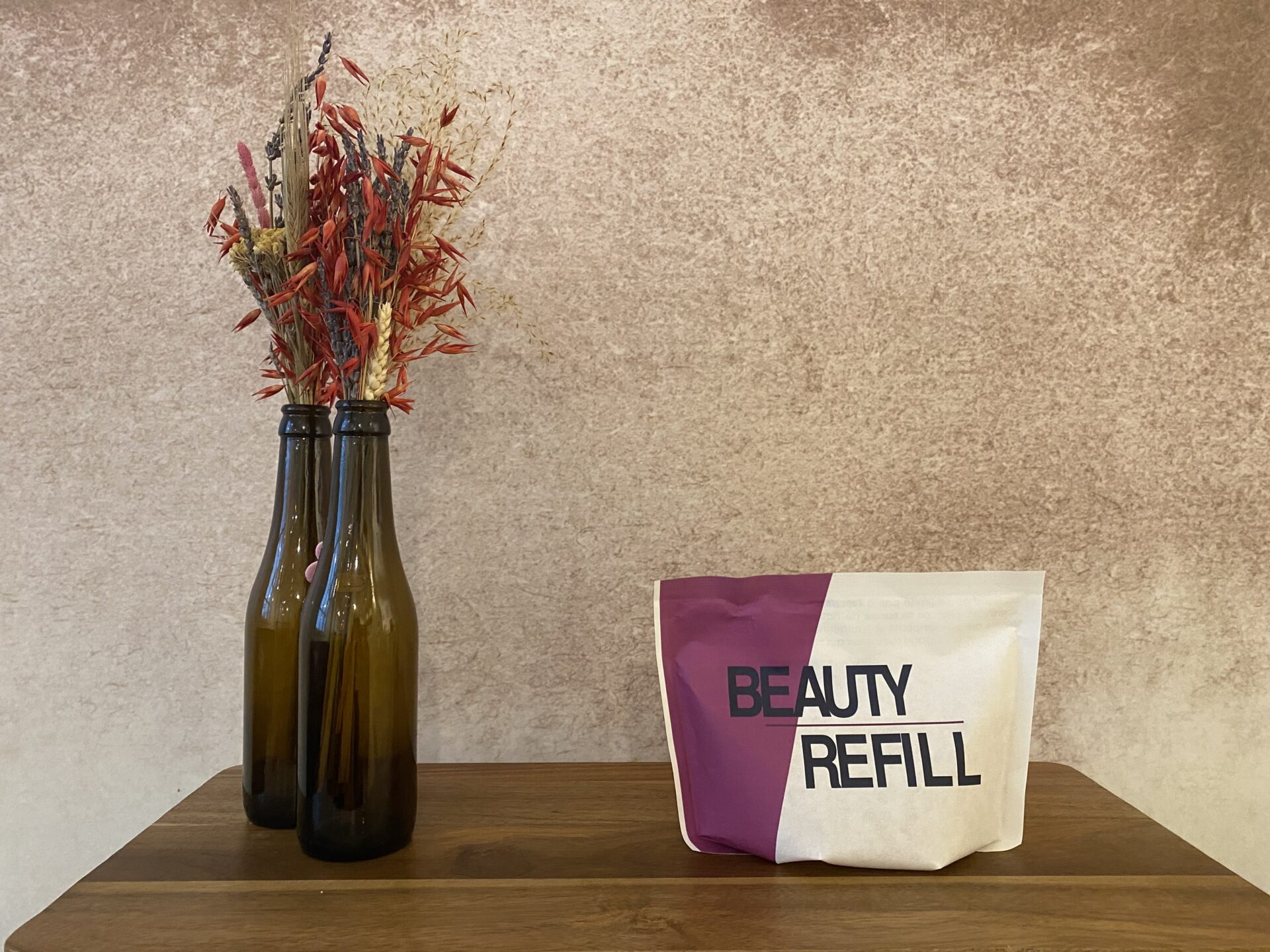
Five-hundred-milliliter pouch composed of over 70% paper. Pouches of 500 ml composed of over 70% paper, with a target of 80%, capable of withstanding drops of over one meter.
« As a player in paper transformation, we believe the future lies in virtuous, recyclable solutions from renewable resources. This project reveals the full potential of cellulose fiber: from a porous fiber to a functionalized fiber, from a simple 2D sheet to 3D packaging », rejoices Clémence Mazeron.
Recyclability remains an absolute imperative. In all development phases, recyclability tests are integrated into the specifications. « It's non-negotiable », insists the consortium team.
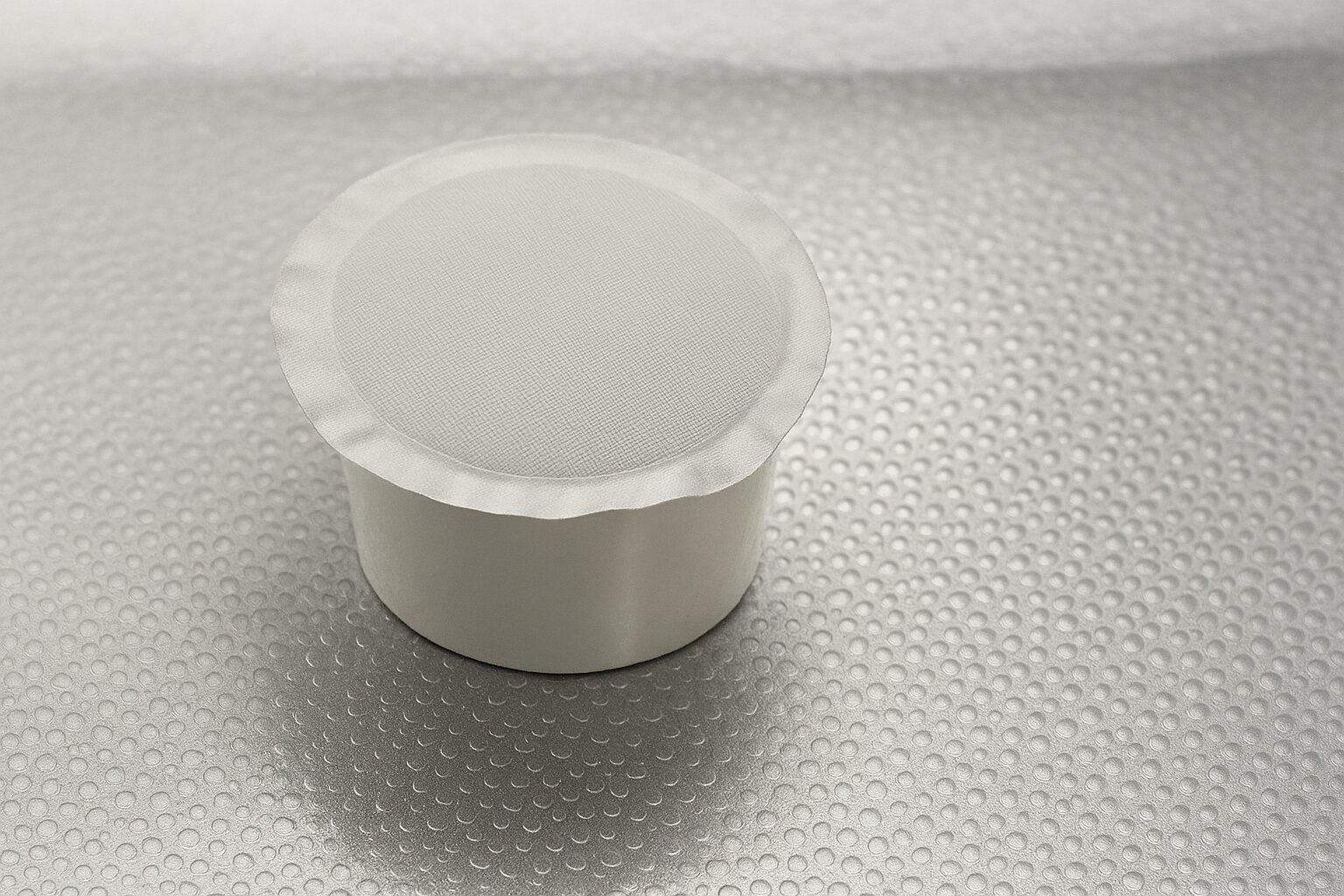
Paper refill cup
Beyond the technical feat, Pulp in Action now incorporates a focus on the appeal of these new packagings. Because paper packaging will never fully resemble its plastic equivalent: textures, printing, and user interactions must be reinvented. The consumer must desire this change, not just understand the environmental reasons for it.
The 13 sponsors participating in the consortium are Arcade Beauty, Biocodex, Chanel, Expanscience, Gascogne Flexible, Kenvue, the L’Occitane group, the L’Oréal group, Noas, Nuxe, Pierre Fabre, Shiseido, Sisley, as well as Adelphe, Citeo, and Febea.