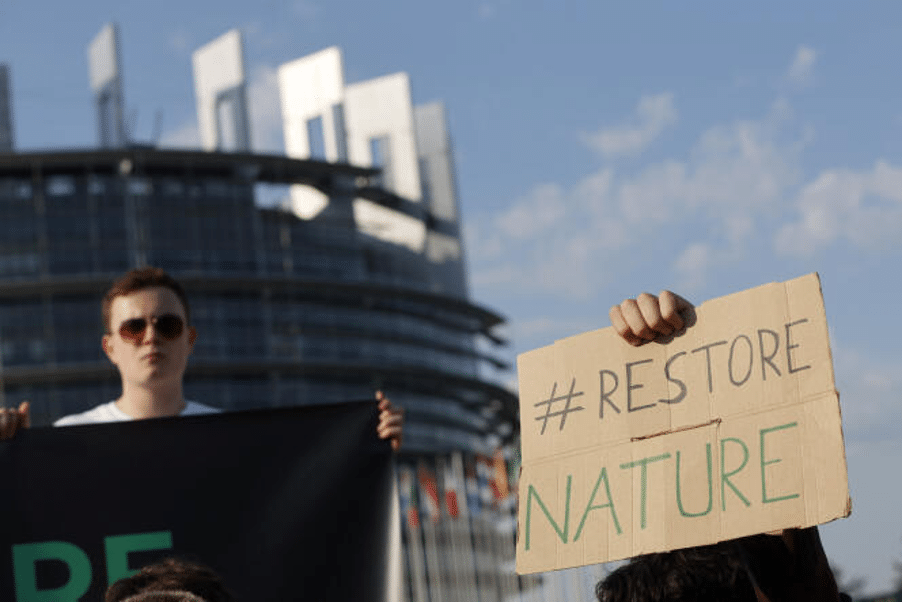
No attentive reader of Breaking (RE)NEWS will be surprised, but the scale of the movement is striking. The closer the deadline for the European elections, the more our European leaders seem frightened by their own past audacity and are rushing to dismantle entire sections of the "Green Deal," painstakingly negotiated in recent years. Let's take a look. Since November 22 and the surprise rejection of the European regulation on pesticides, the dismantling machine has been accelerating. Revisited Common Agricultural Policy (CAP), duty of vigilance stripped of part of its substance, nature restoration law in limbo, threatened text on imported deforestation, … By June 9 and the first round of the elections, transition actors are clinging to their seats, electrified.
What is most striking is that these are steps backwards on texts that had already been approved, for which majorities had emerged! An institutional innovation because the EU is not accustomed to this, European legislation being already quite complex, as it is the product of multiple compromises, to not want to reverse difficult decisions, at the risk of never concluding. We are witnessing what equestrian riders would call a refusal of obstacles. Thus the CAP, renegotiated for many years and finally voted, with a "greener" tone, in 2021, provided for various action trigger thresholds. For example, in 2023, new environmental requirements were to be implemented and respected, as well as in 2024. But this year, as last year, just before the decisive dates, "transitional phases" are added, "exceptional measures" are decided, "exemptions" are multiplied, to empty the reforms of their substance. In short, as Libérationputs it, a "unraveled" Green Deal. Same thing for the European duty of vigilance, finally passed by a narrow margin ten days ago but with thresholds, sectors, and sanctions that greatly lower the initial ambition of the text, yet initially approved by a majority in Parliament, Council, and Commission. Leading to a "very weakened" duty of vigilance, as Le Monde and Novethicdescribe it. And what about the flagship project on Nature Restoration, again torpedoed, in the final straight before its adoption, which was supposed to be a mere formality, after its content had already been heavily watered down. Biodiversity will wait a little longer… The text, which aimed to preserve biodiversity on 20% of land and sea, had been the subject of a trilogue agreement (between the three European institutions) in February and a positive vote in the European Parliament. "Remaining" only to pass the EU Council test. But no, this time due to an unexpected turnaround by Hungary. The latest victim, and not the least, the innovative and ambitious regulation on imported deforestation, adopted in 2022 and supposed to come into force at the end of the year, is now also threatened with suspension and postponement. This is at least what about twenty states – a solid majority of member states, therefore! – are asking for, including France, according to information gathered by Reuters and reported by Novethic. Deforestation will wait a bit for the European elections. What began as the announcement of a "pause" is beginning to resemble a rout. Hurry up, elections! Even if it is to be feared that their outcome will hinder the continuation of reforms as urgent as they are sometimes decisive. We should perhaps have prioritized and clarified them better so as not to frighten…
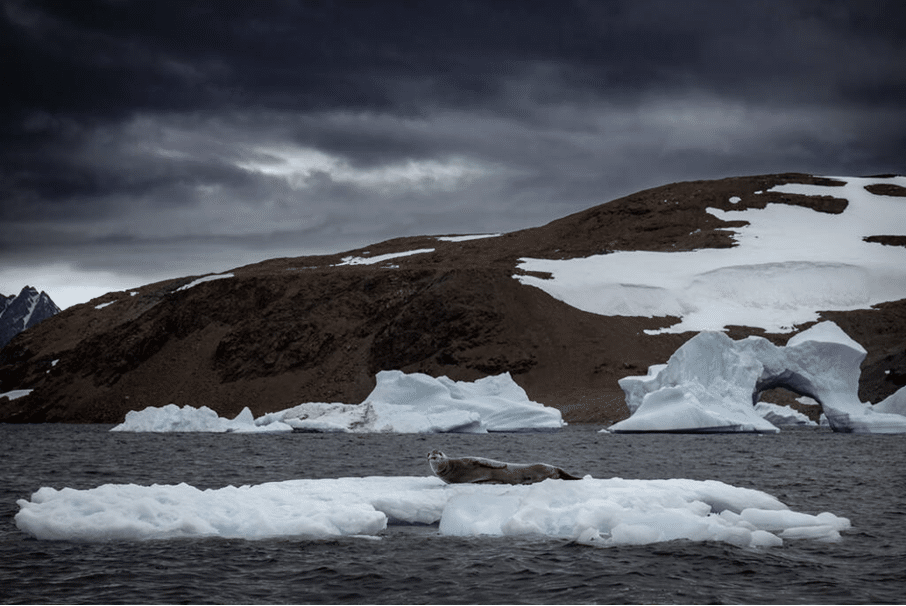
To begin our weekly sections, let's start with a classic: the weather. Records broken for ocean heat, sea level rise, glacier retreat… 2023 concluded the hottest decade ever recorded, pushing the planet "to the brink," the UN has just warned. A new report from the World Meteorological Organization (WMO), cited by L'Express and AFP shows that records were "shattered" regarding greenhouse gas levels, surface temperatures, ocean heat content and acidification, sea level rise, Antarctic sea ice extent, and glacier retreat. The planet is therefore "on the brink" while "fossil fuel pollution is causing unprecedented climate chaos," alerted for the millionth time (we exaggerate a bit) UN Secretary-General António Guterres. "It is still time to throw a lifeline to people and the planet," according to him, but action must be taken "now." The global average surface temperature in 2023 was 1.45°C above the pre-industrial reference level. "Every fraction of a degree of global warming has an impact on the future of life on Earth," warned the UN chief. And what will he say in 2024…? Because the new year could be just as chaotic, Libérationwarns. "There is a high probability that 2024 will again beat the 2023 record," stated Omar Baddour of the WMO.
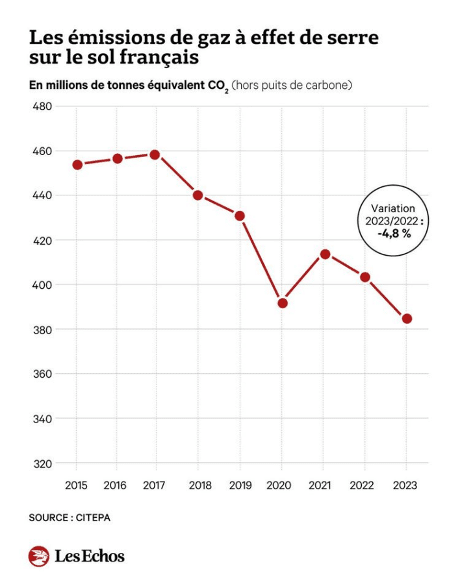
Regarding greenhouse gases, the good news of the week will not have escaped you because it was trumpeted loud and clear, especially at the highest levels of the State: the decline in greenhouse gas (GHG) emissions in France is accelerating! Enough to allow the Minister of Ecology to appear on the 8 p.m. TF1 news, congratulating himself on a "record" year. In 2023, GHGs thus fell by 4.8% compared to 2022, reaching 384.5 million tonnes of CO2 equivalent. In a single year, that's the equivalent of "almost all of the decline" recorded in France between 2012 and 2017, highlighted Christophe Béchu. As a reminder, the decline was only 2.7% in 2022 compared to 2021. Even more efforts will be needed to achieve the targets France has set: a 34% reduction in emissions between 2022 and 2030 – i.e., 5% per year – the only way to achieve carbon neutrality by 2050 (-55% net). Above all: we still do not measure greenhouse gases linked to our imports, which are far from negligible. Also: we know that a good part of the decline is linked to weak economic growth, particularly industrial production, whose GHGs plunged by 8%, Les Echosexplain. Finally: we heard less about the performance of Germany, our favorite competitor, whose GHGs decreased by more than 10% last year, even though this country no longer has nuclear power…
The judicial decision of the week is not unrelated to the previous subject and comes to us from the administrative judge, for a change. It concerns the ski economy. It concretely marks the consequences of the climate crisis and the need to adapt to it. Within a month, the ski resorts of Alpe-d'Huez (Isère) and Grand-Bornand (Haute-Savoie) each had their urban planning scheme rejected by the Grenoble administrative court. He also canceled a chairlift project in Aussois (Savoie) on March 5. As Le Monderecalls, the tone was set in 2023, with a decision that caused a stir: the annulment, on May 30, 2023, of the territorial coherence scheme of Maurienne, a document voted on by sixty-two Savoyard municipalities, including twenty-four resorts (Valloire, Valmeinier, Saint-Jean-d'Arves, Valfréjus…). This roadmap provided for the expansion of ski areas and the construction of 22,800 tourist beds, including a 1,000-bed Club Med in Valloire. Today, " a tipping point has been reached, estimates Philippe Bourdeau, a professor-researcher at Grenoble-Alpes University, specializing in the mountain economy. High-ranking officials are increasingly sensitive to environmental issues and to the expenditure of public money that would not take them into account. The recent Court of Auditors report is evidence of that. There is less benevolence towards this ski economy. »
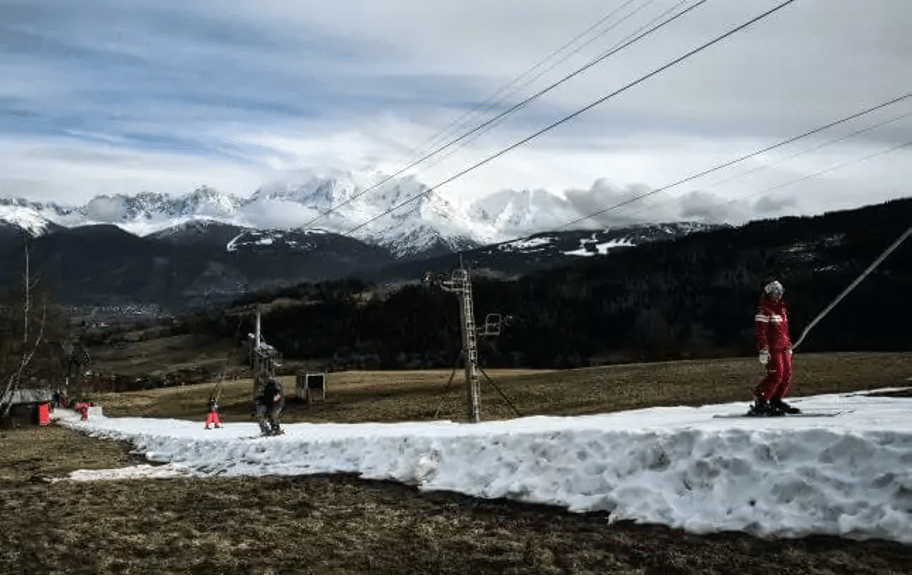
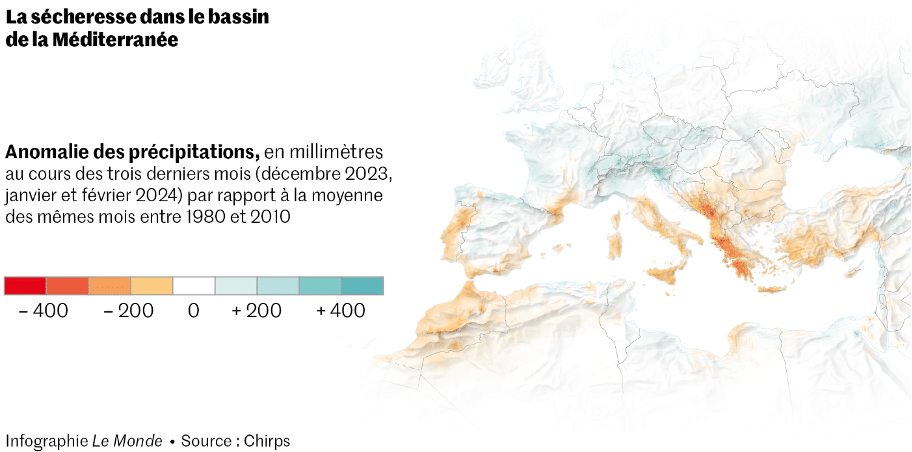
Somewhat along the same lines, the prayer of the week (a "must" this Easter weekend!) is addressed to Saint Galdric, patron saint of Catalans. The parishioners of Perpignan have decided to turn to him once again to finally bring rain to the Pyrénées-Orientales. On Sunday, March 10, for the second consecutive year, they organized a procession through the city streets. In the far south of France, as throughout the western Mediterranean basin, drought has settled in, for good, it seems. God willing, the prayers will be heard. Failing that, an effective and undoubtedly reinforced "Water Plan" could also serve.
On the "resources and transition" side, the public debate of the week (and the coming months) has been launched in Auvergne. Before the lithium resource exploitation project by the company Imerys, a world leader in mineral specialties for industry, is launched on the Échassières site, a technical, environmental, and economic study must be completed. The site is currently used for the production of ceramics and porcelain. If the project is finalized, the Échassières site would become the second largest lithium operator in Europe. From March 11 to July 7, 2024, a public consultation is open on this project, under the supervision of the National Commission for Public Debate (CNDP). An online participation platform is also available for the public to discover the project and provide feedback. Our attentive readers will remember last week's "concept of the week": nimby ("not in my backyard"). Lithium is good for the transition and electric batteries, but a mine in my garden is less nice. A good illustration.
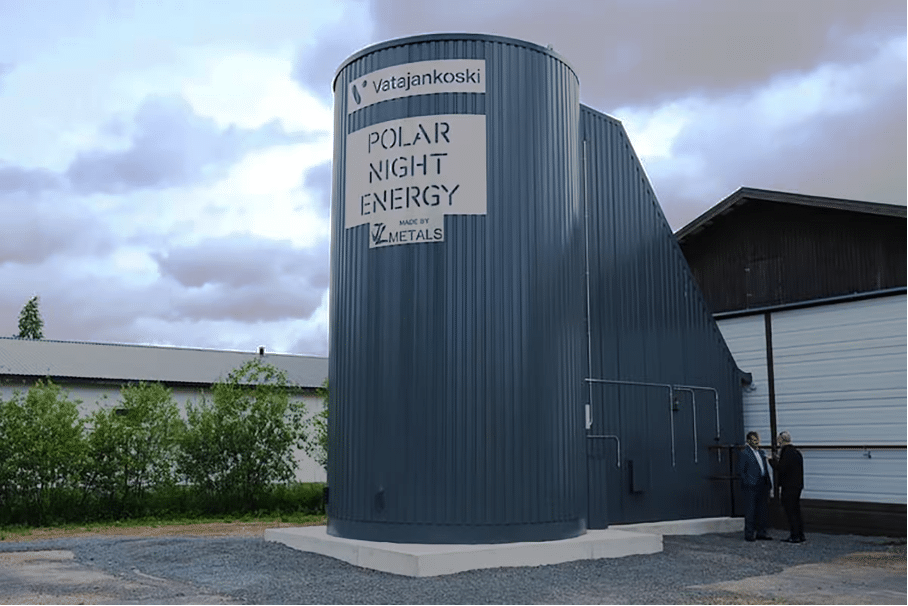
Regarding "clean" energy, the innovation of the week comes from cold countries, more precisely from Finland, with the scaling up of "sand batteries" (Sand Battery), a first version of which has been working since 2022. The new sand battery, which should be operational within 18 months, will measure 13 meters in height and 15 meters in width, offering an output power of 1 MW and a capacity of 100 MWh, specifies the online letter Newatlas. It should reduce the nearby town's district heating system's carbon dioxide emissions by 160 tonnes per year, which corresponds to a reduction of nearly 70%. The perverse-minded among you will have the same remark as the author of these lines: sand is also a resource that is becoming scarce… But the Finns have the answer: the sand itself will come from sustainable sources! It will consist of crushed soapstone, which is a by-product of another local industry. A material that can apparently conduct heat even better than old ordinary sand.
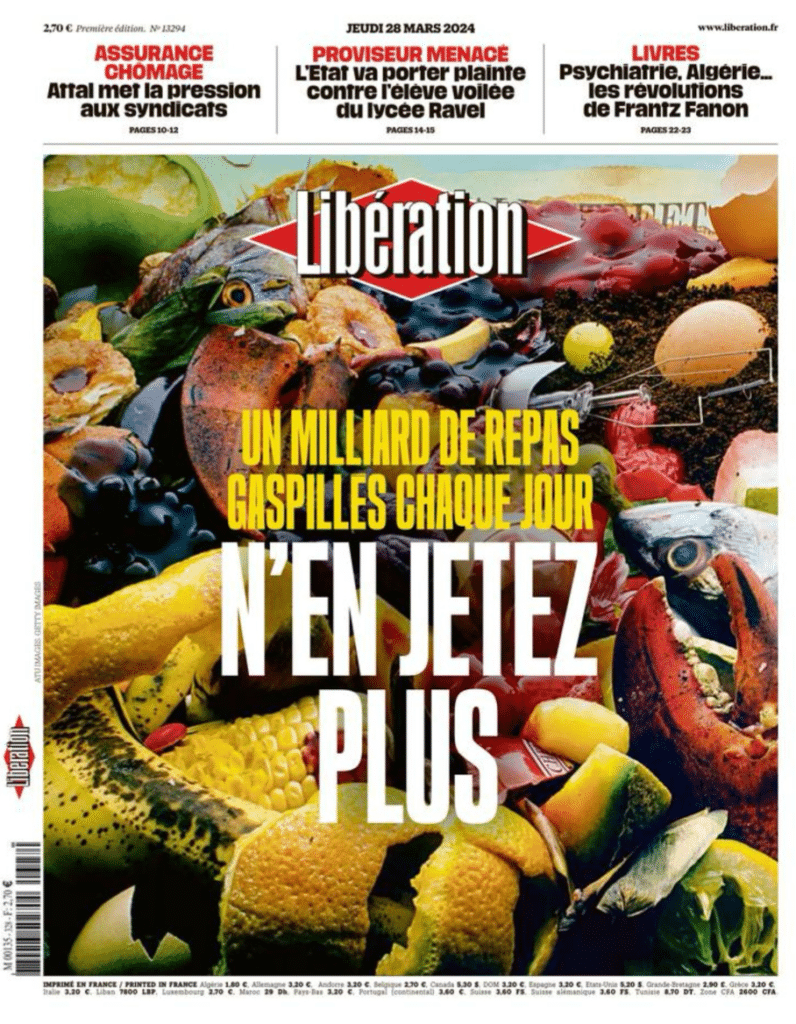
Still resources, but food this time, the waste of the week is pointed out by the UN, which speaks of a " global tragedy ": at least one billion meals are wasted every day on the planet! This figure is all the more shocking because in the same year, 783 million people suffered from hunger, and a third of humanity faced food insecurity. According to the study, carried out in partnership with the British NGO Wrap, 1.05 billion tonnes of food (including inedible parts such as bones, fishbones, pits, or eggshells) were thrown away worldwide in 2022, i.e., " nearly one-fifth (19%) of all food made available to consumers ". Worse, Libérationspecifies, this only represents part of the total food waste. Because this staggering volume of foodstuffs thrown away rather than eaten is added to the 13% of total global food production lost upstream of the supply chain (after harvests and before reaching stores), a figure provided by the Food and Agriculture Organization (FAO). From fields to plates, the world thus squanders a third of total food production! And households are largely to blame. Because they are the ones who throw away 60% of all this wasted food (i.e., 631 million tonnes), while restaurants and canteens throw away 28%, and stores 12%. The consequences of this global waste are " devastating " the report warns. It is indeed responsible for 8 to 10% of annual global greenhouse gas emissions, i.e., "nearly five times more than those of the aviation sector." Another dire effect is a "significant loss of biodiversity ", because producing all this wasted food occupies the equivalent of nearly 30% of global agricultural land. In addition to being an " environmental failure ", food loss and waste is also " a market failure ", weighing on the global economy, with over 1,000 billion dollars (approximately 922 billion euros) literally thrown in the trash each year. The global objective, set at the end of 2022 in the Kunming-Montreal Agreement on biodiversity, is to halve food waste by 2030. A "job that is too big for any single stakeholder" taken in isolation, the report concludes. It therefore calls for a collective effort, "governments, municipalities, agri-food companies, researchers, and non-governmental organizations of all sizes [all having] a role to play in changing practices and behaviors, targeting high-risk areas, innovating, and improving the situation" by helping households take action, the report concludes. " If food waste were a country, it would be the third largest greenhouse gas emitter behind the United States and China ", we also read in Le Monde.
A good time to mention the diseases of the week, linked to food insecurity! Rickets and scurvy are making a comeback in Europe, notably in the United Kingdom. "Why the return of Victorian-era diseases in the UK worries health experts," headlines The Guardian , reporting the return on its territory of diseases thought to have been eradicated forever in Europe, thanks to modernity and the advancement of medicine. The reason: the impoverishment of the population. About one in five Britons now lives below the poverty line. That's 14 million individuals, some of whom struggle to eat properly. In 2022, 423 patients were hospitalized in the UK for rickets, caused by a deficiency in Vitamin D or calcium, and 188 for scurvy, due to insufficient consumption of fresh fruits and vegetables, which guarantee a vitamin C intake. In total, nearly 10,000 Britons have been hospitalized in one year for malnutrition, four times more than twelve years ago. "It is shameful," concludes the British daily. Indeed.
Let's continue with the content of our plates with the "international day of the week", which might not entirely convince victims of rickets and scurvy: March 20 was "meat-free day". By the way, which change in behavior is most useful in fighting global warming? "Consuming only local products," answered 31% of the French surveyed by YouGov in February. "Choosing the bike for short trips" or "adopting a zero-waste lifestyle" came in second and third place (20% and 19% of responses, respectively). For 16% of respondents, we should "refuse air travel". Only 6% of those surveyed think we should above all "adopt a vegetarian diet". However, the association Futur, which commissioned this poll, took advantage of the International Meat-Free Day to remind, with the complicity of Libération, that giving up meat and fish is by far the most useful ecological gesture for reducing greenhouse gas emissions on an individual scale. This poll is part of a campaign called "L'Affaire du steak" (a reference to the climate justice campaign "L'Affaire du siècle"), which is also being displayed in the Paris metro.

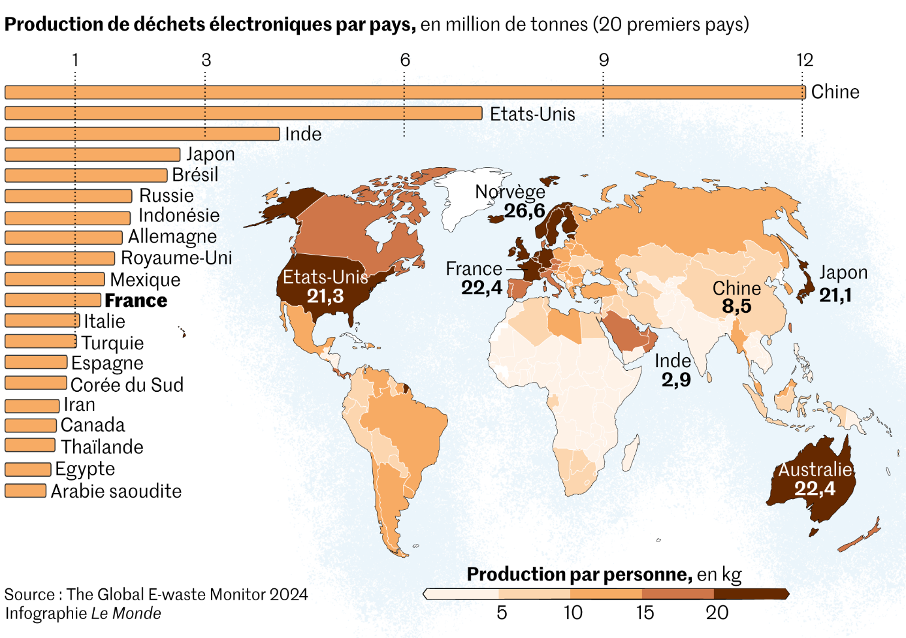
The second (!) waste of the week is electronic: smartphones, tablets, computers, flat screens, electric bike batteries, photovoltaic panels… The digitalization and electrification of our lifestyles are accompanied by an explosion of electronic waste. Between 2010 and 2022, they jumped by 82% to reach a record volume of 62 million tonnes, on a global scale, alerts the United Nations (UN) in a report published on March 20. And, according to UN projections, it will continue to grow by a third by 2030. Worse: between 2022 and 2030, the collection and recycling rate is expected to decline from 22.3% to 20%. As a result, electronic waste is growing five times faster than the amount recycled. E-waste and the circular economy still don't go hand in hand. Which is a shame because, as we well know at (RE)SET, it could be possible… Meanwhile, the distribution by country is no surprise: China is far, far ahead, followed by the United States, India, and Brazil. But, as often, when we relate waste volumes per capita, the hierarchy changes drastically: the European Union is far ahead of the rest of the world. A French person generates on average 22.4 kg of electronic waste per year, less than a Norwegian (26 kg), but more than an American (21.3 kg), nearly three times more than a Chinese person (8.5 kg), and ten times more than an African! In 2022, nearly half of the 62 million tonnes of "e-waste" ended up in illegal dumps (14 million tonnes) or fed the black market for recycling in developing countries (16 million tonnes). This has catastrophic consequences on the environment and the health of people working or living near these dumps, especially children, by exposing them to a cocktail of toxic products (lead, dioxins, PFAS…). Today, recycling of this waste, which contains significant amounts of strategic materials, covers barely 1% of global demand for rare metals (copper, cobalt, nickel, gold, and silver). The UN estimates this waste of resources at 91 billion dollars. "The status quo can no longer last," estimates Kees Baldé, the lead author of the report, quoted by Le Monde. It is urgent that states invest more in recycling infrastructure and promote repair and reuse." At (RE)SET, we applaud this recommendation wholeheartedly! Especially since in France, we have eco-organizations specialized in the issue.
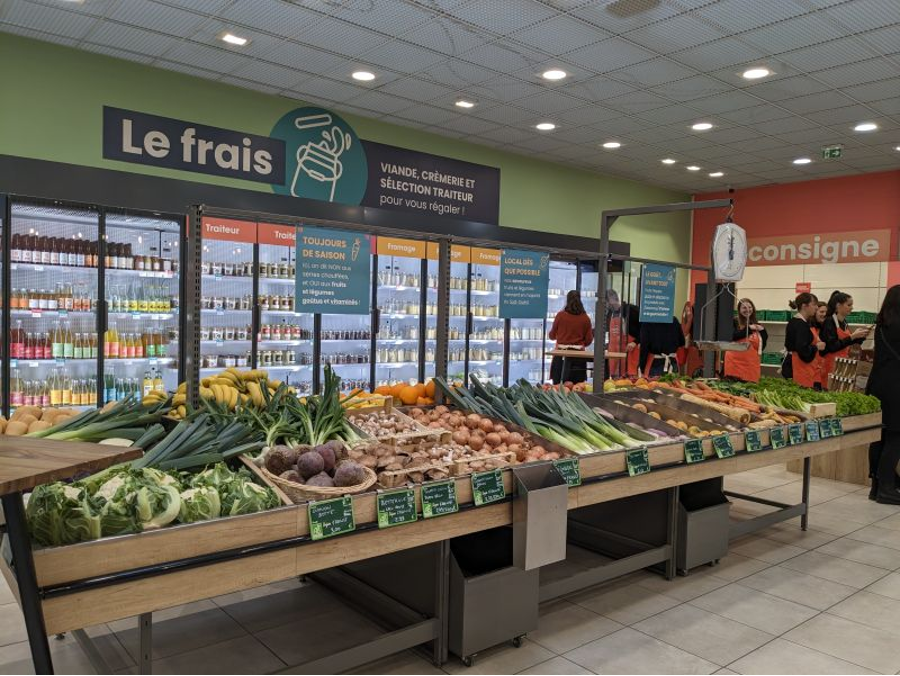
Regarding waste and recycling, the supermarket of the week has a nice name: it's called Super Tout Nu. It was just inaugurated in Toulouse by Minister Olivia Grégoire, responsible for businesses, tourism, and consumption. There is no disposable packaging there! Deposit, local, organic, reuse, and bulk everywhere! It was conceived by Salomé Géraud (Nicaise) and Pierre Géraud-Liria, co-founders of the zero-waste e-commerce brand Le Drive tout nu. A container washing station (jars, bottles, …) adjoins the supermarket. To go shopping there, you will need to go to the Labège commercial area south of Toulouse. Visuals are available on LinkedIn.
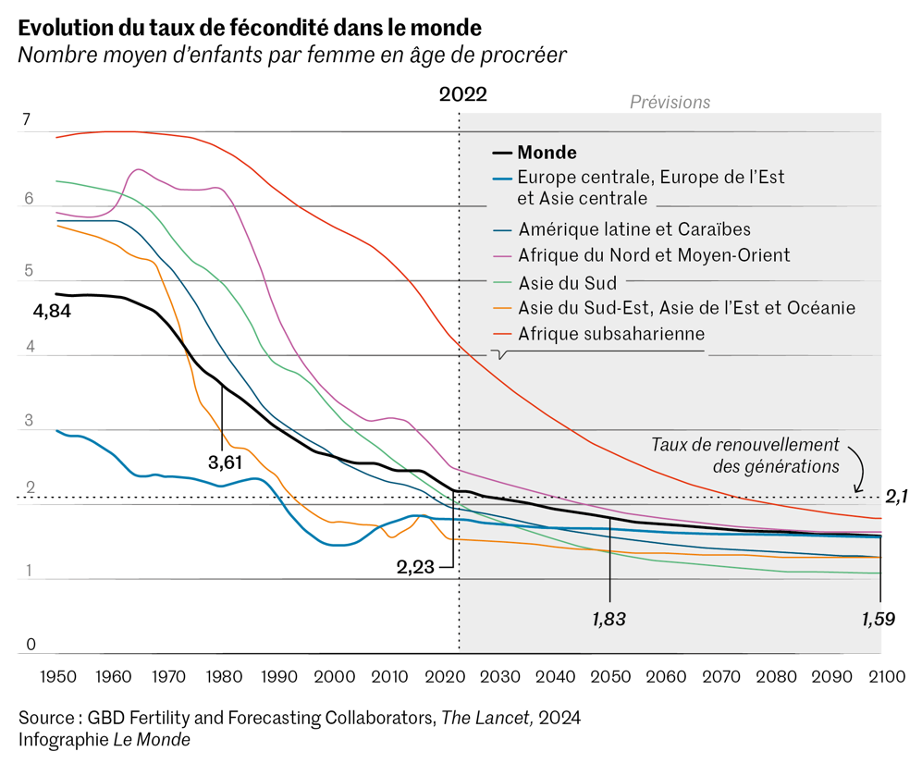
The surprise of the week has only an indirect connection with our subjects, or at least we hope, but since it is important, we give it to you anyway: the decline in human fertility worldwide is faster than expected. According to a study published in "The Lancet," reported by Le Monde , the average fertility rate in 2050 could be around 1.8 children per woman globally, i.e., below the population replacement threshold of 2.1. Researchers expect that by 2100, only Samoa, Somalia, Tonga, Niger, Chad, and Tajikistan will remain above the population replacement threshold. At the other end of the spectrum, Bhutan, Nepal, Bangladesh, and Saudi Arabia could see their fertility rate drop below one child per woman (which eventually leads to a halving of the population). "The implications are considerable," said Natalia V. Bhattacharjee of the IHME, co-author of this work. "These trends (…) will completely reconfigure the global economy and the international balance of power and will require a reorganization of societies." Counter to the political mood in France and Europe, the researcher anticipates "international competition to attract migrants to support economic growth, while the baby boom continues at a sustained pace in sub-Saharan Africa." Moving from forced expulsion to competition to attract migrants will take time, but it will happen, according to the scientists…
The star of the week is Barack Obama, the former US president, who during a visit to Paris openly mocked the visions of Elon Musk and Jeff Bezos, mentioning "the Silicon Valley magnates, many of whom are building spaceships (…) I love space exploration, and I look forward to seeing us get to Mars and beyond (…) But when I hear some people say that the plan is to colonize Mars because the environment on Earth might degrade, become unlivable… What are you talking about?! ", Obama exclaimed. "Even after a nuclear war (…) Earth would still be more liveable than Mars! Even if we did nothing about climate change, it would still have oxygen, and for all we know, Mars doesn't", he elaborated, before an audience that notably included renewable energy professionals gathered in the CNIT amphitheater in Paris-La Défense. And at least one journalist from Francetvinfo.
The opinion piece of the week delighted us at (RE)SET, as it comes from its President. On economic and environmental transition, "one form of radicalism can hide another," writes Géraldine Poivert in Les Echos. In other words, it is no longer time to alert (everyone knows), nor to debate (the debates have already taken place), but rather to act! The difficulty of the transition today largely lies in the fact that promises and commitments (from states, companies, citizens) are not kept. Isn't true radicalism, the one that tackles the root of the problem, simply about stoping paying lip service and acting? The stakes are known. The difficulties are just as known. The legal framework is, for the most part, in place. Many pragmatic solutions are already ready. It remains to take hold of them, to align actions with commitments. Big capitalists, governments, and environmental activists could find common ground in that kind of radicalism. The kind that actually moves things forward. Our obsession at (RE)SET.
The riddle from last week had nothing to do with the film Dune, no giant worm, nor spice if you dig deeper. Because it is a satellite photo of the Namib Desert. If you wish to go there, it is here: 24°42'51.43″S, 15°29'22.71″E.

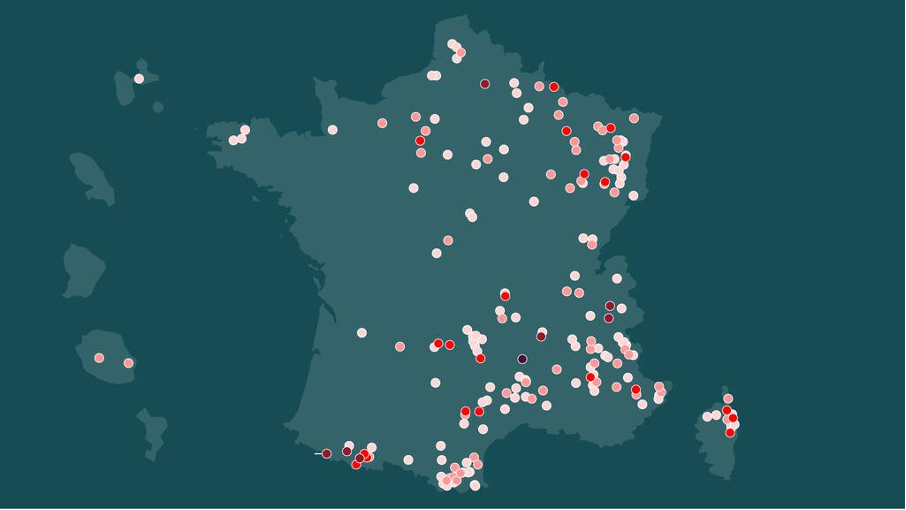
The week's riddle brings us back to France. On this map, what could these little dots ranging from pale green to dark red represent? There are more of them than elsewhere in Ardèche, Pyrénées-Orientales, Hautes-Alpes, and Corsica (that's the clue).
[As a reminder, (RE)SET, founded in 2019, is the first independent consulting firm dedicated to economic and environmental transition and built for action. "(RE)SET: resources to win environmental and economic battles!" Inevitably partial, sometimes biased, always committed, this media review with its often spirited, even impertinent tone, in no way commits (RE)SET in its consulting activities, but it paints a picture we find interesting of the state of the transition as it appears in the press and research. A snapshot of the debate, of the forces at play, the oppositions, the convergences, which we hope is useful for your decisions and for building your transition strategies.]