Breaking (RE)NEWS du 20 septembre 2024
Hello,
If you happen to read these lines on Sunday, you would have an advantage over us: you would know, if all goes well, the composition of the Barnier government. For our part, we are still reduced to hypotheses. Already, however, signs are multiplying that do not bode well for increased attention to environmental and economic transition issues in the coming years. We can at least console ourselves by noting that in Brussels, on the other hand, things have moved, rather in the right direction.
First, three concordant signs, then. The first is the unfortunate decision, according to the press, to detach the General Secretariat for Environmental Planning (SGPE) from Matignon's services. The idea, it seems, is to clearly separate what falls under "politics" from what falls under "administration." It is not certain that sidelining the SGPE as an administrative entity is good news. As Le Mondereminds us, Emmanuel Macron's 2022 announcement attaching the management of "ecological planning" to the Prime Minister constituted "a real step forward." Between the two rounds of the presidential election, candidate Macron promised to transform France into a "great ecological nation," "the first to get out of gas, oil, and coal." The creation of the SGPE responded to this just ambition. It initiated progress: the traditional siloed policy – transport, industry, housing, … – dominated by Bercy began to be replaced by a global strategy based on sustainable targets for reducing carbon emissions. The impetus and arbitration provided by this new entity proved all the more effective as the Secretary General, Antoine Pellion, held this position concurrently with that of ecology advisor to the Prime Minister. This is no longer the case. At the same time, as they say, perhaps this is a recognition of the principle of reality. Already, Le Monde recalls, "Gabriel Attal's disregard for these subjects had notably weakened the structure." An anonymous member of Pellion's team spoke somewhat to the press to explain that "since Attal's arrival, the SGPE had not won a single arbitration" and was no longer consulted much. Second sign: the budget. The "ceiling letter" sent by Matignon to the Ministry of Ecological Transition for its 2025 budget, inadvertently made public by Médiapart, provides for budget cuts, in total contradiction with the set objectives. Third sign: it has been whispered for a few days that the next Minister of Ecological Transition will be a returnee to this Ministry, Agnès Pannier-Runacher, with a fairly technocratic profile, which does not bode well for a new momentum.
We hope these signs prove misleading. Because the files left "fallow" since the start of the electoral sequence are substantial. Consider, with Libération, which has drawn up a (very) partial list:
- The energy and climate programming law (LPEC), which has the key role of defining the objectives and action priorities of national energy policy. It was supposed to be published before July 1, 2023, and it is a European obligation. In the wake of that, the national low-carbon strategy, which sets carbon budgets and sectoral emission reduction trajectories, will need to be addressed. Same observation for the multiannual energy program (PPE), which should have been finalized last summer.
- The national climate change adaptation plan, which was supposed to be finalized at the beginning of the summer. The text, which must prepare France's resilience for a 4°C warming, was ultimately shelved after the dissolution of the Assembly.
- Biodiversity: this is one of the rare pieces of good news. Narrowly adopted in June, the European Nature Restoration Law entered into force on August 18. It now remains, at the expense of the new government, to plan its implementation over the next two years.
In Brussels, on the other hand, things seem to be moving in the right direction, if we are to trust the choice of European commissioners made by member states and Ursula von der Leyen. The new European Commission seems capable of preserving the Green Deal and even "industrializing" it, to use the headline from Actu-Environnement. The new scopes and titles of the portfolios illustrate this, with a cross-cutting approach to this subject. "The backdrop is competitiveness in the double transition," the president explained when presenting the organization chart on September 17, boasting of having "demolished the old rigid silos" to "build a competitive, decarbonized, and circular economy – with a fair transition for all." Thus, Teresa Ribera (Spain – S&D) will be responsible for the Clean, Just and Competitive Transition. Industry is also a prerogative assigned to Stéphane Séjourné (France – Renew). The French representative will be responsible for Prosperity and Industrial Strategy. For MEP Pascal Canfin (France – Renew), "these two portfolios are very complementary and not in competition." The Spanish and French commissioners will also have to work with Dane Dan Jørgensen (S&D), potential Commissioner for Energy and… Housing, a notable novelty. The Commissioner responsible for Climate will also have a say. He could be the Dutchman Wopke Hoekstra (EPP), who has held this post since 2023. So we can expect continuity on the issue. Finally, a portfolio entitled Environment, Water Resilience, and a Competitive Circular Economy has appeared and highlights new priorities. Jessika Roswall (Sweden – EPP) has been designated to take charge of it.
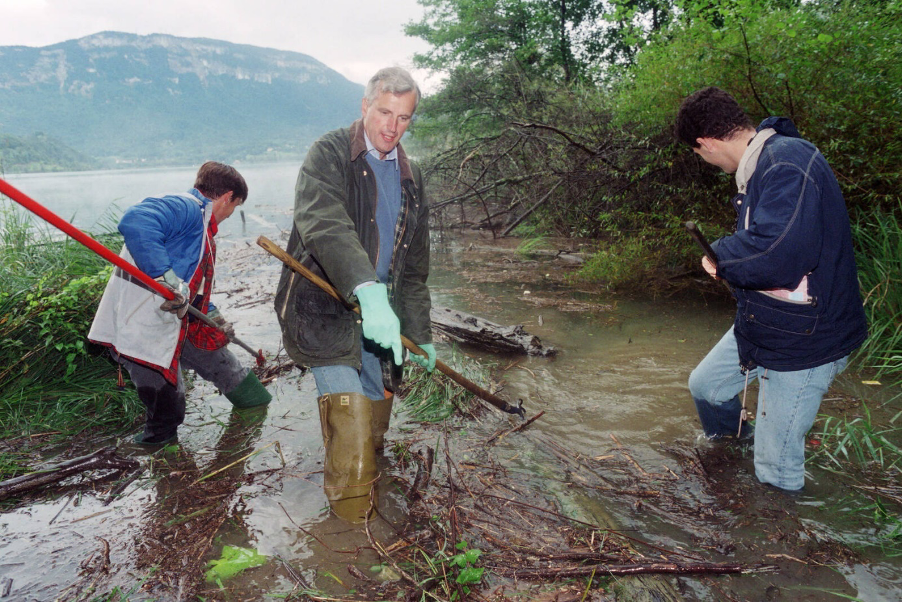
Let's dream a little: what if Michel Barnier, by Sunday, pulled a "Minister of the Circular Economy" out of his hat? Then we would applaud him at (RE)SET! Meanwhile, to continue dreaming, let's look at the former Minister of the Environment cleaning a lake in his region about thirty years ago.
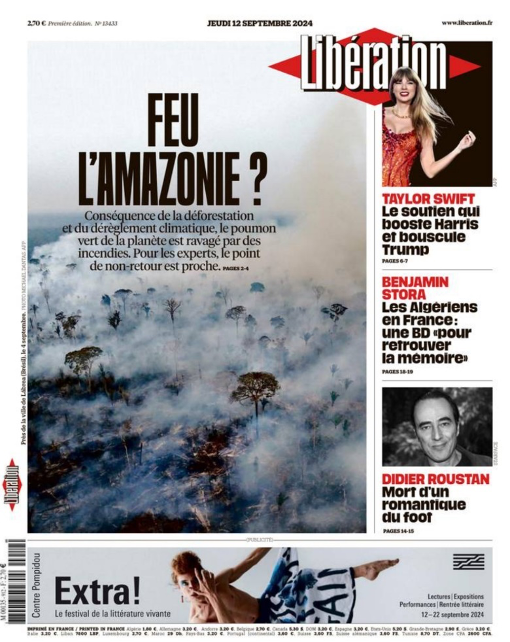
Meanwhile, the environmental emergency is ever more… urgent, as evidenced by our regular section, the "weather of the week". This time dwelling on current "natural" disasters, remembering that while they cannot be directly linked to global warming, they are absolutely, indirectly linked, which translates into the increased frequency of their occurrences. Thus surgical masks, used during the Covid-19 pandemic, have reappeared in daily life in Brazil. This time, it is not to protect against a virus but against the pollution emitted by the forest fires devastating the country. More than 60% of the territory, or 5 million square kilometers, is now covered by smoke. A thick, greyish haze, visible from space and harshly felt on the ground. In recent days, in Porto Velho, in the Amazon, the fine particle (PM2.5) level exceeded 339 micrograms per cubic meter, 68 times the limit recommended by the World Health Organization over a year. For its part, Sao Paulo, the largest urban agglomeration in South America, has since Monday, September 9, held the unenviable title of the "most polluted city in the world." It was awarded by the Swiss company IQAir, which observes air quality in over a hundred large cities. No district, no suburb escapes this unhealthy blanket, notes Le Monde. This inspired Libération with this well-found front page, as often:
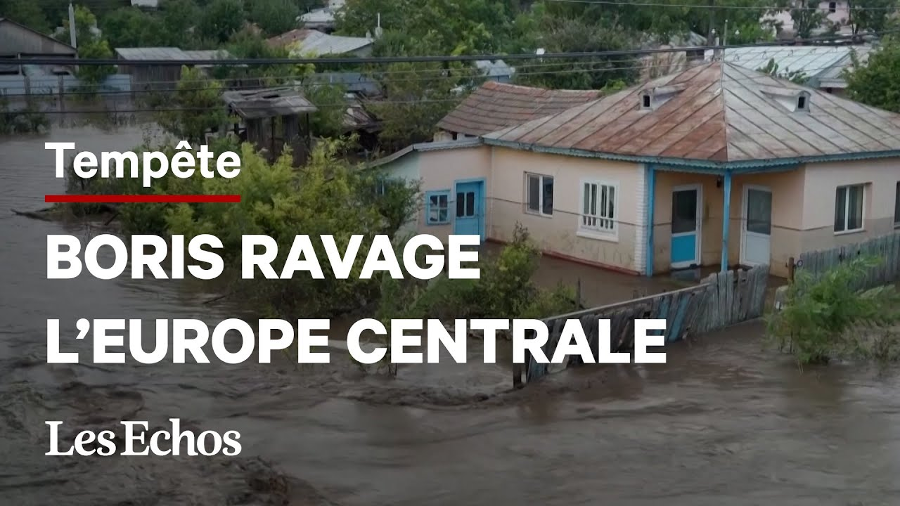
Another large-scale disaster, closer to us, "Storm Boris" [N.B.: Nothing to do with the author of these lines, reputedly calm] is unfolding its effects and devastating Central Europe, to use the words of Les Echos. Since last week, violent winds, exceptionally heavy rainfall, and floods have killed 24 people in the Czech Republic (5), Austria (5), Poland (7), and Romania (7). In some places, the water "literally destroyed everything," leaving the landscape devastated "like after a war," the Polish Minister of Infrastructure told the press yesterday, quoted in Le Parisien. While the rain has stopped falling in a large part of the region, swollen rivers are still threatening towns and localities downstream. To the point that the European Union is mobilizing. "At first glance, it is possible to mobilize 10 billion euros from the Cohesion Fund for the affected countries. This is an emergency response," said the President of the European Commission, still Ursula, after a meeting with the Polish, Czech, Austrian, and Slovak heads of government. "It was heart-wrenching for me (...) to see the destruction and devastation" caused by the floods, she added.
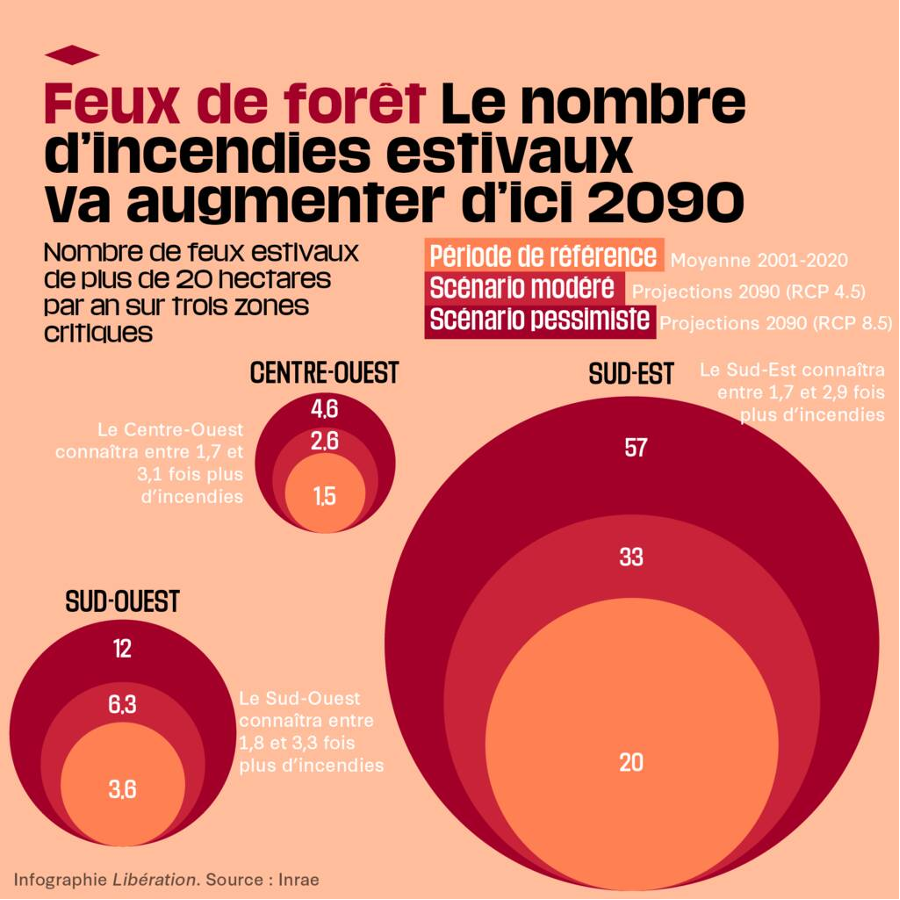
And France in all this? It will of course not be spared, particularly with regard to forest fires. According to the latest study from INRAE, we even have a fairly precise idea of what will happen by 2090, namely two to three times more fires, as perfectly illustrated by this infographic published in Libération :
And to conclude this climate sequence in style, the newspaper La Croix reported on a new "world record," that of methane emissions. This is the finding of a study by the Global Carbon Project organization published on Tuesday, September 10, in the scientific journal Environmental Research Letters. The finding is all the more worrying as the warming potential of methane is more than 80 times greater over twenty years than that of CO2. Its lifespan in the atmosphere being much shorter (around ten years compared to between 300 and 1,000 years for carbon dioxide), this makes it a major issue in the fight against global warming. In the 2010s, methane had already contributed to an increase in global temperature of about 0.5°C compared to the end of the 1980s. And its levels in the atmosphere continue to rise. "Methane is rising faster than any other major greenhouse gas and is now 2.6 times higher than in pre-industrial times," the study warns. In 2020, human activities emitted 400 million tons of methane, a record. But these emissions have continued to increase "at least until 2023." A situation that "cannot continue if we want to maintain a livable climate," warn the scientists at the Global Carbon Project. As a reminder, on the occasion of COP26, organized in Glasgow in 2021, more than 100 states joined the "Global Methane Pact" and committed to reducing their emissions by at least 30% by 2030 compared to 2020 levels. But the observed growth in methane emissions currently follows the most pessimistic scenarios. The reduction targets "seem as distant as an oasis in the desert," judges Rob Jackson, a researcher at Stanford University and lead author of the study. "We all hope they are not a mirage," he concludes.
This leads us directly to the "Oh shit moment" of the week, presented with these words in Le Monde, coming from the reading of a study on the effectiveness – or not – of climate policies. This evocative expression, conceptualized by Australian philosopher Clive Hamilton, describes "the moment when everything seems useless and derisory in the face of inevitable global warming. A kind of crystallization of dread," writes Le Monde nicely. Reading a study published in the journal Science on August 22 will not alleviate the anxieties of the most desperate. Scientists from the Potsdam Institute for Climate Impact Research tapped into OECD data to analyze the effects of 1,500 climate policies implemented in 41 countries between 1998 and 2022. Using an artificial intelligence machine, they estimated their consequences on reducing CO2 emissions. The result is "deplorable." In detail, they identified only 63 effective measures that led to emission reductions of at least 4.5% to 13% in different sectors. Most of the improvements occur in the building sector (24 cases), followed by transport (19 cases), industry (16 cases), and electricity (10 cases). Sixty-three out of 1,500, in other words 4.2%? "Oh, shit…," one might be tempted to think. And yet, in the midst of the very dark graphs, this work holds keys to improving public policies. Thus, 70% of the useful measures were effective when combined with one or more other initiatives. In 2013, in China, the implementation of an emissions trading system in industry had little effect. But in 2016, emissions clearly decreased when this system was coupled with a strengthening of financing mechanisms for energy efficiency investments, followed by a reduction in fossil fuel subsidies. Another example, in the United Kingdom, the inflection in emissions in the electricity sector in 2015 and 2016 was caused by the introduction, in mid-2013, of a carbon price floor, which imposed a minimum price on British electricity producers. This measure reinforced the European Union's emissions trading system.

The sector of the week, which is becoming a full-fledged section given its growing news, is the automotive industry – electric, of course. Le Monde is quite accusatory regarding the responsibilities of European companies' failures: "it is not the transition to the electric vehicle that is the cause of the industry's difficulties but the way it has been carried out." The cause? The choice to design and offer luxurious and expensive vehicles, contrary to the Chinese approach, which offers low- or mid-range vehicles at relatively low cost. Second error: relying solely on imports, of both materials and software, or the ex nihilo creation of small parts of the supply chain, rather than trying to establish a complete value chain. Third error according to the Le Monde editorialist: imposing customs duties that may be insufficiently dissuasive for Chinese exporters but sufficiently disruptive for European brands that have partially relocated production to China, such as Renault or Volkswagen! In the same vein, Le Monde published an edifying report on CATL, a little-known Chinese company based in Ningde – a third-tier city without an airport – which alone produces 40% of the world's automotive batteries. To provisionally conclude this section, we recall that it is on September 27, in one week, that the imposition of 100% customs duties on Chinese electric cars will come into force… in the United States. Le Monde reminds that electric vehicle batteries and solar panel cells are also affected, to be taxed at 25% and 50% respectively. For semiconductors, it will be 50%, starting January 1, 2025. The war is thus raging.
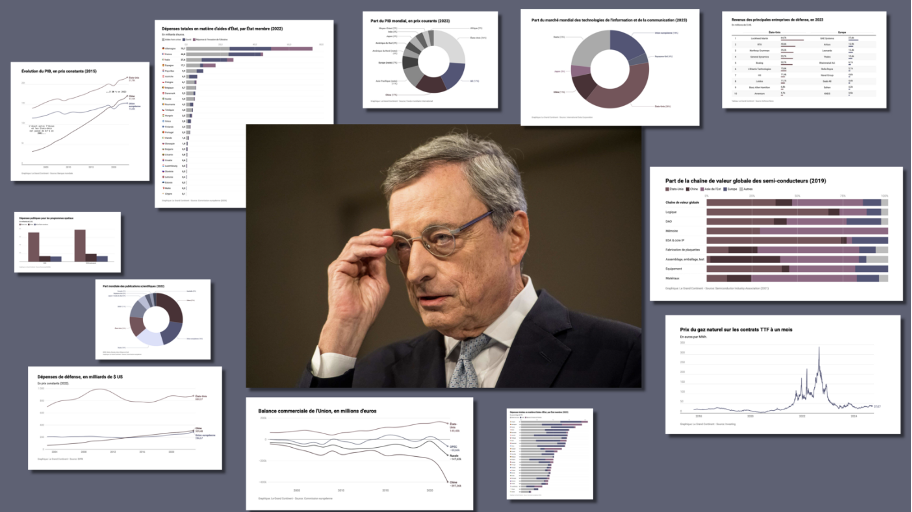
As an echo to the previous subject, the weighty report of the week is that of Mario Draghi, former President of the European Central Bank, a very serious gentleman. This report, dedicated to European competitiveness and how to improve it, makes waves all the more as it can be interpreted in various ways, depending on which chapters one is interested in. While the observation, "an existential crisis," is widely shared, some of the report's recommendations are perhaps more debatable. The observation first: if the European Union does not want to experience "a slow agony," it needs "800 billion euros in additional investments per year" to finance the necessary reforms to avoid being definitively left behind by the United States and China. A significant jump that would represent 5% of current European GDP, Le Figaro highlights. "By comparison, Draghi details in his report, the investments made under the Marshall Plan between 1948 and 1951 were equivalent to 1 to 2% of EU GDP." Failing that, "we will not be able to become, at the same time, a leader in new technologies, a beacon of climate responsibility, and an independent player on the world stage. We will not be able to finance our social model. We will have to lower some of our ambitions, if not all," Draghi writes. And he calls on member states to take responsibility, to truly give the Union the means for its ambitions. But how to do it? The recommended solutions are not unanimous. Thus, Mario Draghi advocates a large European loan to find necessary resources. But sourpusses note that the previous one, decided during the COVID crisis and endowed with over 800 billion euros, is far from having been fully spent: resources exist, they are not sufficiently used. The European Court of Auditors has just revealed, the editorialist of Les Echos reminds us, that by the end of 2023, EU countries had used less than a third of the funds provided for by the previous plan… To the point that according to L'Express, the "Draghi Plan" might be stillborn. In the same spirit, the President of the European Commission is also not convinced, who essentially replied to Mario Draghi: "First use the available money from the previous large loan, the one launched in February 2021 in the wake of the first COVID wave."
Another possible criticism leveled against the Draghi report: its recommendations to lighten certain environmental regulations deemed too burdensome for businesses. And in particular CSRD and CSDDD (scheduled for 2027), i.e., the application of a genuine duty of vigilance for companies. To form your own opinion and if you have some free time, the report can be downloaded here.
The solar farm of the week is the largest in the world. It will see the light of day in 2030. SunCable, that's the name of the phenomenal renewable energy project launched by Australia. On August 21, Environment Minister Tanya Plibersek officially approved the plans for this solar plant, whose construction is expected to cost nearly 21 billion euros. Spread over 12,000 hectares in the north of the country, the site is expected to power three million homes starting in 2030. But this energy will not only be reserved for Australia: a cable connecting to Singapore should eventually supply 15% of the city-state's needs. Described as the "largest solar area in the world," SunCable could allow Australia to become "the world leader in green energy," hopes Tanya Plibersek, quoted by Novethic. An ambitious goal. At the end of August, the share of coal, of which the country remains one of the world's leading exporters, fell below the 50% mark of national electricity production for the first time.
The "Success Story" of the week – because yes, not everything is bleak in the complicated world of the transition! – is that of Dunkirk. Pascal Canfin, MEP, talks about it very well on his LinkedIn page: "In this region, 20,000 jobs have been created in 10 years thanks to the opening of 4 gigafactories for the production of electric car batteries and factories for their recycling, and industrial decarbonization projects with the Ecocem decarbonized cement plant and Arcelor Mittal's steel plant. Dunkirk is also an innovative model of territorial planning for the ecological transition operated by the Public Interest Group, Écosystème D, which brings together major public and private actors (the Dunkirk Urban Community, the Grand Port Maritime de Dunkirk, the CCI Littoral Hauts-de-France, the Community of Communes of Hauts de Flandre, local businesses, investors, educational institutions, etc.) to coordinate and support regional development projects. And as Pascal Canfin reminds us, all this "would not have been possible without the European Green Deal which sets the target of achieving climate neutrality by 2050 at the latest!"
Our EPR Focus of the week is not just one, but rather an instance to regulate them all ("one to rule them all"…)! Written by the General Inspectorate for the Environment and Sustainable Development (IGEDD), the General Inspectorate of Finance (IGF), and the General Council for the Economy, Industry, Energy and Technology (CGE), the report entitled "Performance and Governance of Extended Producer Responsibility (EPR) Sectors," commissioned by Élisabeth Borne when she was still Prime Minister, points out, according to L'Usine Nouvelle, shortcomings and malfunctions in the model. But also values and virtues. Since the EPRs of yesterday cannot be those of today, "the status quo is not conceivable," the authors call for "an institutional reform" of the sectors subject to the EPR principle. Here are the 10 main proposals of the report, as summarized by L'Usine Nouvelle:
Proposition #1 [Government]: Create a regulatory body for EPR sectors, to centralize and independently exercise the functions of regulating competitive balances, dispute management, control, and sanctioning. Strengthen the DGPR (Directorate General for Risk Prevention), in conjunction with the DGE (Directorate General for Enterprises), in a role of defining the framework and objectives of the EPR public policy and, more broadly, the circular economy.
Proposition #2 [Regulatory Body]: Collect, secure, and regularly update the data on which the management of EPR sectors must be based.
Proposition #3 [DGPR, in conjunction with DGE]: At the sector level, transform specifications into guidelines, setting credible medium-term objectives associated with relevant indicators, reviewed every four years. Assess their environmental and economic impacts.
Proposition #4 [Regulatory Body]: At the level of eco-organizations and individual systems, issue certifications without time limits. Implement a closer and more regular performance monitoring mechanism, based on a four-year objective framework breaking down sector guidelines to the level of each eco-organization or individual system.
Proposition #5 [Regulatory Body]: Entrust the regulatory body with an appropriate, rapid, and dissuasive response mechanism (a panel of tools including formal notice, injunction, sequestration, sanctions, etc.) in case of observed deviation from the target. Make it the recipient of eco-organization and individual system budget projects and allow it to formulate observations.
Proposition #6 [Regulatory Body, in conjunction with eco-organizations]: Develop capacities to identify producers/importers placing products on the market who are not in compliance with their obligation to pay an eco-contribution. Entrust the regulatory body with the responsibility (i) to apply the penalties provided for in Article L. 541-10 II of the Environmental Code and (ii) to make public on a website the list of non-compliant producers/importers.
Proposition #7 [Regulatory Body]: Better incentivize local authorities towards performance (i) by differentiating, in the standard contracts of the relevant sectors, the levels of support to local authorities according to the average costs of waste collection and treatment by territory category and (ii) by publishing the performance levels of each local authority on the main material flows.
Proposition #8 [DGPR, DGE]: In addition to modulating eco-contributions, rely more on the regulatory lever harmonized at the European level, to strengthen requirements towards producers/importers concerning eco-design, extending product lifespan, and incorporating recycled materials.
Proposition #9 [DGPR]: Entrust ADEME with the implementation of reuse and repair funds, instead of eco-organizations, as their governance creates a conflict of interest with these missions.
Proposition #10 [Government]: Only create a new EPR sector if it corresponds to a European requirement.
Let us dare to write it, at (RE)SET, we find many of our own recommendations here…
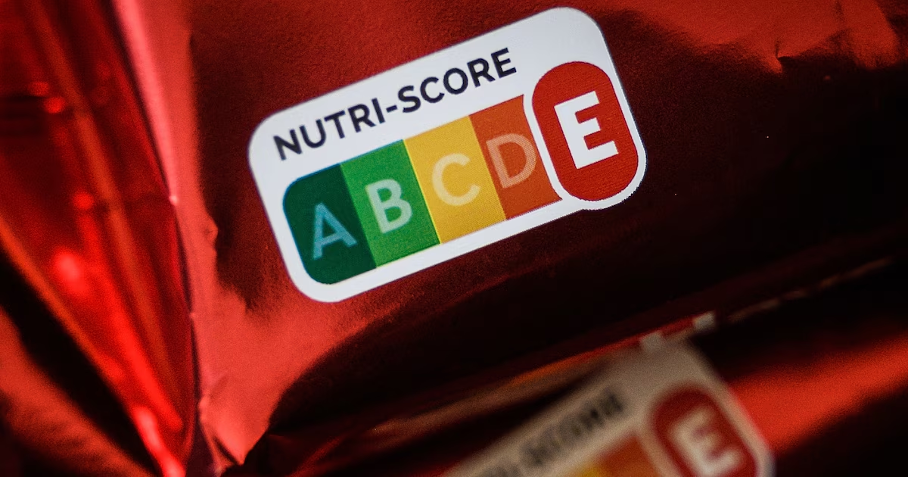
The Nutri-Score of the week is that of Danone, one of the historical promoters of the system, which has just decided to keep it only on products whose results they like… The cause: an update of the criteria that penalizes excessively high sugar content and therefore downgrades the rating of certain Danone flagship products, including Actimel, Activia, and Danonino. The result: a pick-and-choose Nutri-Score… but then what's the point? According to L'Express, which is alarmed by this, it is therefore "urgent to make the Nutri-Score mandatory," the goodwill of private actors "having proven its limits."
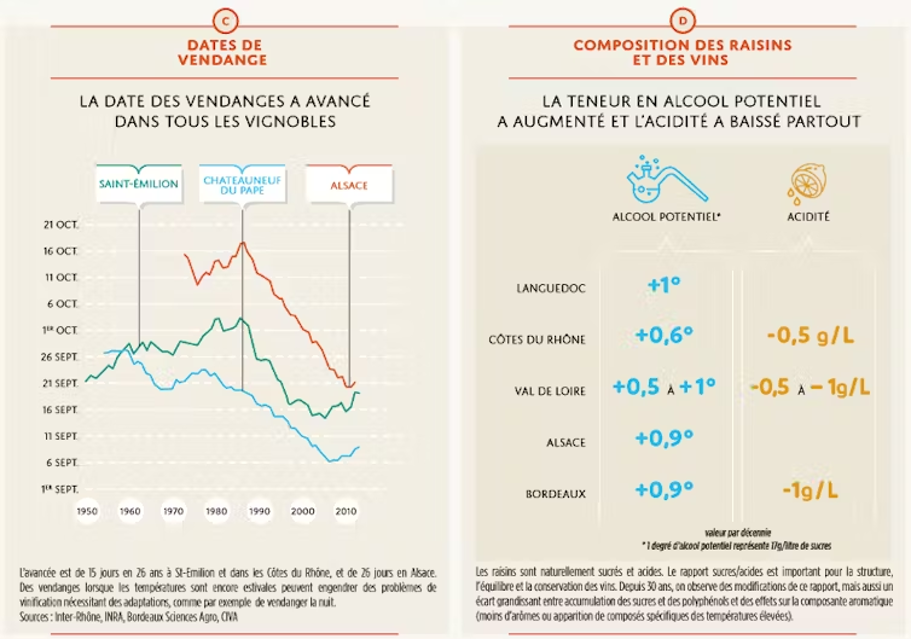
The infographic of the week could be titled "small causes, big effects" (we are being ironic). It illustrates the impact of global warming on our grand cru wines and speaks for itself, courtesy of The Conversation . So more than ever, we must "consume in moderation"!
The "parenting" idea of the week concerns your potentially idle teen or young adult. If they spend their time lying on a couch immersed in video games, suggest they sign up for "ecological civil service"! The National Civic Service Agency, the Agency for Ecological Transition (Ademe), and the association Unis-Cité have launched "the recruitment of 1,000" young people for civic service, ambassadors "specifically tasked with" encouraging others to get involved, reports Les Échos. In total, the government aims to recruit 50,000 young people to complete civic service related to the environment by 2027. As a reminder, this service is intended for all young people aged 16 to 25, with the maximum age set at 30 for those with disabilities. The possibility of completing ecological civic service is open regardless of your status (student, unemployed, employee, etc.). No diploma or prior experience is required. Small detail: this service is not voluntary but paid.
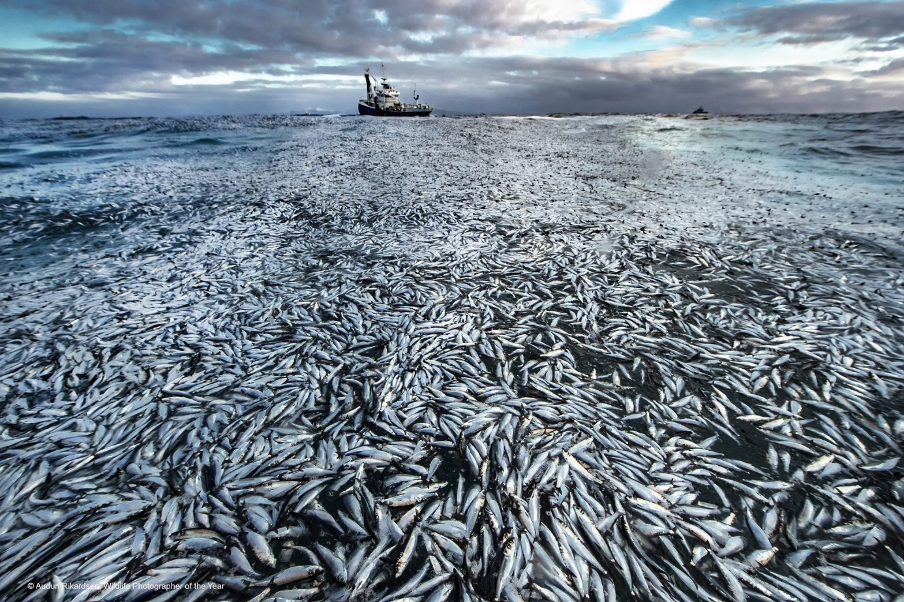
On the biodiversity side, the study of the week counts fish… and the numbers do not add up! "Counting the number of fish in the ocean is no small matter," notes La Croixastutely. It is even a devilishly complicated exercise, but essential: assessing fish populations allows knowing how many can be caught without endangering stocks. This is the basis of the quotas implemented to preserve fishery resources. Except that according to a study published on August 22 in the journal Science, the models used often overestimate fish population numbers. On average, fish stocks would be overestimated by 11.5%, with strong disparities between populations, however. In fact, it is vulnerable populations – affected by overfishing, water warming, or smaller numbers – that are systematically overestimated. Models can also incorrectly indicate that the numbers of a stock are rising. "The more depleted a population, the more pronounced the bias. It is doubly in danger, since we can increase catches at a time when conservation measures are needed," warns Christopher Brown, one of the study's authors. According to the Food and Agriculture Organization (FAO) of the United Nations, the share of sustainably fished stocks worldwide would have fallen from 90% in 1974 to 64% in 2019. Figures that would be greatly underestimated: according to the study, a third of these populations deemed sustainable globally are actually overfished. The authors of the publication therefore invite determining fishing quotas with more caution.
Still on biodiversity, our domestic animals have a new defender, and no less a one. Well, in the context of a Breaking (RE)NEWS overly marked by "Oh shit moments," we can also try a joke of the week . For those who do not understand where these "AI-generated images" come from, we suggest watching the last Trump / Kamala debate !

Our previous edition was punctuated, exceptionally, by two riddles, one easy, one less so. The easy one first, which was connected to the Olympic Games. Why did Coca-Cola find itself accused of greenwashing – we also heard sportswashing – despite its "eco-cups" "fully recyclable," as the ad says, used during the Olympics? For a simple reason: each "eco-cup," before being served, was filled from… plastic bottles. In a way, two disposable packages instead of one: quite an ecological achievement, indeed.

The second riddle was tougher: what does this photo represent? Simply the portrait of a lady lying in the grass (no surprise so far!) … surrounded by her actual personal waste for the week. The result of photographer Greg Segall's work and his "7 Days of Garbage" project: photos of friends and strangers lying in a week's worth of their actual waste. Remember your own week and imagine what your photo would look like.

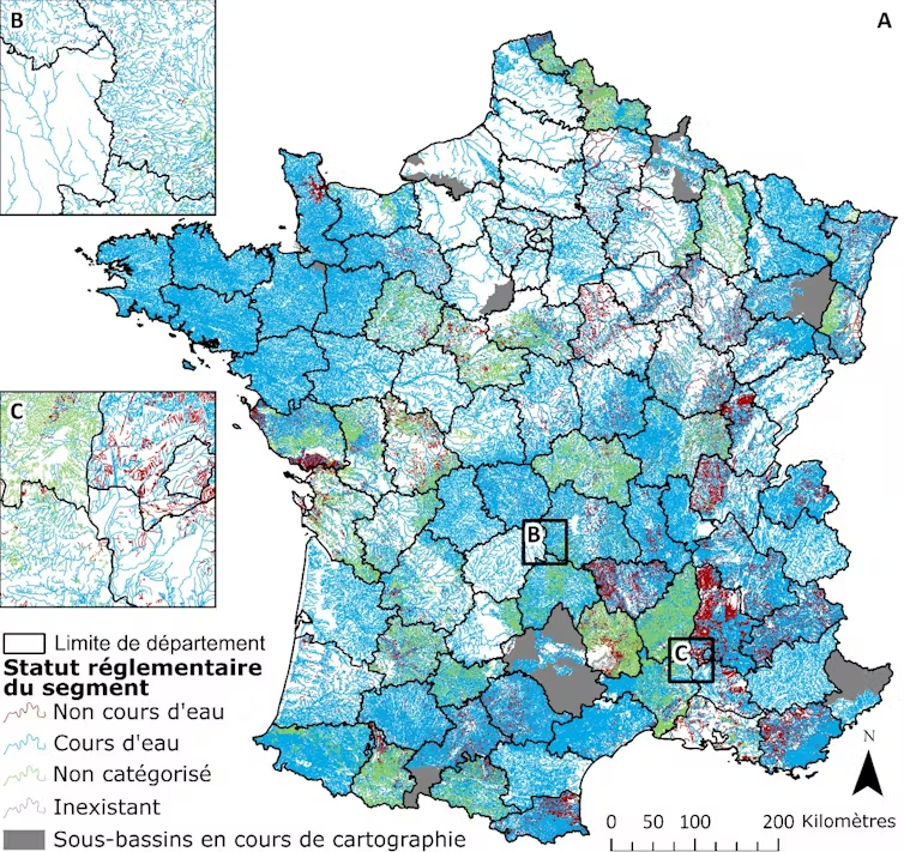
The week's riddle should be simple: it is an unprecedented, captioned map of watercourses in France, according to their status. But what is the main surprise it reveals…?
Happy reading and have a great weekend!
[As a reminder, (RE)SET, founded in 2019, is the first independent consulting firm dedicated to economic and environmental transition and built for action. "(RE)SET: resources to win environmental and economic battles!" Inevitably partial, sometimes biased, always committed, this media review with its often spirited, even impertinent tone, in no way commits (RE)SET and even less so Julhiet Sterwen in its consulting activities, but it paints a picture we find interesting of the state of the transition as it appears in the press and research. A snapshot of the debate, of the forces at play, the oppositions, the convergences, which we hope is useful for your decisions and for building your transition strategies.]