School holidays are here, and media coverage of the economic and environmental transition is suffering a bit as a result. This is a good time to lift our heads from the grindstone and fast-forward a few months. To June 6-9, to be precise. On those days, every five years, citizens of the 27 EU member states will go to the polls to elect their Parliament. Well, not all, certainly, but 68% of them, 9% more than in 2019, according to the latest European poll on the matter. This is good news: the EU, a driving force of the transition for the past 5 years if ever there was one, is of interest. But, bad news, the transition, now mistakenly associated with purchasing power, has become partisan, a stake or hostage of debates that should not concern it. All surveys show a marked shift in the electorate towards extremist or nationalist political parties that are not inclined to accelerate this transition. Or even in favor of a rollback and "unraveling" of the Green Deal. As if global warming, the resource revolution, and the transition that will meet these challenges had to have a political color…
This strong growth of the far right and nationalists risks being at the expense of the Greens, liberals, and left-wing parties, as shown in these illustrations, taken from summaries of various polls, notably reported by Euractiv :
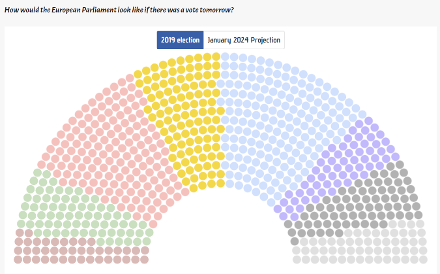
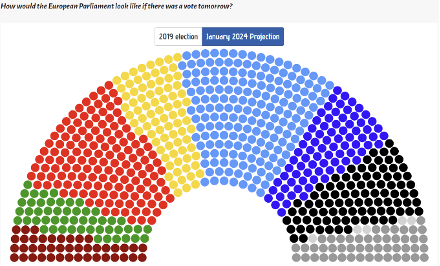
If these voting intentions were to materialize in less than four months, what could be the consequences for the EU's "green" policies? The EU got a taste of this when MEPs debated the climate target recommended by the European Commission for 2040, namely a 90% reduction in greenhouse gas emissions compared to 1990 levels. Conservative and far-right groups warned of the social consequences and the risk of deindustrialization associated with ambitious climate targets. The nationalist group European Conservatives and Reformists (ECR), which could overtake Renew (the party where Macron's allies sit) as the 4th political force in Parliament, spoke forcefully: "Did you tell farmers and the population that energy, transport, housing, meat, and other basic foodstuffs will become more expensive?" The far right was even clearer: "abolish the Green Deal"! If we add the European People's Party (EPP, conservative), which initiated the "pause" of the last six months in European environmental legislation and should remain the EU's first political force, we get a broad majority. Enough to give cold sweats to Pascal Canfin, Chairman of the Committee on the Environment, Public Health, and Food Safety, who is fighting back by "harshly" criticizing the European record of the National Rally, calling it "the useful idiot of Qatar, Saudi Arabia, and Algeria" in reference to an amendment by Jordan Bardella on COP 28 requesting the deletion of the phrase: "Reduce our dependence on oil."
In the meantime, we can clearly feel that the transition is no longer in vogue in Strasbourg, nor in Brussels, nor in… Berlin. Hence the unforeseen political twists and turns that C3D, the simplified name for the Corporate Sustainability Due Diligence Directive (CSDDD), is facing. Last Friday, the agreement reached in a trilogue between representatives of the European Parliament, the EU Council, and the European Commission was supposed to receive, as a formality, the favorable vote of member government members sitting on the EU Council's Committee of Permanent Representatives. "Well no…", notably due to a reversal by Germany, denounce lawyers Stéphane Brabant, Céline da Graça Pires, and Daniel Schönfelder, in an opinion piece published by Le Monde, who call on Europe to pull itself together when a new vote takes place, perhaps next week. Indeed, they argue, "the CSDDD is a pillar for the transition to a sustainable economy in Europe. It encourages companies to integrate sustainability into the heart of their strategies and actions, thus contributing to a future where economic prosperity goes hand in hand with human rights and environmental protection." At (RE)SET, we also believe that the CSDDD should not be experienced by companies as a new constraint but rather as an opportunity to overhaul what needs to be overhauled, in their own interest. Meanwhile, this persistent legal uncertainty, noted by NOVETHIC, risks curbing desires: what if the next European Parliament and Commission were to withdraw the draft directive…?
Back to France for our weekly sections, with the victim of its own success of the week : the "€100 electric car". Since the beginning of the year, 50,000 households have ordered a car at €100 per month subsidized by the State, twice as many as planned. All this is not free, Libérationrecalls. The Élysée has therefore announced the end of the system, as it has "exceeded" its initial goals. It will be relaunched in 2025, Le Mondeexplains. In the wake, with the "whatever it takes" policy having given way to a certain budgetary rigor, other aids for electric vehicles are reduced, such as the "ecological bonus," cut by 1,000 euros, explain Les Echos.

On the agricultural front, the clarification of the week comes to us from Arnaud Rousseau, in the form of an opinion piece published in Ouest-France. The President of the FNSEA adopts an almost environmentalist tone when he writes: " A change in mindset must occur in the approach to the relationship between agriculture and the environment. Ecological planning demands it, because this challenge will not be met without the central and major contribution of agriculture. Farmers also demand it because they are the first to suffer the consequences of climate change. Producing our food in France and Europe is an ecological act! Let us not give in to the hypocritical temptation of buying ourselves a decarbonized living space in Europe by having food produced at the other end of the world, at low prices, respecting none of our sustainability standards. " Everyone applauds wholeheartedly on these principles. Then there is the way to do it. And there, it's more complicated, it seems. The devil is in the details; ask the Prime Minister.
The same Arnaud Rousseau, this time wearing his "Groupe Avril" hat, can also boast of the presentation of the "roadmap of the week" : the "food and environmental transition" is on the agenda of the grain and oilseed group, L’Usine Nouvelle details: the goal is to decarbonize its supply for the production of two of its oils sold under the Lesieur brand. Starting in April, all of the Fleur de colza and Cœur de tournesol ranges, which represent less than 10% of Lesieur's turnover, will become the sales representatives of the "committed oils" approach: 20 million liters of vegetable oil are being pushed towards "greening". An approach resulting from "a project launched two years ago," according to Claude-Emma Komly, Lesieur's CSR director. The entire value chain was involved in its construction: storage operators, crushing units… not forgetting the farmers, of course. In the wake of regenerative agriculture projects adopted by a growing number of agri-food giants, Lesieur is equipping itself with discretionary specifications.
The discreet COP of the week, too discreet is numbered 14, and unless you are an attentive reader of Libération, you have not heard about it. And yet it exists! Proof with its logo:

It is a technical, legal COP, for insiders, not to say, recounts Libération. Far less resounding than the climate COP, more obscure than the biodiversity COP, but whose subject is just as crucial for grasping the ongoing planetary upheavals. This 14th edition of the Convention on the Conservation of Migratory Species of Wild Animals (CMS) allowed governments, experts, and other scientists, under the aegis of the UN, to spend a short week considering the unenviable fate of billions of wild and nomadic animals that move each year with the seasons and reproduction cycles. All these fish, sharks, elephants, caribou, birds of prey, albatrosses, which swim up rivers, crisscross oceans, cross rivers, desert plains, or wander through the skies, sometimes for thousands of kilometers, to reach their new refuge. Today, 44% of the migratory fauna on the CMS red list is in decline (corresponding precisely to 523 species). Almost a quarter is threatened with extinction (260 species). To substantiate the gravity of the situation and fuel debates during this COP14, the CMS has just published its first ever global assessment on these vulnerable traveling species. A report presenting "irrefutable evidence of the peril" they face, according to Inger Andersen, Director of the United Nations Environment Programme. An opportunity to publish this superb photo of a jaguar used by Libération to illustrate its article:

To stay on biodiversity, the big critter of the week that risks not adapting is the polar bear, which is the subject of an interesting article in Le Parisien. Global warming does not suit them at all. Le Parisien presents the results of an unprecedented study conducted by scientists from the USGS and Washington State University. They had the good idea of placing cameras on 20 polar bears in Manitoba, Canada. After dozens of hours of images and measurements taken on the animals, the researchers reached an alarming conclusion published in the journal "Nature Communications": "Although terrestrial polar bears exhibit remarkable behavioral plasticity, our results demonstrate the risk of starvation," they write. For an experience "inside a polar bear's head," we recommend this surprising video .
To finish with biodiversity, the quote of the week that its author, Hervé Berville, would have preferred to be forgotten, is the following, spoken in the Senate on March 10, 2023: "France and the Government are totally opposed to the implementation of the ban on bottom trawling in marine protected areas." But since then, Hervé Berville has added another string to his bow as Secretary of State: in addition to the Sea, Biodiversity. And there he finds himself confronted with the complexity of the transition, a ridge line that sometimes forces him to try to reconcile the apparently irreconcilable. Last year, the Secretary of State drew sharp criticism from environmental protection associations, with the association Bloom even filing a complaint against him with the Court of Justice of the Republic, a complaint that was dismissed without further action. The journalists at actu-environnement, who revealed this "wolf," are mischievous.
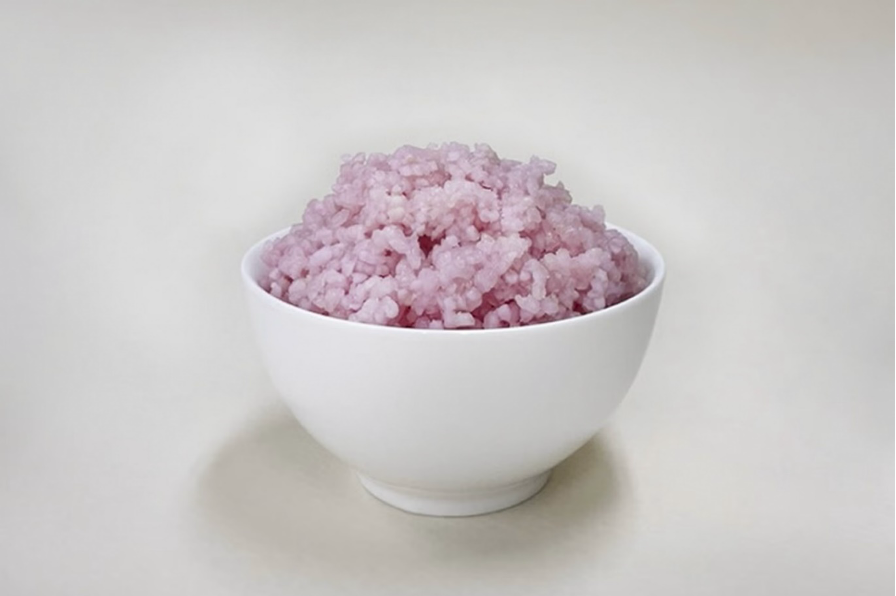
And when there are no more animals, we can always eat the "rice of the week" ! It is "augmented" rice, as we say of reality or soldiers. In South Korea, scientists have created a pink rice capable of replacing meat, Libération reveals: "The hybrid food, grown in a lab, contains cow muscle and fat cells. A less expensive, less polluting, and more nutritious product than ordinary rice." And which does not require livestock farming… This 2.0 meat would be yet another substitute for animal proteins, whose livestock production is one of the world's largest emitters of greenhouse gases. Enjoy your meal!
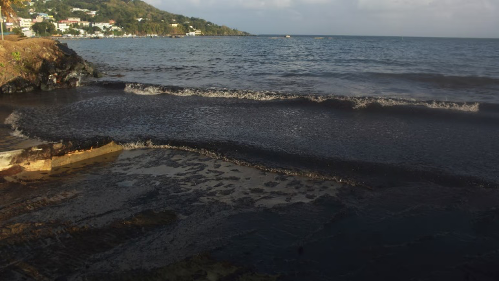
The oil spill of the week severely bereaved the pretty beaches of Trinidad and Tobago, in the Caribbean, after the sinking of an unidentified (!) ship on Wednesday. It is still "not under control," warned Sunday, February 11, the head of government of this archipelago, Keith Rowley, quoted by FranceTVinfo officially declaring a state of emergency. Divers were unable to plug the leak on the ship, which is about 100 meters long, and the Tobago Disaster Management Agency reported no signs of life on the mysterious Gulfstream vessel responsible for the oil spill. There was the before, there is the after:
Before:

After:
The dependence on Russian gas of the week is that of Austria, with this record figure for the last known months: 98%! When Russia attacked Ukraine on February 24, 2022, Austria imported 80% of its natural gas from the state company Gazprom, a figure now at 98%. Austrian Energy Minister Leonore Gewessler is calling for swift action to reverse the trend, quotes Euractiv : "The diversification of our gas imports is progressing much too slowly. This has resulted in a new record of 98% Russian natural gas imported in December". This 98% figure represents a considerable increase from the 17% reached in October 2022, when Russia itself restricted gas flows to Europe. But the trend quickly reversed, and the share of Russian gas was already back to 43% in August last year.
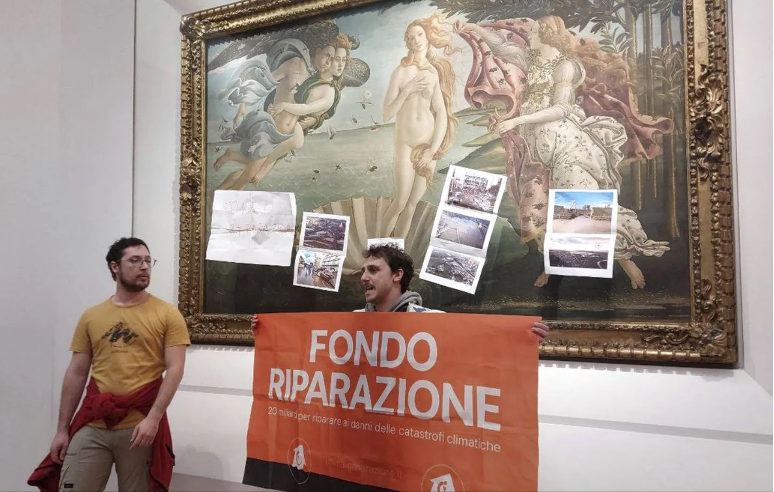
The so-called "radical" action of the week comes from Florence, where Botticelli's masterpiece, "The Birth of Venus," was targeted by climate defenders, La Croixrecounts. The organization Dernière Génération began non-violent actions in Italy in 2022 at the time of the legislative elections, calling on politicians from all sides to make climate one of their priorities. But is this the radicalism the transition needs? A little reminder: radical comes from root; radicalism would mean tackling a problem at its root. At (RE)SET, we will return to this subject soon…
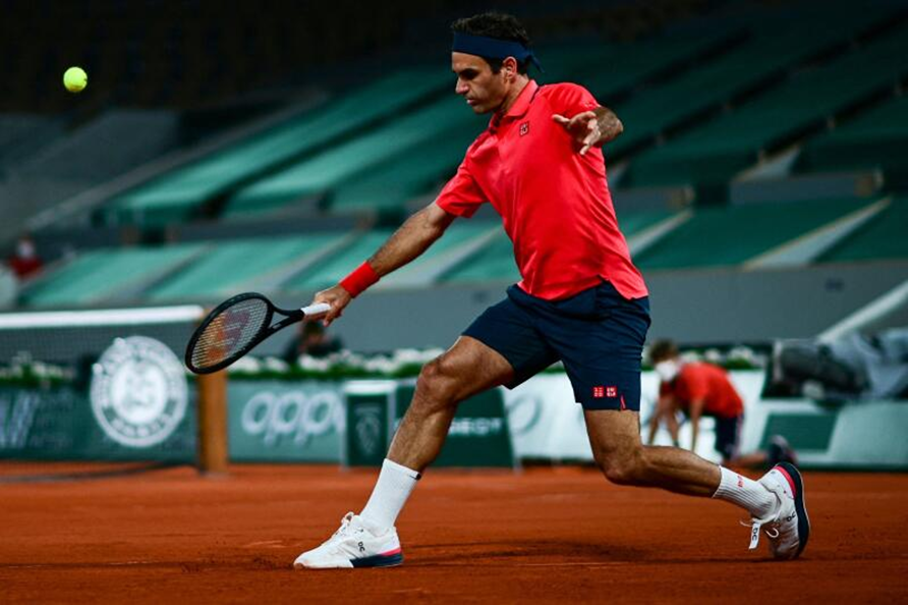
The sliced losing return of the week is that of the great Roger, Federer of course, with his "On" sneaker brand, of which the former world number one in tennis is one of the main shareholders and which plays on an image of Swiss probity and quality. Small problem: these expensive sports shoes are actually made in Vietnam. Awkward when you claim to stand for great "sustainable" and "ethical" principles, accessible with one click on the brand's website: " We innovate for people and the planet. In the future we dream of, all our products will be made without fossil energy and designed to be circular – while ensuring fairness and celebrating diversity." Despite the small Swiss flag that sometimes appears on the back of its sneakers, Le Mondereports, it has them manufactured in Vietnam and markets them with such a staggering margin that the Swiss consumer magazine Ktipp has just devoted an investigation to its "scandalous" prices. As we were saying, "CS3D" and vigilance can save a lot of trouble upstream!
The new acronym of the week has no direct connection to our topics, but we still give it to you for "fun": you know granola, but what about GRANOLAS? No, not the breakfast cereal, but, Le Mondetells us, the acronym born in the fertile minds of Goldman Sachs analysts for tracking the best-performing European stocks. There we find GSK, Roche, ASML, Nestlé, Novartis, Novo Nordisk, L'Oréal, LVMH, AstraZeneca, SAP, and Sanofi. GRANOLAS, therefore. An acronym less impressive, however, than the name for American stock market stars: the "Magnificent Seven" – Meta, Tesla, Alphabet, Amazon, Nvidia, Apple, and Microsoft.

The riddle from last week was a list: what were the ten biggest plastic polluters of 2023? The clue was that they were probably the ones you're thinking of. Proof in the global ranking established by the NGO Break Free From Plastic in its latest annual report.
1. The Coca-Cola Company
2. Nestlé
3. Unilever
4. PepsiCo
5. Mondelēz International
6. Mars Inc.
7. Procter & Gamble
8. Danone
9. Altria /Philip Morris
10. British American Tobacco.
The week's riddle is a number: $2.2 trillion worldwide in 2023 alone. But which sector could have prompted such spending…? An explosive number – that's the clue!