What if we started this Breaking (RE)NEWS with a song? Remember: " Brussels, my beauty I'll join you soon, as soon as Paris betrays me (…)". Certainly, Dick Annegarn in 1974 – so a discovery for most of you – was not talking about the economic and environmental transition. But he could have, because this week again, much seems to be happening more in Brussels than in Paris. The war of regulations is in full swing, and the temptation, if not of an island, at least of a "pause," as Emmanuel Macron and others have said, seems to be asserting itself.
Let's take a look, first with the feared indefinite postponement of the "REACH" regulation (Registration, Evaluation, and Authorization of Chemicals), the plan to ban dangerous chemicals. Presented as a pillar of the "zero pollution" strategy of the Green Deal, this reform of the REACH regulation was intended, in particular, to massively ban or restrict the use of a multitude of dangerous chemicals by 2030, present in many common consumer products: toys, food packaging and containers, clothing, furniture, electronic devices, cosmetics, paints, cleaning products,… Postponed once a year ago, it has been postponed again, not even appearing in the work of the European Commission until… the end of its term, in June 2024. Phthalates, bisphenols, parabens, glycol ethers, brominated flame retardants, perfluorinated compounds, or per- and polyfluoroalkyl substances (PFAS): the Commission's services themselves assessed the magnitude of the health and economic burden of the European population's chronic exposure to these dangerous products. In total, Le Monde recalls, " depending on the severity of the proposed withdrawal measures, the study in question estimated that the economic translation of the expected benefits for the European population was between 11 and 31 billion euros per year at EU level. The economic weight of such measures for the industrial sectors concerned was about ten times lower, between 0.9 and 2.7 billion euros per year." By a quirk of timing, a study by INSERM was also published yesterday, demonstrating the reality of "the link between the risk of pediatric leukemia and living near vineyards," pointing to pesticides and other chemicals used…
At (RE)SET, we are not ultra-regulatory… but we have a conviction: we must tackle this subject, because without green chemistry, our pollution control and remediation costs will suffocate our economies.
Lobbying, you've got us; the other draft regulation of the week – and even more so of the coming weeks – concerns packaging and packaging waste. For the year since the European Commission made it public, knives have been sharpened on both sides to strengthen or empty, as the case may be, the content of the project: strengthening the "3 Rs" (Reduce, Reuse, Recycle) in a sector responsible for 40% of plastic waste and 50% of household waste volume. To use the examples of Pascal Canfin, somewhat annoyed President of the European Parliament's Environment Committee, McDo, KFC, or Pizza Hut are among those fighting what is called a "rear-guard" battle. France, due to the AGEC law, piloted by Brune Poirson in 2020, rather took the lead. On reuse, the future regulation goes beyond the AGEC law. On other aspects, it's the opposite. The votes in the European Parliament's environment committee next week, and then in plenary in November, will be crucial. It is possible that the results will not live up to expectations. Time to recall, perhaps, that last year, 44.7 tonnes of microplastic fell on Parisians' heads, according to the latest figures from plasticforecast.com.
And above all, the merit of this regulation could have been to harmonize regulatory constraints and therefore solutions, an essential convergence for brands that must comply…
Fortunately, Brussels also produces " things that work ", as Alain Bashung sang. Precisely, regarding microplastics, since October 17, the sale of loose glitter has been progressively banned throughout the European Union. This follows the adoption on September 25 of new rules by the European Commission aimed at prohibiting the use of microplastics in consumer products. The goal: to reduce plastic pollution by preventing the release into the environment of "all synthetic polymer particles less than 5 millimeters that are organic, insoluble, and resistant to degradation," the institution specifies. This therefore concerns glitter, mainly composed of plastic and aluminum, but also the loose microbeads used in the composition of cosmetic products such as scrubs. Many products will be gradually affected by the microplastic ban, according to varying deadlines, to allow manufacturers time to adapt their formulations. Five years are thus granted for detergents, eight years for infill granules used on artificial sports surfaces, and twelve years for make-up and cosmetic products. With this new regulation, the European Commission thus hopes to prevent "the release of half a million tonnes of microplastics into the environment." It complements its "zero pollution" action plan, which aims to reduce the pollution caused by microplastics by 30% by 2030. In parallel, the Commission announced on Monday, October 16, proposals this time targeting plastic pellets.
To start our weekly sections, let's stay in Europe with the common position of the week concerns Europe and is disappointing, according to Le Monde : for COP 28, the European Union's common position adopted on Monday does not provide for a date for the phase-out of fossil fuels, the Twenty-Seven having simply reaffirmed the target of at least a 55% reduction in their greenhouse gas emissions, enshrined in their Climate Law. For once, Libération has a more optimistic view, noting that the European Union is taking a step toward the end of oil because the compromise text and negotiating mandate for the future COP nonetheless provide for their "near-elimination".
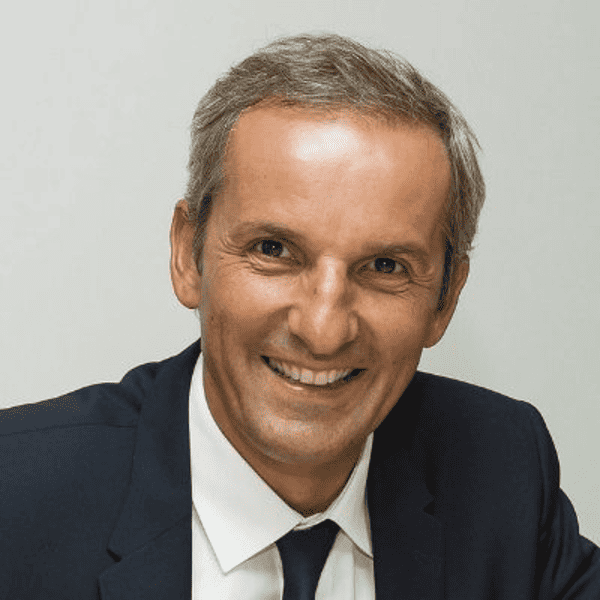
The portrait of the week is that of Pascal Demurger , "the activist insurer" who is shaking up the business world, to use Le Monde's headline. At the head of MAIF for fourteen years, the ENA graduate, who took over as co-president of the social economy movement "Impact France" in March, wants to convey to the government the idea of making corporate tax cuts conditional on their social and environmental responsibility. Drawing the ire of MEDEF.
The alternative energy of the week that is struggling a bit in France is wind power. Le Figaro, which generally pays little attention to the transition, nonetheless dwelled on the Court of Auditors' report published last week, which analyzed the implementation and results of public policies dedicated to the development of onshore and offshore wind electricity production since 2017. The report highlights France's high ambitions in this area, ambitions that could cost it quite a lot. Indeed, it is the only European country not to have met the targets set by the 2018 European directive on renewable energy. They were 80% met, with wind power production capacity representing 8.3% of national electricity production in 2022. Consequently, Paris must buy "statistical rights for significant amounts and also faces financial penalties," notes the Court. These "statistical rights" correspond to the gap between the set targets and those achieved. They would be between 500 and 900 million euros for the year 2020 alone. Penalties could be added in the event of litigation with Europe. An irony, given that the deployment of wind power in France has long been financed by the State. It thus paid 4.3 billion to renewable energy producers (all sectors combined) in 2017 and 5.8 billion in 2020. Since 2021 and the rise in energy prices, the trend has reversed. These sectors are becoming contributors, paying back 9.1 billion to the State for 2022, and 13.4 billion are expected in 2023.
The other (!) alternative energy of the week is solar, often criticized for its non-recyclable waste. This is a false problem, Serge Besanger, Professor at ESCE International Business School, INSEEC U Research Center, explains in essence on The Conversationwebsite. With these figures, which are worth more than a long speech:
Accumulated waste worldwide from 2016 to 2050
Household waste (53,87%)
Photovoltaic waste (optimistic scenario) (0.04%)
Photovoltaic waste (pessimistic scenario) (0.12%)
Oily sludge (0,19%)
Electronic waste (1,44%)
Plastic waste (9,46%)
Coal ash (34,88%)
Source: Data compiled by H. Mirletz et al.
There you go, that gives a better dimension to the problem: 0.04% of waste in the optimistic scenario, 0.12% in a pessimistic scenario 😉.
The opinion piece of the week was written by Fabrice Bonnifet , President of the College of Sustainable Development Directors (C3D), which brings together some 300 members in charge of sustainable development or corporate social responsibility (CSR) within French companies. He notably writes that today, " we are perfectly aware of the limits of the system on which the value creation of our own companies is anchored. If we are sincerely committed to their interest, precisely, we can only tell the truth: no, profits, like resources, are not infinite, and yes, our production and marketing methods and our relationships with our stakeholders are not sustainable and must change. " At (RE)SET, we applaud, only regretting that Sustainable Development or CSR Directors are not always sufficiently listened to in their companies 😉.
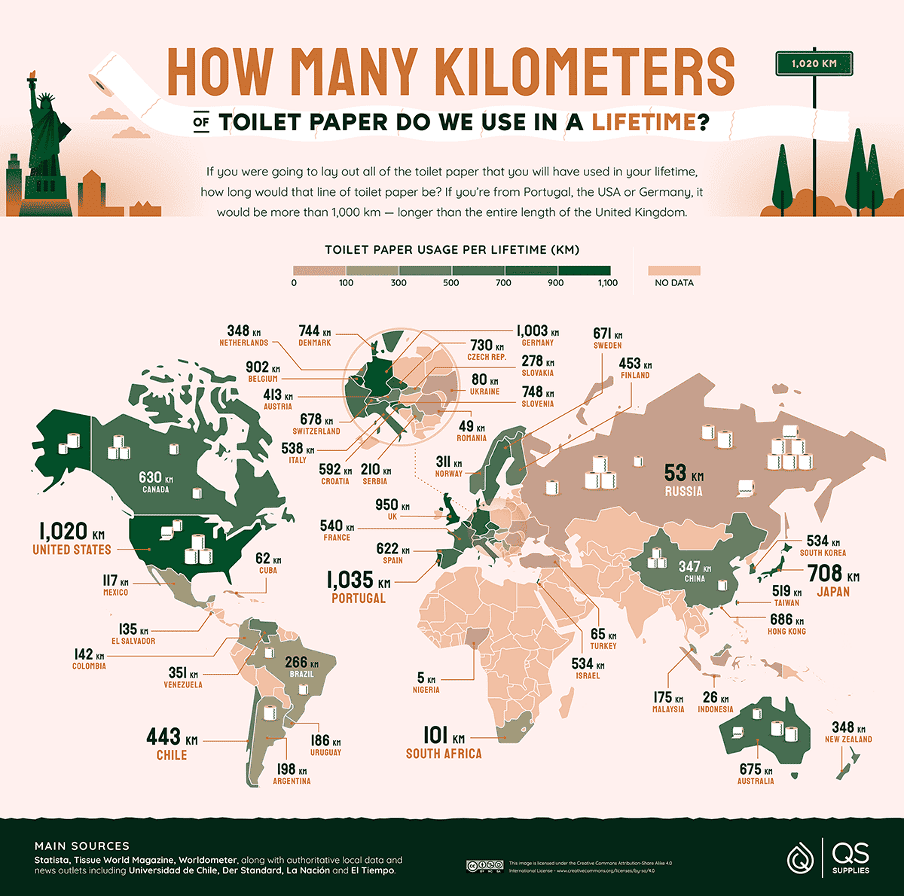
The illustration of the week will speak to each of us: in your opinion, how many kilometers of toilet paper will you use in your entire life? If you match the average French person, it will be on the order of 540 kilometers, 10 times more than if you were Russian, 100 times more than a Nigerian, but half as much as if you were Portuguese or American 😊. These results, from a very serious study by QS Supplies, are not meant to remind you of the famous Lotus TV commercial and its cheeky baby (which dates from the 80s and therefore may not be famous for you!) but a more prosaic reality: 15% of global deforestation is used for paper production, particularly hygienic (tissues and toilet paper).
The hefty bill of the week could soon affect the reinsurance sector. Indeed, the cost of natural disasters could jump by 60% by 2050. The public insurer CCR has reassessed, based on Intergovernmental Panel on Climate Change scenarios, the impact of the resurgence of climate events on the natural disaster compensation mechanism. Conclusion: a major risk weighs on the Nat(ural) Cat(astrophe) fund. As a reminder, the Cat Nat system, thanks to the State's financial guarantee, ensures the compensation for damage from floods, geotechnical drought (also called clay shrinkage and swelling), earthquakes, coastal flooding, and cyclones.
The video of the week unfortunately probably has little connection to our favorite subject, despite claims to the contrary. If you want to know where the pharaonic and megalomaniacal project of the Saudi sovereign, otherwise known as "NEOM," stands, it's here. Giant open-air swimming pools in the middle of the desert, ski slopes in the Saudi mountains, and other potential "green hells" are progressing well, at the cost of tens of billions of dollars. Cool.
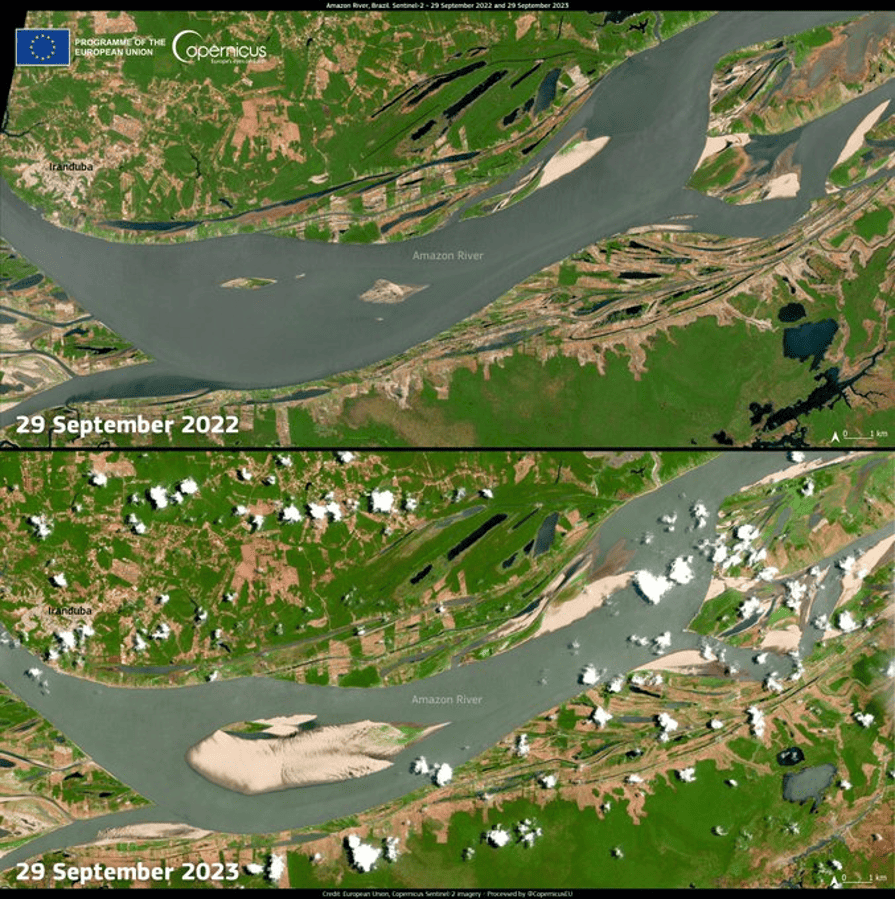
The image of the week comes from the Amazon: Copernicus, which sees everything, shows us here the level of drying, from one year to the next, of the most powerful river in the world, due to a severe drought and arson in the region to transform rainforests into fields…
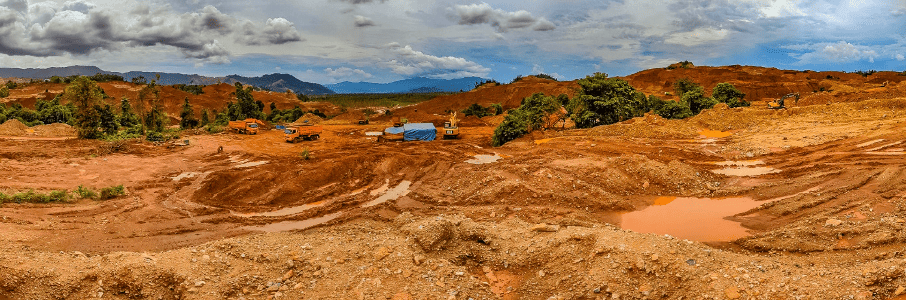
The resource in peril of the week is nickel, well known to New Caledonians. According to a study by the NGO Mighty Earth, car manufacturers are fighting over this mineral essential for future electric cars. In Indonesia, this is taking on disastrous proportions for the environment, as these deposits are located in biodiverse-rich forests. The explosion in demand for nickel has already led to the deforestation of an area equivalent to New York City in the Amazon rainforest. This, incidentally, contributes to worsening the financial situation of New Caledonian mines (which supply more than 80% of France's needs), as Indonesia "benefits" from much cheaper, subsidized coal-based energy and labor costs five times lower than in Nouméa.
The other (!) resource in peril sometimes believed to be abundant, is freshwater. In its latest report, published this week, WWF indicates that the degradation of our freshwater ecosystems is worsening the water crisis, threatening human and planetary health – and an estimated annual economic value of $58 trillion. The report, subtly titled " The high cost of cheap water " and subtitled " The $58 Trillion Water Crisis " calls for urgent action to protect and restore our rivers, lakes, wetlands, and underground aquifers.
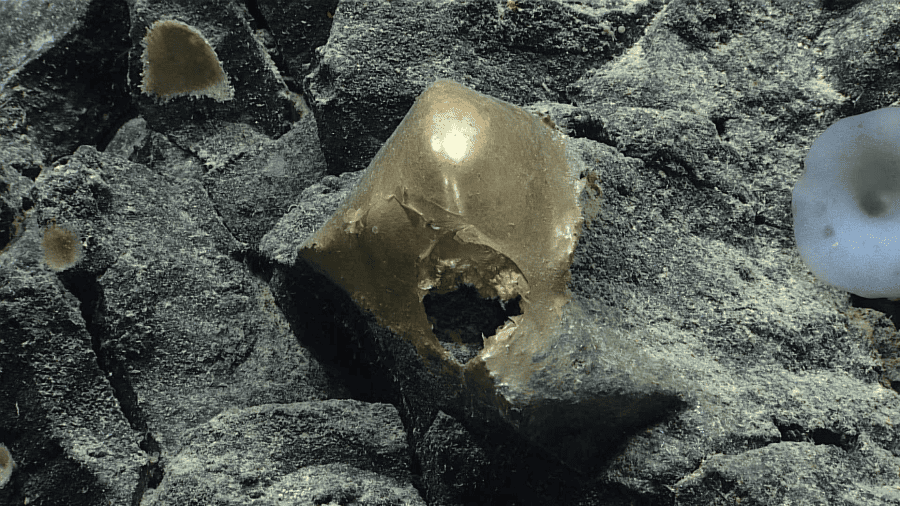
The golden egg of the week comes from saltwater, more precisely from the depths of the ocean off the coast of Alaska, where it was fished by scientists. There is a high chance that the object is linked to a new species, as it is estimated that more than a third of life in the ocean is still unknown. In any case, it provided a good pretext for Virginijus Sinkevičius, European Commissioner for Environment, Oceans, and Fisheries, to recall in an opinion piece in Le Monde that "the high seas treaty [signed on September 20] is an example of the importance of multilateralism." Also with this nice evocation: " The deep seabed, more mysterious than the surface of the Moon, never ceases to amaze us. And if the high seas offered much more than golden eggs: solutions for our common future? »
The incongruity of the week comes from New York; it is insignificant, not to say grotesque, but marginally good for biodiversity, which gives us a pretext to share it with you: the inhabitants of the Big Apple are rushing en masse to bless the animals ! And all sorts of animals, not just dogs and cats: alligators, turtles, birds, and even, recently, a dromedary and an ostrich. Animal blessing is " an extension of the attitude of Saint Francis of Assisi ", explains the Protestant church organizing these blessings. It is rumored that it is rather a "marketing" approach by the church to limit the disaffection of its flock, but well, that's none of our business, and it's always better than euthanizing horses…

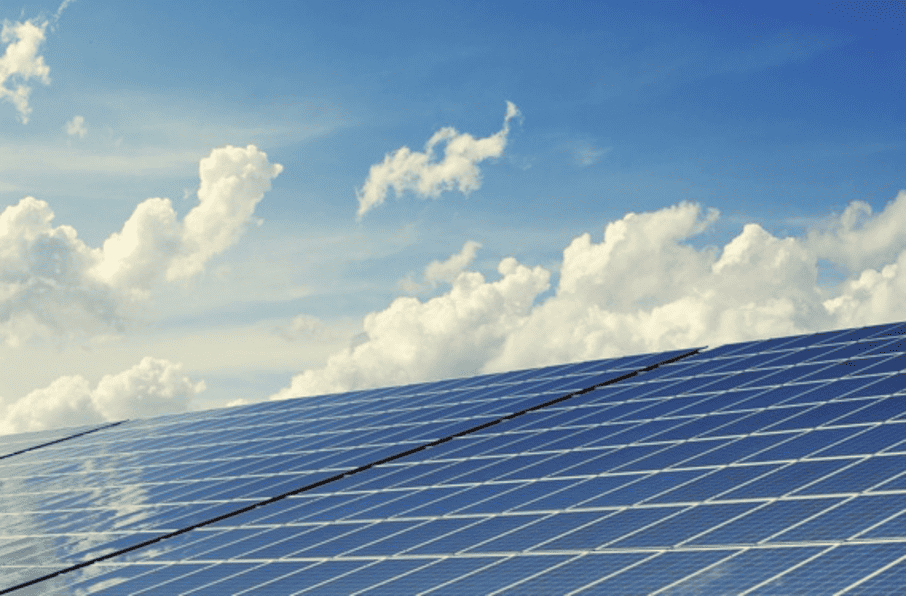
Last week's riddle was about a number: 5 million square meters. But of what? Two clues were given, as this number was doubly problematic: on the "made in China" or not of… something; on net zero land take. Too easy! It was, of course, about solar panels: five million square meters of solar panels will be installed on logistics warehouses within five years in France. This was calculated by the association of logistics and industrial property actors after having surveyed the various projects within the sector. Photovoltaic installations, mainly on roofs, will produce the equivalent of the annual electricity consumption of 600,000 inhabitants. In detail, these new plants should represent after five years a peak power of 1.2 gigawatts, for a production of more than 1300 GWh/year, according to project leaders. As a reminder, the vast majority of solar panels installed in France are still produced in China, a country largely dependent on coal. And the photovoltaic canopies placed over parking lots are raising debates around land use change. While France is aiming for a "net zero land take" objective, the installation of these structures could hinder this goal.
The riddle of the week is a quote. Who said: " It is a political question whether we want – and to what level – to develop immediate satisfactions, the standard of living, that is, the expansion of consumption, and consequently sacrifice the future (at least in part), or, on the contrary, work in favor of future benefits, those that ultimately result from a present increase in investments, and sacrifice (at least in part) the present. »
A clue: neither the author of these lines nor Jancovici were born yet! The most learned can specify the date of this speech.