
Let's start this Breaking (RE)NEWS with the 28th UN Climate Change Conference of the Parties (COP 28), which, as no one will have missed given the massive media coverage it generates, will take place from November 30 to December 12, 2023, in Dubai, United Arab Emirates. It hasn't started yet, but the press is already discussing its conclusions, which are shaping up to be somewhat disappointing. The magic of working documents… One of the elements that will be scrutinized to judge any progress is paradoxically a return to the past, with the first global stocktake of climate action since the Paris Agreement, which will need to be approved by member states to the United Nations Framework Convention on Climate Change, in accordance with said Agreement. A large majority should be found to state that… the world is not on the right track. "The window is rapidly narrowing to (…) limit warming to 1.5°C," write the authors of the pre-report. The idea is of course to go beyond this observation to identify ways and means to correct the trajectory. "The success of the global stocktake will ultimately determine the success of COP28. It is the decisive moment of this year, of this COP, and as it is one of only two stocktakes in this decisive decade for climate action, it will be decisive for whether or not we achieve our 2030 targets," insists Simon Stiell, UN Executive Secretary for Climate Change. And that's where problems begin, because for now, there is no consensus on the answers to be provided. According to a synthesis report listing the positions of the 197 parties, it emerges that "many parties" are in favor of collective targets in terms of renewable energy or the development of electric vehicles, and emphasize that the phase-out of fossil fuels is "vital for just energy transitions towards carbon neutrality." But not all. In particular, the major fossil fuel exporters, including the COP host, stubbornly refuse to name "the evil." In reality, while states whose climate plans were not aligned with the Paris Agreement had committed to presenting new ones this year, only the United Arab Emirates and Brazil have done so…
In the meantime, a small reminder is in order. To limit global warming to 1.5°C above pre-industrial levels, humanity has only 500 gigatonnes of CO2e left to emit, according to the latest IPCC (Intergovernmental Panel on Climate Change) report. That is our "carbon budget." And the fascinating investigation by the daily Le Monde accompanied by two NGOs on "carbon bombs" tells us, among other things, that in total, if all the 422 bombs identified today are fully exploited, 1,182 gigatonnes of CO2e will be released into the atmosphere. That represents more than 675 billion round-trip Paris-New York flights. And more than twice the limit indicated by the IPCC if we truly wish to achieve the goals of the Paris Agreement…
An opportunity for a form of "cock-a-doodle-doo," since TotalEnergies is the second largest global group most involved in these "carbon bombs." It is linked to 23 extraction sites, the largest of which is North Field in Qatar, whose emission potential alone is about 12 gigatonnes of CO2e.
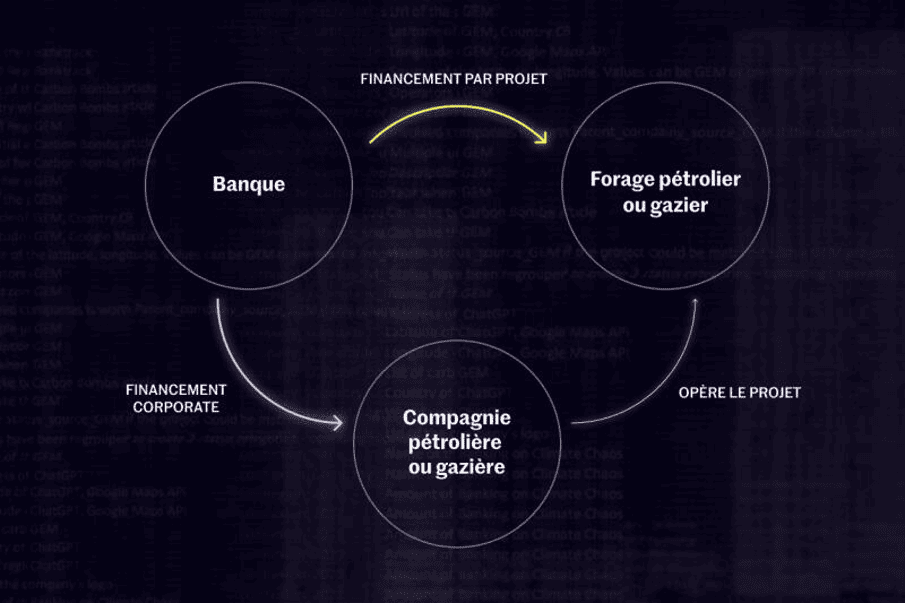
But by the way, how do these companies find financing, while all banks are committing, one after another, to renouncing the financing of fossil fuel extraction, with self-congratulatory CSR reports in the bargain? Easy: only about 3% of their loans are affected by these promises… Because if these banks effectively renounce "direct project financing," they continue or even increase their "corporate financing," which represents more than 95% of their financial commitments to these companies. Here too, a little French bragging: in the top 10 of these financiers, we find several leading global banks, including BNP Paribas (fifth globally) and Crédit Agricole. Thus, in 2022, BNP Paribas, Crédit Agricole, Société Générale, and BPCE/Natixis contributed to financing 11 companies operating vast oil, gas, and coal deposits for 17 billion euros.
To stay in the "pre-COP 28" mode and start our weekly sections, let's continue with the call of the week, signed by international health organizations, representing 46.3 million healthcare professionals worldwide. In a letter addressed Wednesday to the president of COP 28, they demand a just energy transition to "save lives." The Paris Agreement recognized the "right to health" as a fundamental part of climate action. As a reminder, air pollution alone is estimated to cause more than 7 million premature deaths worldwide each year. These public health professionals are not the only ones wanting to weigh in on the debates. On Saturday, October 28, during a World Organization of Family Doctors conference, 39 organizations (the mouthpiece of more than three million doctors worldwide) solemnly asked governments "to act now in the face of the climate emergency to preserve the health of global populations". Also recommending "putting an end" as a priority to the "proliferation" of fossil fuels. And three days earlier, Libération recalls, more than 200 medical journals simultaneously published the same opinion piece to call on the World Health Organization (WHO) to make the climate crisis a "public health emergency of international concern" (PHEIC). "The global environmental emergency is today so serious that it constitutes a global health emergency", can be read in the text, written by academics and published notably in the British Medical Journal
Still in our "pre-COP 28" series, the figure of the week is proposed by UNDP: the sums needed to adapt to global warming are "ten to eighteen times higher" than current public financial flows. The United Nations Environment Programme estimates that the costs of climate change and the financing needs to prepare developing countries' societies are between 203 and 365 billion euros per year over this decade. We are far from that, very far, notes Le Monde, while Libération specifies: not only are efforts insufficient, but they are slowing down!
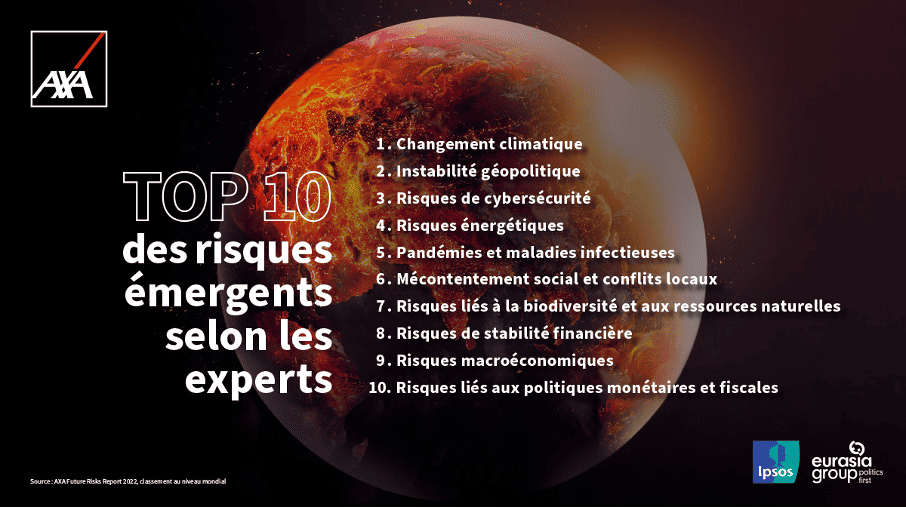
Finally, to close this rich "pre-COP 28" sequence, the risks of the week, or rather of the year, are presented by the Axa Future Risks Report, 2023 edition. The world's leading insurer surveyed more than 3,500 risk experts in 50 countries and 20,000 people from 15 countries. Since 2015, climate change has been at the top of the ranking – except in 2020, when the pandemic logically stole the spotlight. In 2023, it also becomes, for the first time, the main threat from the general public's point of view in all geographical areas studied. Other major concerns: cybersecurity, closely followed by geopolitical instability and artificial intelligence with the emergence of generative AI and ChatGPT. Distrust is such that 64% of experts and 70% of the general public consider it necessary to interrupt research on AI and other disruptive technologies. The report also makes a special case for greenwashing: while companies have feared it for years, it is now "greenblushing" that could take over: "Companies are avoiding communicating about their ESG activities in the hope of avoiding the backlash observed last year in the United States, where some states decided to divest from companies highlighting their ESG leadership," reads the report. "Caught in a pincer between two opposing camps, companies sometimes struggle to decide which, from greenwashing to greenblushing, serves their interests best".
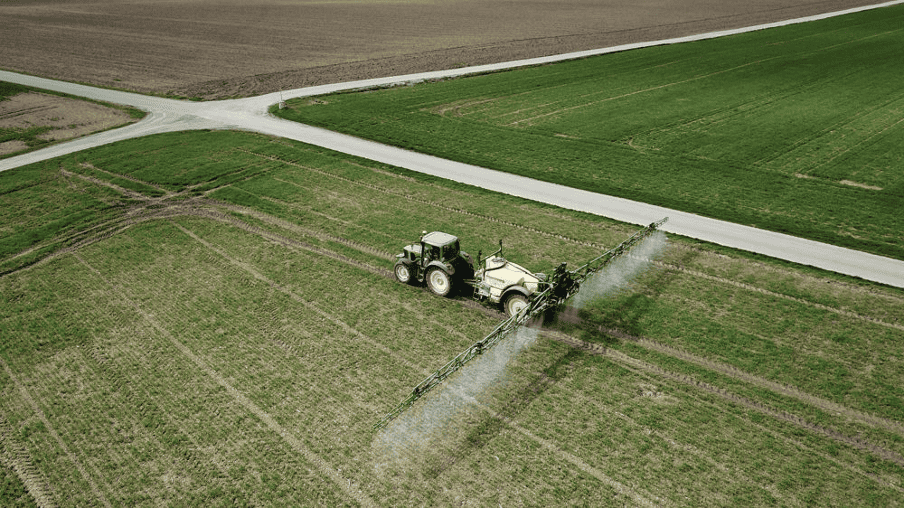
The "plan of the week" concerns pesticides, and we would like to believe that this time it will indeed achieve its objectives. The Ecophyto 2030 plan has been presented by the government and reaffirms the target of a 50% reduction in pesticide use by the end of the decade. The doubt arises from the fact that the previous Ecophyto plans had the same target, and pesticide use continues, year after year, to increase…
On that note, the legal action of the week has been launched by about thirty municipalities in the Rhône region, which have filed a collective complaint for "endangering the lives of others" and "ecocide," due to "alarming concentrations" of PFAS (the famous "forever chemicals") in the Chemical Valley. The industrial groups Arkema and Daikin are implicated .
The weighty report of the week is precisely presented to us by the FAO (Food and Agriculture Organization). Health impacts, malnutrition, poverty, loss of productivity, deforestation, water consumption, greenhouse gas emissions… Food entails considerable hidden costs, which the FAO quantifies, in a report published last Monday, at at least $10 trillion per year (€9.3 trillion), or 10% of global GDP! An estimate it considers itself minimal, as the agency was unable to quantify the costs of pesticide use or antibiotic resistance…
And since we're talking about food, the legumes of the week are kidney beans, flageolet beans, lentils, split peas, and chickpeas. These legumes are endowed with almost all virtues! These dried vegetables, whose seeds are contained in pods, are not always popular. And yet, "the development of their cultivation and consumption would have benefits for our health, that of animals, that of ecosystems, and that of planet Earth." To learn everything about legumes and their benefits, read the dossier dedicated to them by The Conversation.

The opinion piece of the week is offered to us by Maud Hardy, General Director of Refashion, the eco-organization financed by the clothing sector and responsible for the end-of-life of textile products, and it concerns the circular economy in the textile sector, a subject dear to us. She notably calls for "remedying the export of European used clothing to third countries". Regulation, traceability, sufficiency, ecodesign, and recycling – the means already exist to achieve this.

To continue in the circular vein, the recycling of the week concerns plastics and a report by Libération in Clermont-Ferrand, where the company Carbios " digests plastic ", as Libération nicely puts it. The company, specialized in biological chemistry, wants to depolymerize the equivalent of about 3.2 million plastic bottles or 4 million food trays per year in its demonstration plant. And it is now tackling the plastic contained in textiles. Patagonia, On, Puma, PVH, and Salomon are already collaborating with Carbios in a textile consortium.
The philosophical doctrine piece of the week does concern our subjects; you have not been transported to another page by a distracted web browser 😉. It is about "Finding something new (to) get out of the climate impasse," written by philosopher Pierre Charbonnier, also a CNRS research fellow at Sciences-Po. With good news: according to him, " one of the most surprising things about the climate and ecological issue is that there is no longer any difficulty in imagining a decarbonized world, a world in which socio-economic organization reduces its pressure on the environment while ensuring a decent life for the greatest number ". In other words, " there is no climate impasse. But the idea that it exists produces effects that prevent any decisive policy in favor of the transition. " A refreshing demonstration, the reading of which is strongly recommended.
The film to see this week, with or without your children, is Miyazaki's new ecological fable, "The Boy and the Heron", especially if you are interested in biodiversity – but we won't "spoil" it, as they say in French. Go with your eyes… open 😊.

The photograph of the week was taken by Mustafah Abdulaziz. For ten years, the American photographer has been documenting the upheavals caused by global warming. Between declining glaciers and industrial settings, his series "Artic," dedicated to the North Pole, makes tangible the spectacle of a world on the wrong track. Le Monde published a portfolio, giving it the opportunity for a very dark humor play on words, "Northern Horror". Here, it is the iron mine overlooking the city of Kiruna in the Swedish Arctic. In January 2023, a significant deposit of rare earths (those essential for the energy transition…) was discovered there. The entire municipality is being moved.

The riddle of the week last was a simple date on the calendar: October 21, which is World… what Day? The clue: Darwin is not a stranger to it. Indeed, October 21 is earthworm day! An opportunity to recall why they must be preserved: nearly 150 years ago, Charles Darwin praised them, shortly before his death (no connection 😊). Threatened particularly by glyphosate, these animals are of paramount importance for crops and soil fertility.

The week's riddle is about a number: 38 tons in four hours. A clue: to find the answer, you will need to run for a long time!