Hello,
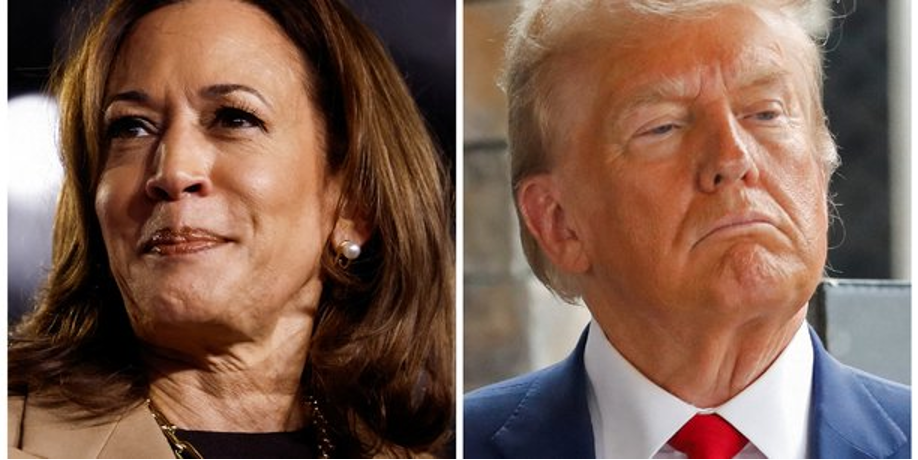
Let's start, for a change, with a fake riddle: my first is the leading fossil fuel producing country, my second is the second largest greenhouse gas emitter in the world, my third is the planet's largest historical polluter, and my whole voted yesterday to elect a President of the Republic who said next to nothing about the environmental transition during the electoral campaign. Which country is it? Yes, of course, it was too easy, we are talking about the United States.
We know the winner. What can be said, except that from the perspective that interests us, that of the environmental and economic transition, he was worse than the other? If both carefully avoided addressing ecological issues, which have become in the American mind an "ideological marker" (i.e., a bad marker), Donald nonetheless has a head start, or a lag, depending on your view, over Kamala. He is the one who for decades has been repeating that global warming is "the scam of the century," the "hoax (…) invented by the Chinese to prevent American industry from being competitive," which will ultimately allow more people to have a nice house "with their feet in the water," as Le Mondepoints out. Although he has eased off since his current best friend is named Elon Musk, Trump continues to underestimate (understatement) the urgency of the transition. As a reminder, during his term (2017-2021), he repealed more than 100 environmental regulations from his predecessor Barack Obama's presidency, and he took his country out of the Paris climate agreement. Today, he wants to go further by doing the same (Biden had since reinstated things) and by adding the challenge to the Inflation Reduction Act (IRA). This vast support program for the energy transition constitutes the largest climate law ever passed in US history. The "President-elect" wants to "put an end" to this "new green scam," as he describes it, and more specifically to subsidies for renewable energy production. Instead, Donald Trump's leitmotif, supported by oil companies, is "Drill, baby, drill!" and he intends to massively restart gas and oil production – "liquid gold under our feet" – while continuing to burn coal, the most polluting of fossil fuels.
For her part, Harris had convinced herself that discussing the transition and its constraints risked alienating, like Al Gore twenty-four years earlier, the centrist votes she needed. Pennsylvania is a good symbol of this entanglement of ecological issues and opportunistic positioning: as the second-largest producer of shale gas, this state is also a "swing state," one of those that make and break US presidents. As a reminder, gas extraction is done using platforms atop artificial hills. "Several wells descend into the impermeable rock to split it by injecting a phenomenal amount of water, mixed with chemicals, at very high pressure," explains Ouest-France. The gas is thus released through hydraulic fracturing. The ecological impact is sufficiently terrible that this type of production is banned in France and most European countries. Kamala Harris had always opposed it. But that was "before." Before she became a candidate. Since then, she was "for" this type of fossil fuel production. Especially in her speeches in Pennsylvania. Clearly, her flip-flopping on the subject was not enough, as she lost this "swing state"...
Hence these headlines seen in the French press these days: on one hand, this election was "a crucial issue for the climate" (Le Monde) and will therefore be "fraught with consequences" (Le Figaro); on the other hand, the environment was "the great absentee of the campaign" (Francetv-Info), making it "the missed appointment" (Les Echos) for Trump and Harris. A "taboo subject," in short, to use the words of La Tribune.
Having failed to really speak about these issues, beyond controversial topics and generalities, we know little about what the President-elect will actually do once in power. We only know that it will not be in the interest of the planet, but rather in that of the United States. But we also know that the transition being what it is, inevitable, its necessities will impose themselves. Perhaps not at the necessary pace.
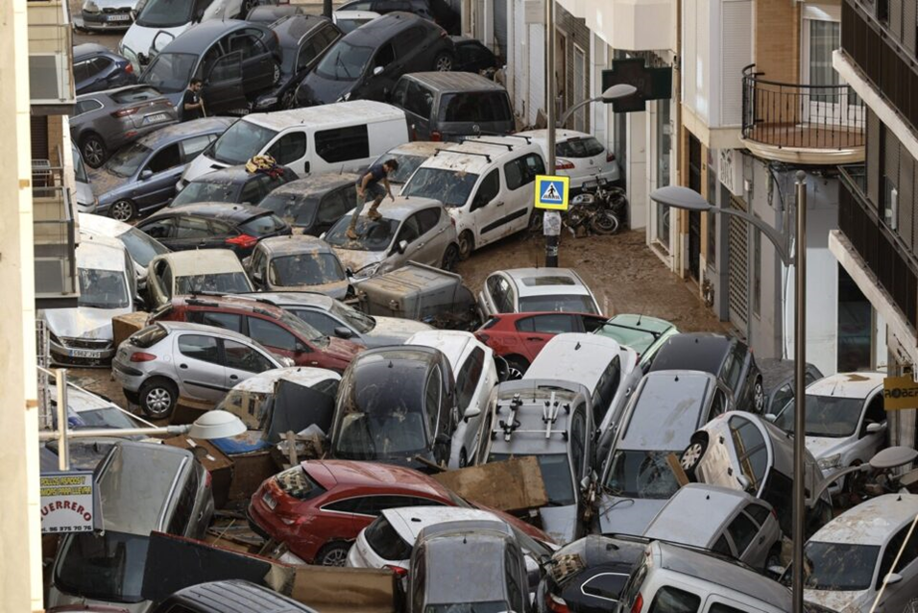
Let us hope that our Spanish friends have understood the urgency of the situation in recent days, which allows us to start our favorite segment: the weather of the week. More than 217 dead in the dramatic floods in the Valencia region, across the Pyrenees! A sad historical record in Spain and across Europe – the previous record was a flood in Germany that killed 190 people thirty years ago. The cause: global warming of course, which we know increases the frequency of all these extreme events. But also the loss of soil permeability, due to "excessive concretization," as natural disaster expert Antonio Aretxabala explains in an interview with Le Monde. It remains that "the warming of the Mediterranean is dynamite," he asserts. "The more temperatures rise, the more the atmosphere becomes loaded with water vapor. And the more the energy difference between the North Pole and the equator decreases, the more cold air currents tend to separate, wander, undulate, and arrive further south." He concludes: "These extreme weather phenomena will continue to increase in frequency and intensity because we are living the real consequences of climate change." As a reminder, each additional degree increases humidity: heatwaves and floods are two sides of the same phenomenon. And when the amount of water vapor in the atmosphere increases, it traps more heat, thus contributing to further increasing the planet's temperature. It is a vicious circle: the hotter it gets, the more evaporation there is, increasing air humidity, which in turn increases temperature.
To use the words of the environmental editor of Le Monde, Audrey Garric, "it is surprising to be surprised" by the events in Valencia. Because this kind of event is expected: for three decades, IPCC reports have predicted it. Recent years are full of examples of such cataclysms. Just in September and October, Ardèche was underwater after the most intense two-day "Cévennes episode" ever recorded, northern France was flooded by Storm Kirk, while Storm Boris killed 22 in Central Europe. In the southeastern United States, Hurricanes Helene and Milton caused over 250 deaths. Earlier, Pas-de-Calais spent the winter with its feet in the water in 2023, Germany and Belgium buried nearly 230 inhabitants in Dante-esque floods in 2021.
In France, many political leaders express concern over the floods while simultaneously seeking to relax the goal of net zero land artificialization. In a context of budget shortfalls, the government is again cutting the "green fund," which helps municipalities adapt to warming, as well as funding for vehicle electrification and MaPrimeRénov', which are essential for decarbonization.
"In reality, it is not ecology that is punitive, but the hesitations and constant backtracking of ecological policies," asserts the editorialist. If such a succession of disasters occurs when the planet has "only" warmed by 1.3°C, it is painful to imagine what will happen at +3°C globally by the end of the century and +4°C in France – the trajectory toward which current policies are leading us, according to the latest report from the United Nations Environment Programme –. Adaptation will no longer be entirely possible, and, warns climatologist Christophe Cassou, it will be necessary "to define who we sacrifice."
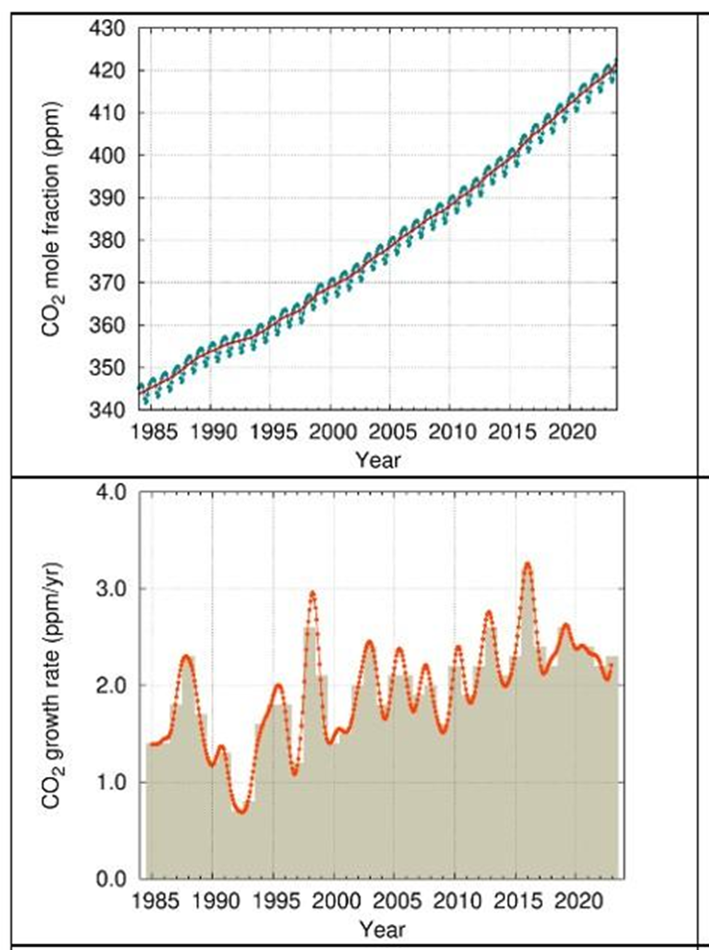
The latest report from the World Meteorological Organization, published two weeks ago, is unequivocal: in 2023, greenhouse gas concentrations made a new leap and reached an unprecedented peak. With an increase of more than 10% in just 20 years, carbon dioxide (CO2) is accumulating in the atmosphere faster than ever in human history.
All indications are that, failing to stay within the limits of the Paris Agreement (+1.5°C), we will have to adapt… This brings us to the " plan of the week ", answering to the gentle name of PNACC3, as in "Third National Climate Change Adaptation Plan." This third version is based on the hypothesis of a 4°C warming in France by 2100, which is "a small revolution," La Croixjudges. Because while France has been equipping itself with plans since 2012, until now, exceeding the Paris Agreement targets had not been considered. "It is positive to see that we are adapting to the trend," notes Nicolas Richard, vice-president of France Nature Environnement. "This plan also seems more complete and readable than the previous ones." In detail, this new plan provides for 51 measures, structured around 5 main axes: protecting populations; ensuring the resilience of territories, infrastructure, and essential services; that of economic activities; protecting biodiversity and cultural heritage; and accelerating research. These policies, for the most part, depend on the local level. Among the main measures is the creation of an "Adaptation Mission," a sort of one-stop shop that local authorities can contact to benefit from support from State services in anticipating climate risks. Starting in 2025, 100 territories will be able to use it. While rather well-received by observers, this PNACC3 suffers from a common flaw in transition matters: its financial support remains unclear. On the financing question, the preliminary version of the plan contains only one measure, inviting "better consideration of climate change adaptation in public financing." "The State must set an example by no longer funding investments that are not or are poorly adapted," Michel Barnier declared. An insufficient commitment probably, given that, as a recent study by the Institute for Climate Economics (I4CE) reminded, investment needs in climate adaptation run into the billions, Novethicreminds on its side. The document is now open for public consultation for two months. There is no doubt that the question of financing, or its absence, will be addressed.
Regarding financing, the strategy of the week is the SPATFE, in other words the Multiannual Strategy for Financing the Ecological Transition. And here again, to use the words of Le Monde, "if the overall trajectory is precise, the means to achieve it remain to be defined." The executive estimates that public and private low-carbon investments will need to increase "by 110 billion euros per year by 2030." In 2023, total investment was 109 billion euros. "The success of the ecological transition relies on a massive reorientation of financial flows and a distribution of the financial effort among all economic actors," can be read in the document. "Having increased markedly over the past five years, decarbonization investments must be further strengthened to meet our climate targets." Long awaited by many sectors such as the automotive industry and renewable energy, this work was requested from the government by parliamentarians during the debate on the public finance programming bill in September 2023. It does not commit the government, but a debate will have to take place in the National Assembly. Devised by the Treasury Department at Bercy, the General Secretariat for Ecological Planning, the Ministry of Ecological Transition, and Matignon, the SPATFE is based on a ramping up of private investment. The public sector "made 20% of its investments in low-carbon assets, compared to 13% for the private sector (households and businesses)," the report highlights, based on 2022 figures. From this observation, the executive establishes two scenarios to chart financing curves until 2027, the year of the next presidential election. If businesses and households reach 20% green investment, the amount could reach an increase of 159 billion per year. "This scenario would be compatible with achieving our decarbonization targets, set at +110 billion euros between 2021 and 2030," can be read in the comments. But if the private sector remains on the current trend, low-carbon investment in France would then only be +107 billion in 2027. While hoping for a sharp increase in private investment, the government is also counting on local authorities, which, according to the SPATFE, should dedicate between 15 and 23 billion to low-carbon investments in 2030, whereas they spent between 7 and 8 billion in 2022. The document also advocates a reduction in "brown" investments that benefit fossil fuels (still 74 billion euros in 2022 for transport and buildings alone). "To achieve climate targets, it is estimated that fossil fuel investments will need to almost halve, with thermal vehicles accounting for more than 80% of the reduction," state the authors, without going into details of which subsidies should be reduced. A political headache. Because this comprehensive work, which draws on multiple serious reports, seems to overlook the current difficulties of the ecological transition. "In line with this multiannual strategy, the 2025 Finance Bill consolidates the ecological course set in 2024," we can read, even though many sectors will suffer from the overall savings the government will present on Thursday, October 10, in its Finance Bill. Ultimately, the publication of this first edition should be welcomed, Le Monde considers, but it is not convincing because, to implement ecological planning without the State having to spend much more, it relies on increased mobilization from local authorities, households, and businesses. Yet it does not specify the public policies that will be put in place to guarantee this increased investment. Nor does it specify how much local authorities will have to invest and how they can do so while being asked at the same time to reduce their debt.
Not stingy with "Strategies," the government presented two others in quick succession: the national low-carbon strategy (SNBC) and the multiannual energy program (PPE), both also long awaited for months. These are important documents, Le Mondereminds us, which will have concrete consequences on the daily lives of the French in terms of transport, housing, or food. The government put out for public consultation on Monday, November 4, until December 15, these two steering tools for the country's climate and energy policy: the 3rd national low-carbon strategy (SNBC) and the 3rd multiannual energy program (PPE). The SNBC covers the 2030 horizon, the PPE covers 2035, and both aim to achieve carbon neutrality by 2050. These roadmaps display high ambitions, which often involve aligning with European objectives, but here as elsewhere, questions remain about France's ability to meet them. The SNBC charts the path toward a reduction in gross greenhouse gas emissions not of 40% but of 50% between 1990 and 2030, a consequence of the new European climate ambition. Carbon emissions must thus be reduced by about 5% per year between 2022 and 2030, compared to an average annual reduction of 2% from 2017 to 2022. Despite the good results of 2023 (−5.8%), the bar is still high: France must go from 373 million tonnes of CO2 equivalent (MtCO2e), excluding imports, in 2023 to 270 MtCO2e in 2030.
As for the PPE, on the energy front, France's objective is to reduce its dependence on coal, oil, and gas. The share of fossil fuels in final energy consumption must drop from 60% in 2022 to 42% in 2030 and to 30% in 2035. To achieve this, the PPE relies on two pillars: reducing energy consumption (with a target of −28.6% between 2012 and 2030), through energy sufficiency and efficiency, and accelerating decarbonized energy production by developing renewable energy and relaunching nuclear power.
These documents will be adopted by decree and not enshrined in law, as the energy code provides, the government having abandoned the energy-climate programming law in April. They should be published at the end of the first quarter of 2025 for the PPE and in the second half for the SNBC, according to the office of Agnès Pannier-Runacher, quoted by Le Monde, and will complement the 3rd national climate change adaptation plan, presented on October 24.
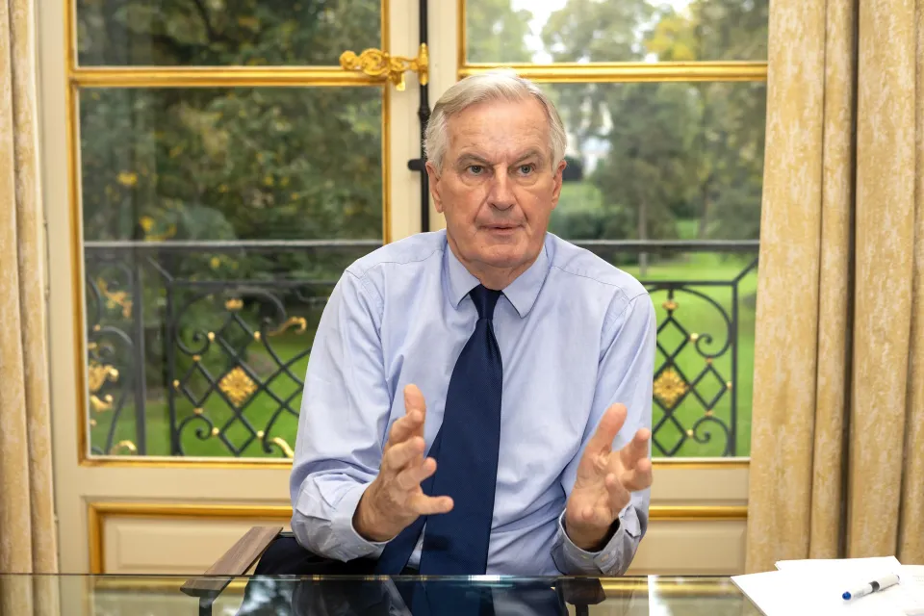
Accumulating texts and strategies is good; applying them is better. Hence our "question of the week", stemming from the Prime Minister's interview in the Journal du Dimanche , which somewhat contradicts these avalanches of ambitious plans. In fact, in the name of "administrative simplification," a concept dear to MEDEF, Michel Barnier suggests nothing less than not always complying with European law. Michel Barnier thus mentions "a mechanism – a form of moratorium, for example – that could postpone the entry into force of very heavy regulations by two or three years," speaking in some cases of "unreasonable standards and constraints." "This applies in particular to European texts such as the CSRD directive [the Corporate Sustainability Reporting Directive, which strengthens companies' obligations regarding the publication of social and environmental data], the scope of which should be re-examined," he continues, even though this law has been applicable since January 1st! This astounds Le Monde , Novethicand also Les EchosContacted by Novethic, Arnaud Gossement, a lawyer specializing in environmental and sustainability law, nevertheless assures that the proposal is just a talking point: "Legally, a moratorium means nothing in this context, because France is committed, and under the control of the court, it is obliged to transpose directives and apply European regulations," he explains. Legally, it would therefore be very complex, even impossible, for the Prime Minister to delay the application of the CSRD or change its implementation conditions without finding himself at odds with European law and France's commitments. Since the Court of Justice of the European Union initiated proceedings a few days ago against 17 European states that had not yet transposed the CSRD, the announcement comes at a bad time. The proposal would even be "dangerous," according to Arnaud Gossement, because it "lets companies believe that they may not have to apply these standards, which is impossible." By creating uncertainty about the legal climate, the proposal could lead economic actors to fall behind in their compliance and thus find themselves in a legal risk situation if they have not implemented adequate measures. Here at (RE)SET, we support companies in their CSRD approach, not only to avoid legal proceedings but above all so they can benefit from it. And we have a secret weapon, a killer tool to do so: pooling! As explained on LinkedIn, (RE)SET is innovating and taking on the challenge of the CSRD collectively ! Because companies in the same sector share constraints and levers, this approach should accelerate the work, making it sharper and more systematic! This is what (RE)SET is currently doing with Pact'Alim, which brings together several national reference associations for SMEs and mid-caps in the agri-food industry.
Last example – for this time! – of a complex and seemingly laudable strategy but with uncertain means, the COP of the week, the 16th dedicated to biodiversity, ended in Cali "between resounding failure on financing and notable advances," to use the headline from Libération. Highly polarized and technical, discussions between the two major blocs of Southern and Northern countries did not allow for a consensus on the implementation of the ambitious nature safeguarding and restoration targets endorsed at the end of 2022 at COP15 in Montreal with the Kunming-Montreal Agreement. The COP president nevertheless said she was "pleased with the result," highlighting some successes, such as the adopted text on mapping marine ecosystems to be protected, the consensus found on the issue of sharing digitized genetic resources – a bone of contention in these COPs – or the recognition of indigenous peoples in UN biodiversity negotiations, "which empowers people on the ground." However, "geopolitical tensions" and the "lack of trust among the parties" prevented delegates from deciding on the crucial issue of mobilizing the necessary funds to make the Montreal roadmap credible, she regretted. Southern countries, particularly the African group, are calling for the creation of a new fund to receive financing for saving nature, judging the current multilateral fund – the GBFF, managed by the Global Environment Facility (GEF) based in Washington – too difficult to access. The issue particularly strains Western countries, led by the European Union and France, followed by Switzerland, Japan, and Canada, who see it as a waste of time and resources. In 2022, in Montreal, countries agreed to unlock 700 billion dollars per year in financing to sustainably manage biodiversity and put an end to the destruction of ecosystems and species, starting with 200 billion dollars per year by 2030. Within this framework, rich countries promised to provide 20 billion dollars per year in development aid to poor countries by 2025. But according to a World Bank report from 2023, countries collectively spend about 1,250 billion dollars per year on fossil fuel exploitation, agriculture, and fishing, thereby "harming people, the planet, and economies." The countries with the richest biodiversity are also the least developed and most indebted. Moreover, these are also the most affected by the consequences of global warming and must therefore borrow more to adapt, which reduces their room for maneuver to invest in nature conservation. A "vicious circle" highlighted by a group of independent experts in October.
"Despite difficult reunions hampered by waning international solidarity, several agreements were reached at COP16 in Cali. And this, even though many countries still need to present their plan to protect biodiversity and negotiations will go into overtime to reach an agreement on financing," summarizes Arnaud Gilles, head of international negotiations at WWF France, quoted by Libération. "It's a small step for nature, but it's a step forward… and that's already something."

The "we're making progress" of the week, because there are good news too, takes us to the fruit aisle. Le Figaro explains "why Intermarché will not offer strawberries and cherries at Christmas": in fact, the Les Mousquetaires group has decided to stop supplying its stores with these two fruits from December to January "to encourage the French to eat seasonal fruit." Consumers will be able to find the first French strawberries in their stores from February onward. "It's a push," explains Thierry Cotillard, president of the Les Mousquetaires group (Intermarché, Netto, Bricomarché). "Eating seasonal fruit and avoiding importing products from the other side of the world supports French farms and improves the carbon footprint." The measure is above all symbolic: the sale of cherries and strawberries represents 1% of the distributor's turnover, whose annual supply of foreign fruit and vegetables is about 30%. But the group could extend this initiative to "other highly seasonal products in the coming years," depending on the results. This measure is part of a broader strategy by the third-largest food retailer to support French food sovereignty, "the objective being to increase consumer demand" for seasonal fruit and vegetables and "to encourage the principle of preference for French production." To do this, Intermarché plans to work with 20,000 local producers within 3 years versus 10,000 today and to launch an "Intermarché Terroir" label.

The second "we're making progress of the week" (!) concerns the insurance sector. The Italian insurance company Generali has updated its environmental policy and announced that it will no longer provide insurance coverage for oil and gas projects across the entire value chain. A first in the insurance world, assures Novethic. Generali had already decided to stop insuring exploration and production activities of oil and gas fields. It now also excludes downstream value chain activities, such as transport, refining, or distribution. A decision welcomed by the Insure Our Future coalition, which points out that Generali is the first insurer in the world to adopt a policy covering the entire oil and gas value chain. These commitments also concern liquefied natural gas (LNG) terminals. A particularly important commitment as LNG producers plan to triple their global production, according to Insure Our Future. The war in Ukraine had indeed accelerated global demand, particularly European, due to sanctions policies against Russian gas. However, Generali limits its exclusions to companies deemed lagging in their transition. They do not apply if "these customers have implemented effective energy transition strategies aimed at achieving a neutrality target."
The "report of the week" comes to us from the association "Actionnaires pour le climat" (Shareholders for Climate), which reveals that 71 of the 120 companies listed on the SBF 120 are in total or partial breach of their obligations to report on their greenhouse gas emissions. In its presentation of the report, Libération reminds us that since the beginning of the previous decade, large companies listed on the Paris Stock Exchange have been required to publish, every four years, their greenhouse gas emission inventory (Beges). This is provided for by the environmental code, certain provisions of which were strengthened last year with Parliament's adoption of the law on green industry. With the first anniversary of the promulgation of this law approaching on October 23, the association Actionnaires pour le climat conducted a study to verify whether the 120 listed companies were complying with their obligations. And, given the result, the numbers are not good: only 49 companies are in compliance and have published a Beges within the last four years. The others, 71 in total, are in total or partial illegality. And among the latter are some big names: Capgemini, Société Générale, Vinci, Kering, LVMH, Carrefour, BNP Paribas, Veolia, Sodexo… "Almost every year, the government passes a new 'green' law and communicates about the efforts made by companies to reassure people. We wanted to know whether the provisions already in force were being respected," Pierre Janot, regional councilor (affiliated with The Ecologists) in Auvergne-Rhône-Alpes and head of the association Actionnaires pour le climat, told Libération. "Companies are certainly making efforts, but they are not up to the challenges," he concludes. At (RE)SET, no problem, we can help them, and not only with diagnostics but with the essential: action plans to improve while creating value.
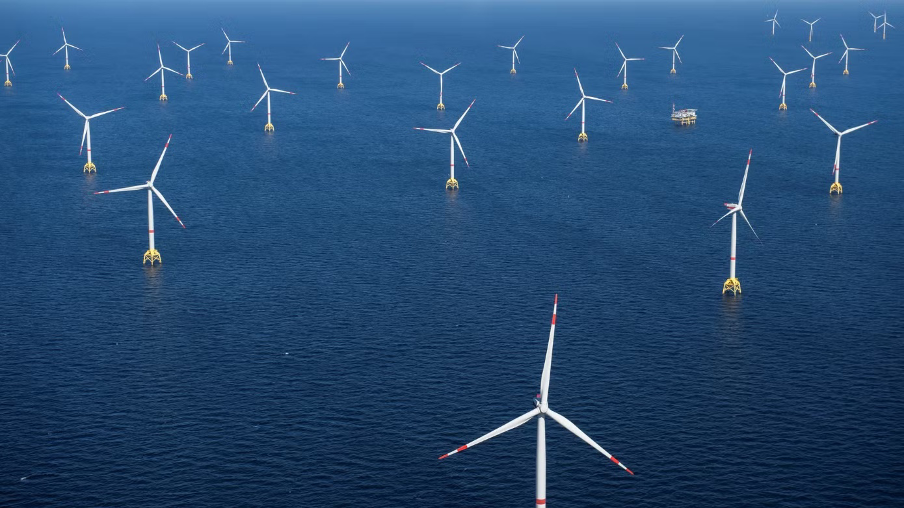
The "collateral damage" of the week concerns wind turbines: Sweden has just canceled thirteen offshore wind projects in the Baltic Sea for national defense reasons, Le Mondeexplains. The Swedish Defense Minister explained that the completion of these projects would have doubled the country's detection time for an attack by missiles, aircraft, or submarines, from one to two minutes: the towers and rotating blades of wind turbines emit radar echoes and produce other interference, particularly underwater! This would jeopardize the effectiveness of Swedish maritime surveillance, it seems. The minister added that the relative proximity of the "highly militarized" Russian enclave of Kaliningrad had been "a central element" in the government's decision.
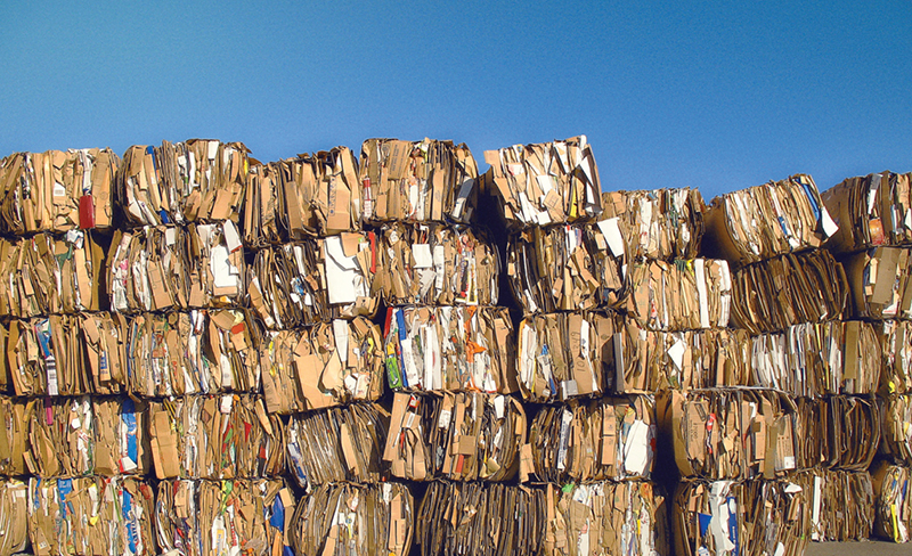
The number of the week is 186.5. As in the average kilograms of packaging waste produced in 2022 by each of us in the European Union, according to the latest report published by Eurostat. With a wide range between member states: Ireland, with 233.8 kg per person, produces three times more waste than Bulgaria (78.8 kg). Compared to 2021, the total volume decreased by 3.6 kg per inhabitant (−1.9%), but over eleven years, it rose by 31.7 kg (+20.5%). However, the reduction observed in 2022 is the first recorded over the period. The overall recycling rate is stable at 65.4%. This waste consists of 40.8% paper and cardboard (34 million tonnes), 19.4% plastic (16.1 million tonnes), 18.8% glass (15.7 million tonnes), 16% wood, and 4.9% metal. In other words, for plastics alone, in 2022, each inhabitant generated 36.1 kg of packaging waste, of which 14.7 kg were recycled (40.7%). Since 2012, this quantity has increased by 7.6 kg per person (+27%), and for recycling, by 4 kg. The treatment rate has therefore increased by 3.2 points. By country, Slovakia has the highest plastic waste recycling rate, at 60%, ahead of Belgium (54%), Germany and Slovenia (51% each). At the opposite end, the worst performers are Malta (16%), Denmark (23%), France and Austria (25% each).
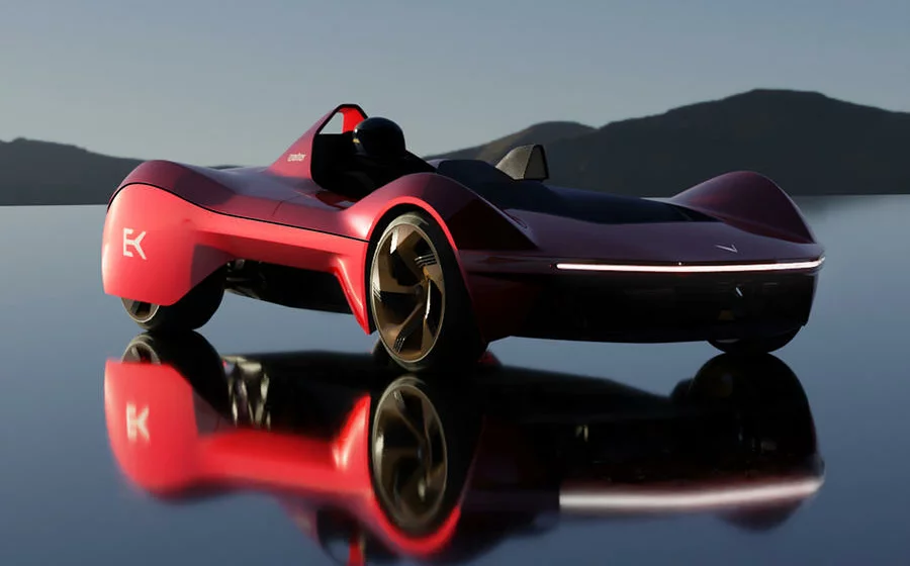
The riddle from our previous edition was related to the theme of the "wattcar." But the answer "a car" was insufficient. Because it has an interesting peculiarity: unlike the SUVs loathed by ADEME, this one is the lightest electric car in the world: 740 kilos, fully loaded.
The week's riddle is related to the first topic mentioned in this Breaking (RE)NEWS – that's the clue. Who posted this "Star Wars-ified" little squirrel on X (ex-Twitter) and why…? It is accompanied by a quote from Obi-Wan Kenobi: "If you strike me down, I will become more powerful than you can possibly imagine." The link to our topics is tenuous, we grant you.

Happy reading and have a great weekend!
[As a reminder, (RE)SET, founded in 2019, is the first independent consulting firm dedicated to economic and environmental transition and built for action. "(RE)SET: resources to win environmental and economic battles!" Inevitably partial, sometimes biased, always committed, this media review with its often spirited, even impertinent tone, in no way commits (RE)SET and even less so Julhiet Sterwen in its consulting activities, but it paints a picture we find interesting of the state of the transition as it appears in the press and research. A snapshot of the debate, of the forces at play, the oppositions, the convergences, which we hope is useful for your decisions and for building your transition strategies.]