Hello,
For lack of green smoke, white smoke has unfurled its complex spirals above the Élysée Palace: a Prime Minister has been appointed, as you will not have missed. Just as you will not have missed that the government will not be appointed before… at least the next Breaking (RE)NEWS! In the meantime, can we perceive the first implications of these developments for the subject dear to us, the only one that matters: the environmental and economic transition? The real answer is no. No government composition, no certainty on the non-passage of a no-confidence motion, no firm indication on the 2025 Finance Bill. But signs are there, often contradictory, and we will let you be the judge by adopting two radically opposite views!
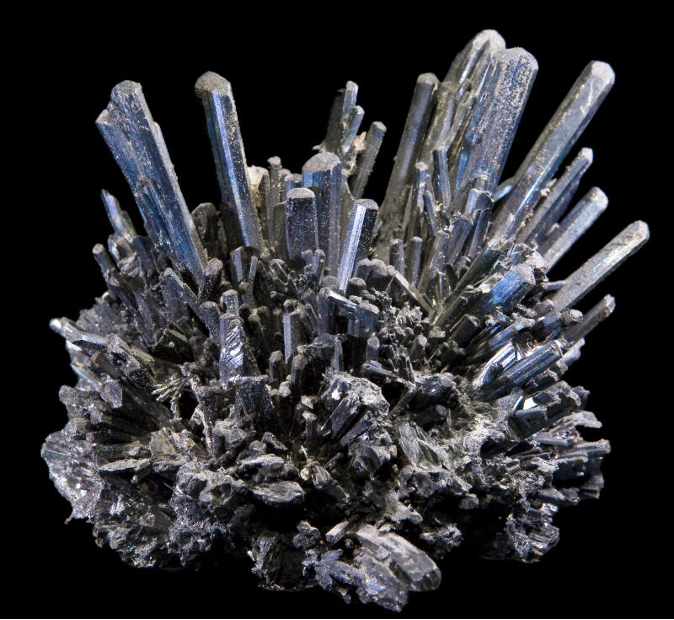
First, let's dream. After all, the holidays are not far away, the sky is rather blue, the back-to-school resolutions are made, in short, the mood is right! Michel Barnier, an experienced man, being the oldest Prime Minister succeeding the youngest Prime Minister of the Fifth Republic, has assets up his sleeve when it comes to transition. First, he was Minister of the Environment (from 1993 to 1995) and as such he designed the "Barnier law" (February 2, 1995). That's no small feat! Because this law established the general principles of environmental law: the precautionary principle, the prevention principle, and the polluter-pays principle. During his time at the environment, Michel Barnier also contributed to the recognition of natural risks for property and people, a tax on protected maritime areas, and the debate on ecology through the creation of the National Commission for Public Debate (CNDP). For completeness, mention should also be made of the "Barnier Fund," which is well known to victims of natural disasters and local authorities, who are compensated through this Fund. Consequently, even an NGO as fierce as Greenpeace recognizes the "sincere interest" of the new Prime Minister "for environmental issues." In an interview given to La Revue des Deux Mondes in October 1993, Michel Barnier expressed a wish: that the Ministry of the Environment be "respected and included." He hoped at the time that "the environment would cease to be a subject of confrontation to become a subject of dialogue." Concretely, the minister wanted to "eliminate landfills by 2002," "reduce to zero the effects of toxic spills [in water] within five years," and "achieve a rate of urban pollution control of 70% by the end of the decade." Ambitious objectives but… unachieved, a constant in our domain.
Later, as Minister of Agriculture, Michel Barnier is known to have resisted pressure from FNSEA (the dominant agricultural union), which is also no small feat, as every attempt at agricultural reform shows. The association Générations Futures thus says it "acknowledges that Michel Barnier as Minister of Agriculture managed to resist pressure, particularly from FNSEA, during the Grenelle negotiations on pesticides." "He maintained the pesticide reduction targets of the EcoPhyto Plan […] At that time, he also opened his ministry to environmental associations, thus breaking with the traditional sole co-management between the State and the dominant agricultural unions," the association also writes. However, this is a subject on which the new Prime Minister will also be expected, the text intended to address the agricultural crisis having been left in limbo due to the dissolution. FNSEA and the Jeunes Agriculteurs thus quickly called on the new Prime Minister on Thursday to "place agriculture among the immediate priorities of his government."
Still later, as Minister of European Affairs, Minister of Foreign Affairs, and (twice) European Commissioner before becoming the EU's Brexit negotiator, Michel Barnier demonstrated his tenacity and ability to successfully conduct difficult discussions, not to mention his experience and exceptional knowledge of EU intricacies. All essential things to influence the Brussels agenda, the importance of which we know regarding texts related to the transition.
So, why not dream?
Because the nightmare is still possible! In a less optimistic view, one can choose to highlight a 2025 Finance Bill that we already know will create great temptations to again cut back on environmental spending, especially if we need the votes, or at least the non-censure, of the most right-wing part of the political spectrum. Which we know is not keen on the environmental and economic transition… The new Prime Minister's room for maneuver, we suspect, will be narrow.
Dream or nightmare, to be continued in the next Breaking (RE)NEWS!
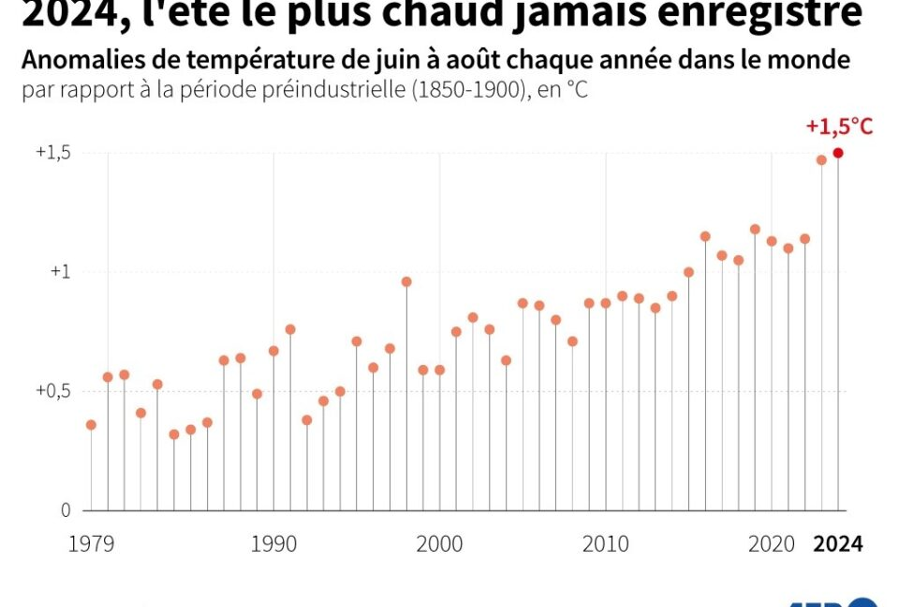
Meanwhile, the environmental emergency is ever more intense, and efforts as well as setbacks related to the transition continue to unfold, as evidenced by our regular sections. Starting with the "weather of the week", or rather of the summer. Indeed, Les Echosrecall, "the summer of 2024 was the hottest ever recorded on the planet." There you have it, months pass and nothing changes: for two years, records have been broken almost every month. From June to August, the global average temperature was the highest ever measured, beating the 2023 record, announced the European observatory Copernicus. "This string of records increases the likelihood that 2024 will be the hottest year ever recorded," again ahead of 2023, worries Samantha Burgess, deputy director of the Copernicus Climate Change Service (C3S), in her monthly bulletin. And since the beginning of the year, the 1.5 degrees Celsius above the pre-industrial average (1850-1900) – the ambitious goal of the Paris Agreement – have already been exceeded.
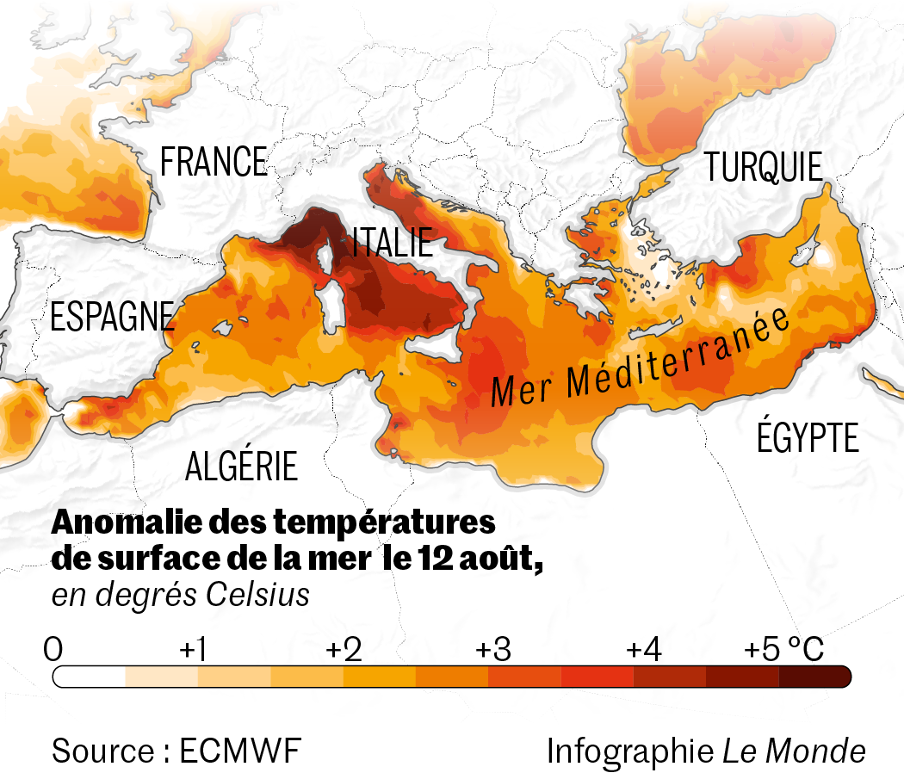
Le Monde brings an important precision: "The unprecedented summer heat is mainly explained by the temperature on the ocean's surface, which remains at record levels in most basins." If, like many vacationers, you had the chance to dip your toe in the Mediterranean in August, you could only observe: the water temperature is approaching what one is more accustomed to finding in the Caribbean! And indeed, "once again, the Mediterranean is overheating." The marine heatwave in the Ligurian Sea reached record levels. In mid-August, according to satellite data, the temperature was 5 degrees higher compared to the reference period (the average of temperatures measured between 1991 and 2020) in the area between Nice, Corsica, and the Gulf of Genoa in Italy."
"The warming of seas and oceans, which absorb about 90% of greenhouse gas emissions, is directly linked to the global warming caused by human activities, particularly the burning of fossil fuels (oil, gas, and coal)," indicates Le Monde. To conclude, affirms the UN, humanity, which emitted about 57.4 billion tonnes of CO2 equivalent in 2022, has not yet begun to reduce its carbon pollution.
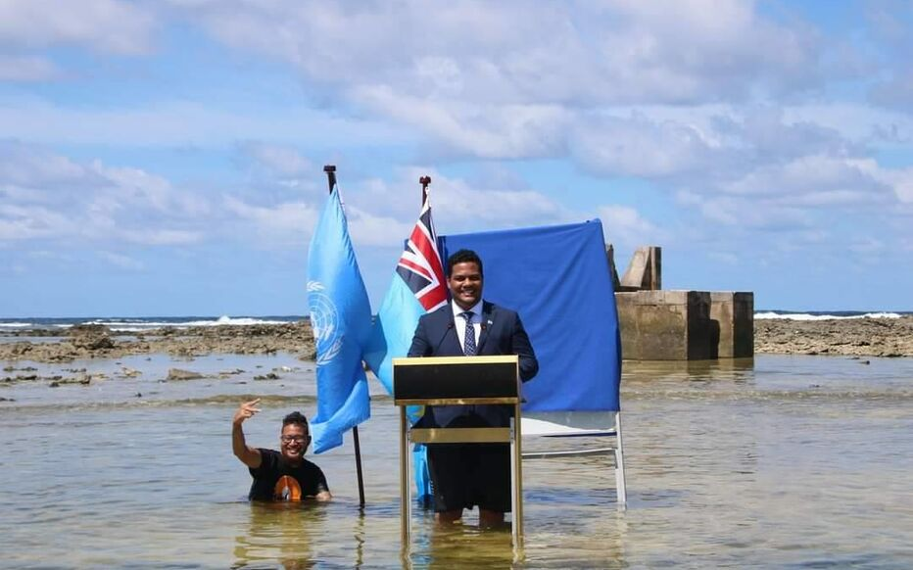
All of which seriously fuel discussions during the annual summit of the Pacific Islands Forum (PIF), which was held at the end of August in Nuku'alofa, the capital of Tonga, while the region is facing a rise in sea level. Libération was there. "We are gathering at a crucial time in the history of our region […]. We are on the front lines of the battle against climate change," launched the PIF Secretary General, Baron Waqa, from the island of Nauru. The Climate Minister of the Tuvalu archipelago, a small low-lying state, Maina Talia, for his part, called on the "most polluting countries" (read: Northern countries) to financially assume the growing costs of climate change, considering that "the polluter-pays principle must be put on the table." The PIF brings together 18 associated states and territories from Oceania, including, since 2016, New Caledonia and French Polynesia. Many of its members are now threatened with outright annihilation by the rise in sea level due to global warming. A country like Tuvalu, with a highest point of 4.6 meters, could thus disappear within thirty years. "The decisions world leaders will take in the coming years will determine the fate, first of Pacific islanders, and then of the rest of the world," predicted UN Secretary-General António Guterres, invited to the summit. "If we save the Pacific, we save the world." An opportunity to republish this image that went around the world at COP26: the head of diplomacy of the Tuvalu archipelago, Simon Kofe, made an impression with a speech recorded in the sea, with water up to his knees.
Suffice it to say that it's time for the transition pace to accelerate. And just as well, things are happening. For example, "the call of the week" could be the one launched by 130 large companies, ahead of COP16 on biodiversity. This major conference of the parties, to be held in Cali, Colombia, from October 21 to November 1, 2024, Novethicreminds us, will bring together world states to continue developing an international action framework for biodiversity protection. In view of this global event, a coalition of nearly 130 large companies has just published a call to promote the role of the private sector in biodiversity protection: "We understand that a healthy planet is essential for resilient businesses," explains the coalition's press release, which advocates for "immediate leadership to strengthen – and not weaken – the policies, incentives, and legislation that will lead to the action from economic actors needed to halt and reverse nature degradation by 2030." Among the signatories are Nestlé, Decathlon, H&M, Kering, Ikea, Inditex (Zara), Suez, EDF, and the oil company Enel. "We must transform ambition into action," the signatories say, thereby perhaps inadvertently acknowledging that for now, while declared ambition is there, actions are not yet. The coalition particularly proposes to ensure "sustainable use and management of resources," by encouraging companies to use ecological compensation solutions, agro-ecology, or regenerative economy techniques. The "integration of nature into decision-making" and measures to promote transparency on biodiversity are also highlighted. Finally, the call emphasizes the need to mobilize finance towards solutions compatible with biodiversity protection, at a time when financial actors still struggle to integrate biodiversity into their investment policies. On all these subjects, it is an understatement to say that at (RE)SET, we approve. We even have offerings to help.

The other "call of the week" comes to us from a collective of 65 circular economy actors including Eric Duverger, Benoît Hamon, and Pierre-Emmanuel Saint-Esprit, who argue, in a column in Le Monde, for the appointment of a minister specifically responsible for generalizing its practices, which now have consensus. According to them, "all day long, companies and local actors are demonstrating that it is possible to decouple wealth creation from the predation of our natural resources." At (RE)SET, we can attest to that.
As a potential counter-example, the "relocation of the week" is that of Chevron, which slammed the door on California to join Texas. By the end of the year, the second-largest US oil company will move its headquarters to Houston, Texas. For its CEO, Mike Wirth, quoted by Novethic, "Houston is the energy capital of the world. It's a natural place for companies in our sector to have their headquarters there." To cut off any controversy, the company explained that this move was motivated by a relocation of its activities, not for political reasons. Despite Chevron's official communication, many wonder whether the exact purpose of this "relocation" is not to escape regulatory controls. "It is regrettable that companies are relocating their workforce to places where environmental regulations are less strict rather than working to create healthy and vibrant communities," remarked Sarah Elkind, a professor at San Diego State University, to the Los Angeles Times. And in reality, Chevron is just joining the very long list of companies that have left California for Texas. A month earlier, in early July, Elon Musk announced his intention to move the headquarters of X and SpaceX to Austin due to the Golden State's "woke" culture. But other companies, such as HP, Oracle Corp, Toyota Motor North America, Charles Schwab, and even Tesla, have already slammed the door on California.
Another discouraging sign, the "step backward of the week" concerns a state: Sweden. Virtuous in many ways, Sweden has been developing since the arrival in power of the right supported by the far right trends that go "against the grain of history," explains Libération. The government announced in early September that it would abolish a tax on air travel put in place by the left in 2018, with the intention of reducing the effects of air transport on global warming. The government had previously indicated it was considering halving this tax. It finally decided to abolish it on July 1, 2025. Unsurprisingly, environmental protection NGOs criticize this decision, judging that it will lead to an increase in flights and thus in greenhouse gas emissions. "It's completely against the current; the government is completely abandoning climate policy," laments Daniel Kihlberg, of the Swedish Society for Nature Conservation, to the newspaper Aftonbladet. Reasons include, notably, measures announced during the presentation of the 2024 budget, such as the reduction of fuel taxes, but also the lack of concrete measures in the "climate action plan," a four-year roadmap. But this is in Sweden, nothing to do with France, of course.
The (bad) number of the week is the amount of the fine that France paid to the EU under the "plastic tax" in 2023: 1.5 billion euros. This year again, the country had to pay 1.5 billion euros to the European Union under the "plastic tax," according to data published by the General Secretariat for Ecological Planning (SGPE). The amount of previous years was between 1.2 and 1.3 billion euros. Since January 1, 2021, this national contribution has been part of the EU's new own resources, initially created to finance Brexit and today the European recovery plan. Imposed on all member states, this tax is calculated based on the volume of unrecycled plastic packaging waste produced in twelve months, based on 800 euros per tonne. This concerns both household and non-household plastic waste, from yogurt pots to phone cases. France is indeed "one of the worst students in Europe," notes Novethic. Despite a 6% increase in recycled quantities, only 23% of plastic packaging is actually recycled in France, compared to a set target of 40%. And we are far behind our European neighbors, with more than 50% recycled packaging in Belgium or Spain. However, France has introduced measures to limit certain plastics, through the Agec law (anti-waste for a circular economy) which came into force in 2021. It notably provides for the recycling of 100% of single-use plastic packaging by January 1, 2025. Meanwhile, in 2023, France became the EU's top contributor under the "plastic tax" (also called "plastic resource" or "plastic own resource"). An inglorious record, judges the dechets-infos website.
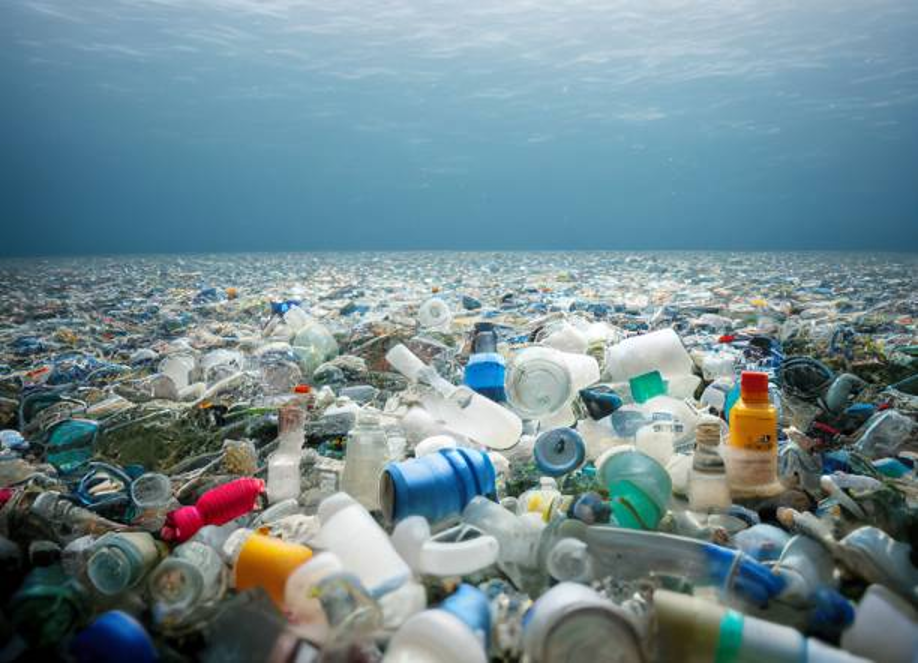
Regarding plastic pollution, the "contracts of the week" are those signed by the French biotechnology company Carbios. L'Usine Nouvelle reveals that the enzyme recycling pioneer Carbios took advantage of the summer to establish itself on the international stage. Indeed, since June, the company has signed no fewer than three letters of intent for the installation of biorecycling units under Carbios license. The first was signed with Zhink, a Chinese manufacturer of PET and textiles. This company plans to build an enzymatic PET waste depolymerization unit with an annual treatment capacity of 50,000 tonnes of PET waste. This agreement formalizes a long-term collaboration between Zhink and Carbios and would contribute to accelerating a circular economy for plastic and textiles in China. "China is showing great momentum to accelerate the circular economy and achieve its goal of carbon neutrality by 2060. The technology developed by Carbios makes perfect sense in this context: capable of recycling all types of PET waste, it promotes the circular economy with high-quality products and significantly reduces the carbon footprint of industries," commented Emmanuel Ladent, CEO of Carbios. In August, two other letters of intent were signed: one with Sasa and another with FCC Environment. Sasa, a Turkish manufacturer of polyester, fibers, yarns, filaments, and polyester-based plastic material, wishes to acquire a Carbios license for the construction of a biorecycling unit with an annual treatment capacity of 100,000 tonnes of PET waste in Adana (Turkey). "As a major polyester producer, it is our duty to lead the way in terms of sustainability and environmental responsibility. Sasa must be part of the recycling sector, and our partnership with Carbios reinforces our commitment to innovation to advance the circular economy in the textile field," declared Kemal Öz, CEO of Sasa. The letter of intent signed with FCC Environment, one of the leading waste management companies in England, envisions the acquisition of a license to build a unit in the United Kingdom. "We look forward to working with Carbios to explore the contribution this technology could make to the UK's circular economy and to examine, based on a solid data set, its potential place in the UK's waste hierarchy," said Steve Longdon, CEO of FCC Environment UK. Cock-a-doodle-doo! And Carbios is not alone in offering innovative solutions in this area. At (RE)SET, we also have another protégé who will make a buzz, when the time comes!
Pollution still, this time of the air, our illustration of the week, which one would be tempted to call the "Maxime Blondeau section" in tribute to the remarkable awareness-raising work done each week on LinkedIn by this "cosmographer, author, and speaker," places France in a rather good position:
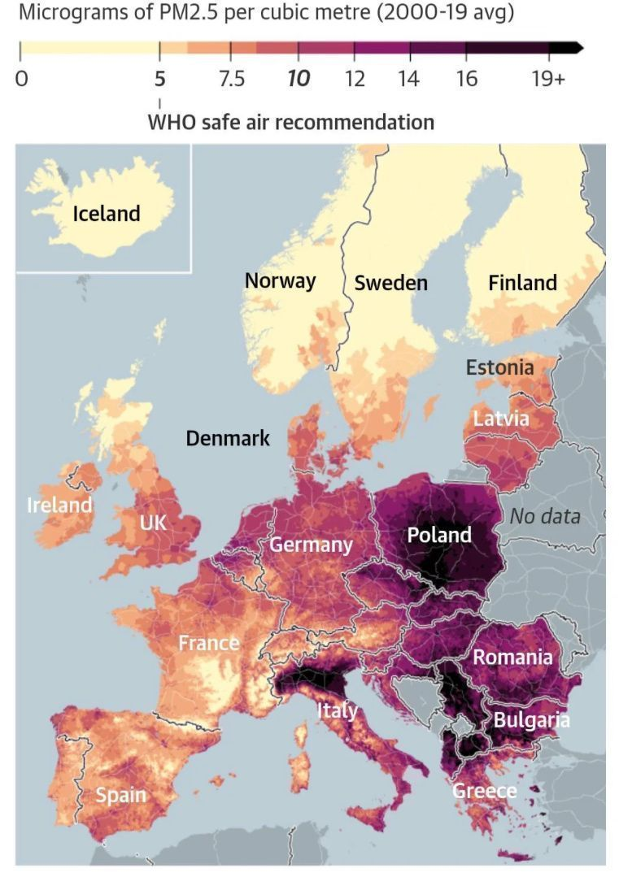
PM2.5 particles are particles with a diameter of 2.5 microns (μm). They consist of a chemical mixture emitted during combustion or formed by industrial or common chemical reactions. According to the European Environment Agency, these fine particles are responsible for the premature death of 5 million Europeans over 20 years. All the same.
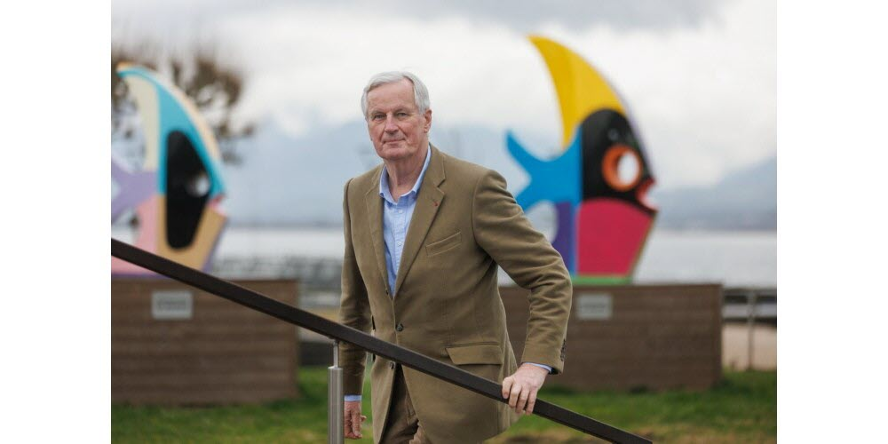
The resource of the week that Europe will soon have difficulty obtaining in sufficient quantity is antimony. Indeed, we learn from L'Usine Nouvelle, China has decided to restrict its exports of this anti-fire metal critical in defense and solar. Beijing announced on Thursday, August 15, its intention to restrict its exports of antimony starting in September. China is the largest producer of this critical metal, used in various industrial sectors for its flame retardant properties, as well as in ammunition and photovoltaics. Its price has already been skyrocketing in recent months. In a trade war in semiconductors with Washington, Beijing has been multiplying this type of operation for a year, notably concerning gallium and germanium, rare earth processing technologies, and certain forms of graphite. This time, the restrictions can affect not only sectors related to the ecological transition, but also a large number of other industries. Thus, while antimony is critical for the production of solar panels (where it is used to clarify and strengthen the protective glass of the modules), it is still mainly used in the form of antimony trioxide, a white powder used as a flame retardant everywhere, particularly in plastics processing but also, for example, in the textiles of car seats.
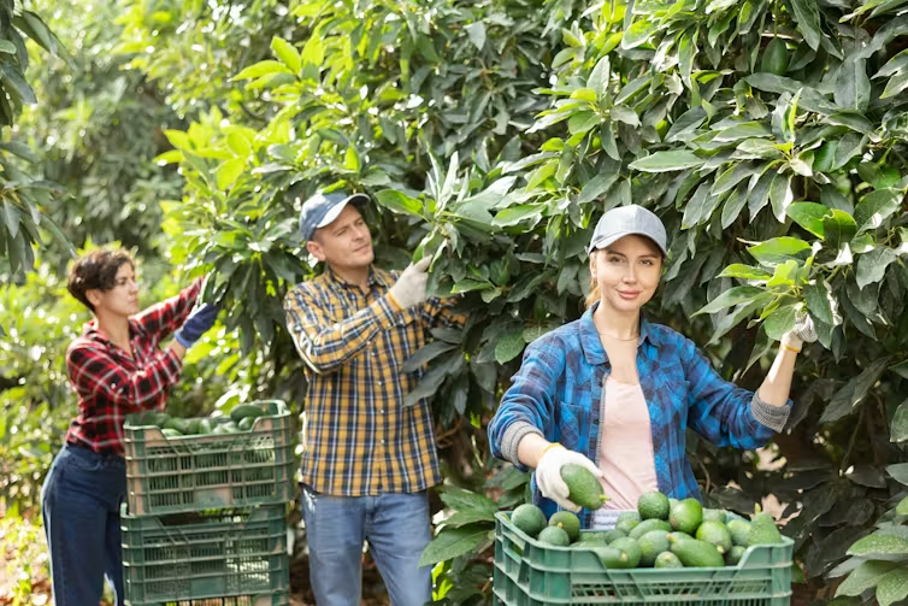
Resource still, but agricultural this time, the food of the week is the avocado. Why it? Because its production has tripled in 20 years globally, which does not have only advantages. The Conversation teaches us that "eating too many avocados is bad for the planet"! The growing popularity of the avocado in recent decades is partly due to its reputation as a "superfood." Although some health claims may have been exaggerated, the avocado is indeed a good source of vitamins, minerals, and unsaturated fats, which give it its creamy and satisfying texture. But here's the thing: like much of modern agriculture, most avocado plantations are actually heavily dependent on fertilizers and fossil fuels, contributing to increased greenhouse gas emissions. Yields are also lower than many other crops, and the carbon footprint per kilogram of fruit is therefore higher. On average, avocados have a carbon footprint of about 2.5 kg of CO2 equivalent (CO2 eq) per kg, over twice that of bananas (0.9 kg CO2 eq per kg) and over five times that of apples (0.4 kg CO2 eq per kg). If, like the author of these lines, you love avocado, don't worry: all these figures remain low compared to the global average carbon footprint of most animal products. One kilogram of eggs has a carbon footprint of 4.6 kg CO2 eq, one kilogram of chicken has 9.8 kg CO2 eq, and one kilogram of beef has an average of 85 kg CO2 eq. So eat less beef and you can continue to gorge on avocados.
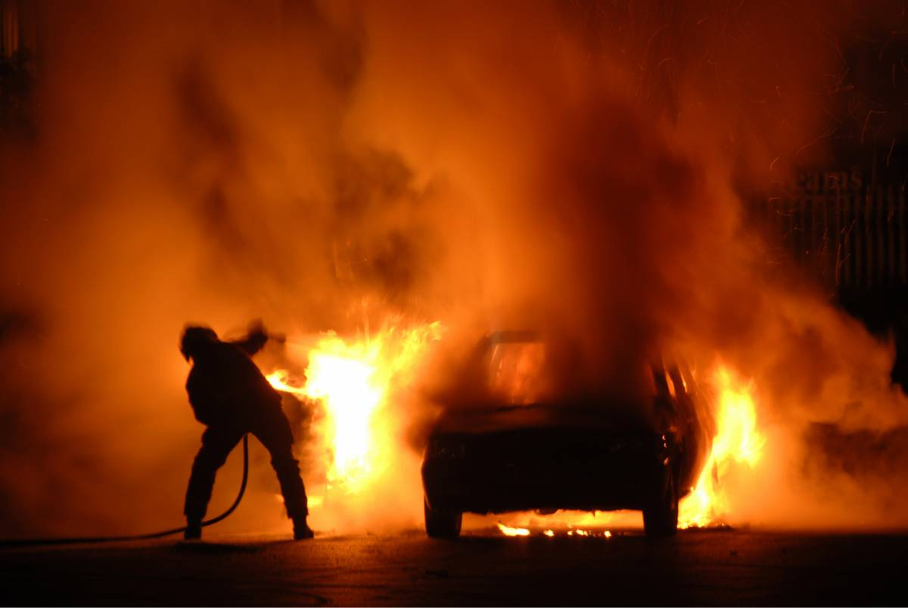
In South Korea, the psychosis of the week concerns electric cars, which are beginning to be banned from public parking due to too-frequent fires. A series of fires involving electric cars has stirred things up for a month. The worst, recounts L'Usine Nouvelle, occurred on August 1 in an underground parking lot in Incheon, a suburb of Seoul: 140 vehicles were reduced to ashes and a large part of the building damaged. The cause: a Mercedes-Benz whose battery suddenly caught fire. The investigation determined that the battery was of Chinese manufacture, designed by the company Farasis. Although accidents remain rare overall, South Koreans are worried about the risks associated with using battery vehicles. Especially since the memory of the Aricell factory fire in June that caused 23 deaths is still fresh in minds. The capital's parking lots are therefore beginning to ban access to electric cars, and charging stations are being moved outside of underground facilities. On used car sales sites, the number of electric cars listed jumped 184% in one week, as owners wish to get rid of their vehicles.
Still on electric cars, the guerrilla warfare of the week still pits China against the EU, with new twists in the customs duties saga, recounted by Le Monde : the European Commission published at the end of August the amount of taxes, slightly revised downwards, but reaching up to 36.3%, which it intends to apply to the import of certain categories of these vehicles. This decision was taken at the end of an investigation conducted by Brussels into the subsidies granted by Beijing to the Chinese automobile industry, to counter unfair competition with European manufacturers. The Chinese reaction was not long in coming. In reprisal, China announced the opening of an investigation into the trade practices of certain dairy products, notably cheese and certain milks and creams, exported by the European Union (EU). Beijing had already opened in January, in reaction to previous European announcements, investigations into French cognac and certain pork products, and filed a complaint with the World Trade Organization (WTO). Although European agriculture is massively subsidized, Brussels claims to be in compliance with the WTO. The interminable Euro-Chinese electric vehicle saga should continue for a few more months. The entry into force of the customs duties decided by the Commission is scheduled for the end of October and requires the approval of a qualified majority of the EU's member states. But the door is not closed. To avoid a trade war, Brussels has signaled that "intense" discussions are underway with Beijing, to try to find "an alternative solution."
The terminological clarification of the week concerns a word often used by environmental defenders, which, it turns out, does have a useful pedagogical value, but is scientifically inappropriate: the Anthropocene. The Conversation explains all this. It could have been established as a new geological epoch where the influence of our species surpasses natural geological forces. But last March, the highest authorities in geology decided otherwise. Does this mean the Anthropocene is now dead and buried? Not so sure… Even dead, it's still moving: the rejection of this terminology does not negate the dynamics highlighted by the word, such as the exceeding of planetary boundaries. Geological epoch or not, the Anthropocene still has much to teach us, particularly in the humanities, by forcing us to think about the world's complexity. But for those who would like to understand why the Anthropocene is a problem for geologists, we need to revisit their arguments. For them, the concept is a form of anthropocentrism, whereas the history of our species is just a blink of an eye on the scale of the planet's history. However, this does not prevent it from being considered a major event due to the impact of human activities… But not as a geological period.
The riddle from our previous edition was a magic photo – and AI had nothing to do with it! It was of course, depicted in this already iconic image, the Brazilian surfer Gabriel Medina, literally levitating after qualifying for the surfing quarterfinals at the Paris Olympics.

This week's riddle is also connected to the Olympics. Why is Coca-Cola accused of greenwashing – we also heard sportswashing – despite its "eco-cups" that are "fully recyclable," as the ad says, used during the Olympics?
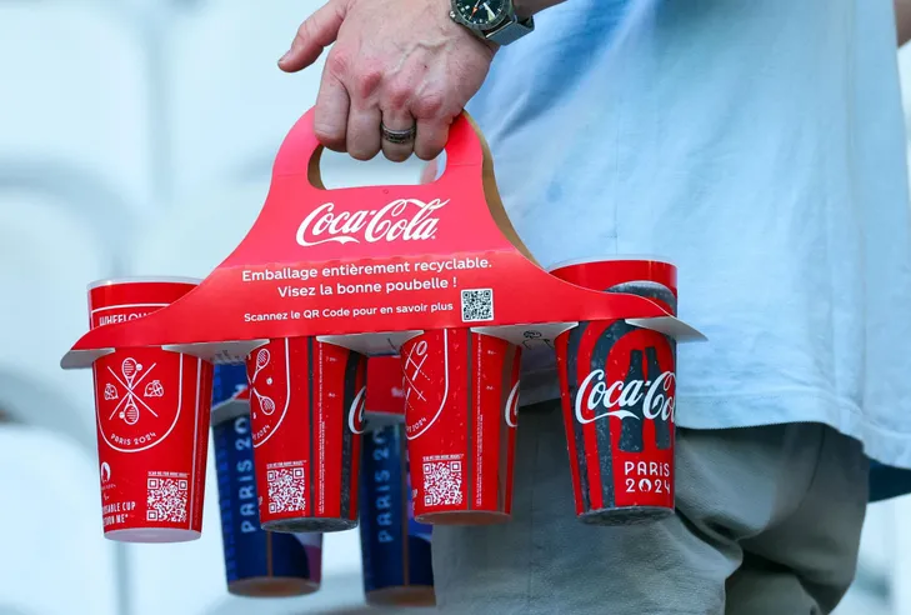
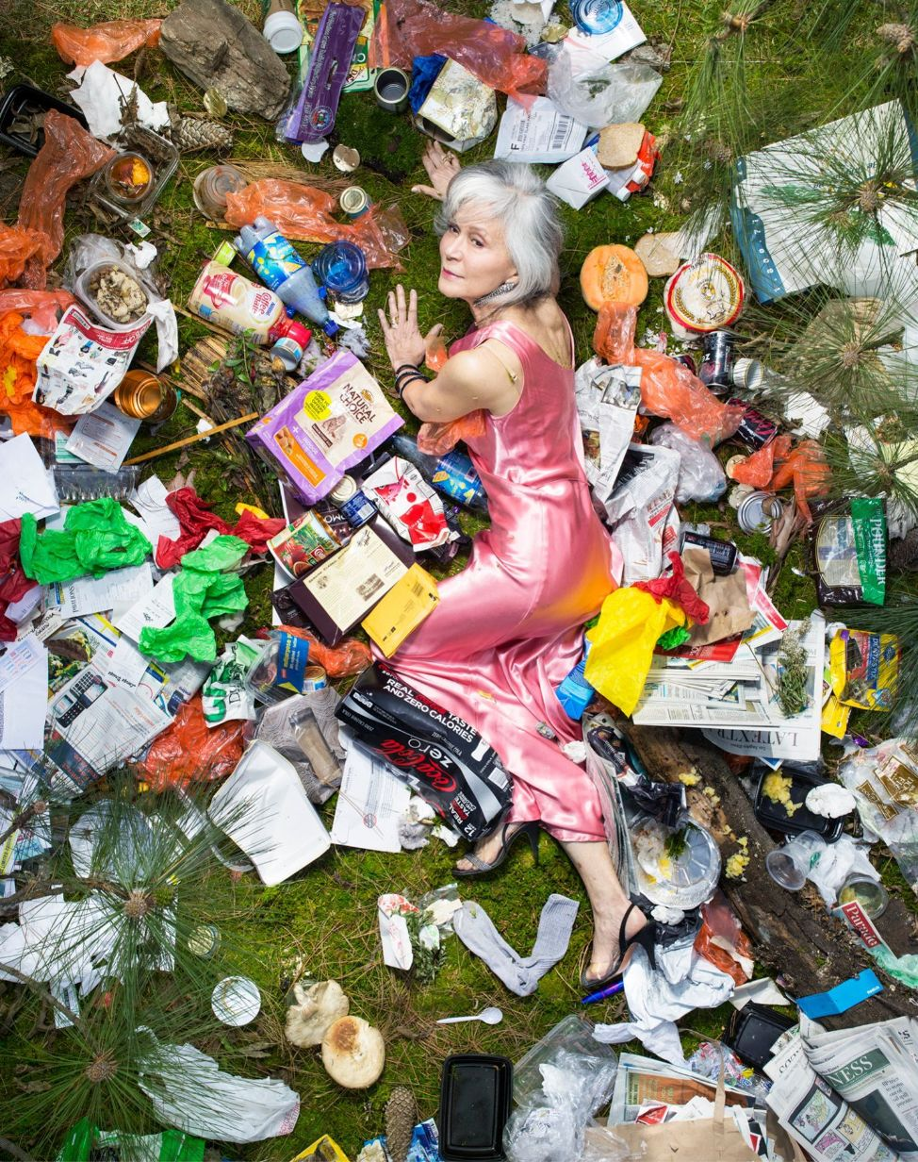
And since that one was a bit easy, here is an exceptional second riddle of the week, perhaps tougher: what is it?
Happy reading, happy weekend, and good luck getting back to it!
[As a reminder, (RE)SET, founded in 2019, is the first independent consulting firm dedicated to economic and environmental transition and built for action. "(RE)SET: resources to win environmental and economic battles!" Inevitably partial, sometimes biased, always committed, this media review with its often spirited, even impertinent tone, in no way commits (RE)SET and even less so Julhiet Sterwen in its consulting activities, but it paints a picture we find interesting of the state of the transition as it appears in the press and research. A snapshot of the debate, of the forces at play, the oppositions, the convergences, which we hope is useful for your decisions and for building your transition strategies.]