
Hello,
Breaking (RE)NEWS is playing leapfrog in this hole-filled month of May! Which, incidentally, is good news for the reduction of greenhouse gases because GDP growth suffers from it. But we especially didn't want to miss this good news: the French economy remains the most attractive in Europe for foreign direct investment for the fifth consecutive year, according to the latest E&Y barometer, quoted by Les Echos. Even more interesting: 44% of these new investments are industrial in nature, reveals Le Monde. And among these, a notable proportion is linked to the environmental transition, such as electric battery construction plants. "Reindustrialization is underway," congratulate at the Élysée Palace. Of course, at (RE)SET, we would like it to go further and faster, but the E&Y barometer helps put into perspective the alarmist discourse about a green transition that would excessively undermine the attractiveness of the French economy.
From everything's fine to everything's wrong, the audacity of nuance is sought… Because these discourses are multiplying! The approach of the European elections continues to fuel alarmist and sometimes populist articles, mentioning, as Le Figarodoes, "the major slowdown on the ecological transition," which it calls for… A discourse relayed by the Financial Times , which makes much of a JP Morgan study calling for a "reality check." JP Morgan is formal: the transition to renewable energies will cost too much. Therefore, it cannot be done in time. Rising inflation, geopolitical crises, and rising interest rates are making the phase-out of fossil fuels increasingly expensive, which puts critical pressure on indebted governments. Conclusion of the report: we must return to reality. Forget the 2030 targets, then 2050, to achieve climate neutrality, forget the urgency to act in the next ten years to try to contain warming to 1.5°C. The pragmatic American bank estimates that it will not be possible. Le Monde , for its part, evokes "the specter of powerlessness" and denounces the rise of a new concept: "climate apathy." The main reason for this trend, according to Le Monde: the persistent feeling that the efforts of the transition are unequally distributed, at all levels. Between rich and poor consumers, developed and developing countries, oil-producing countries and others,…
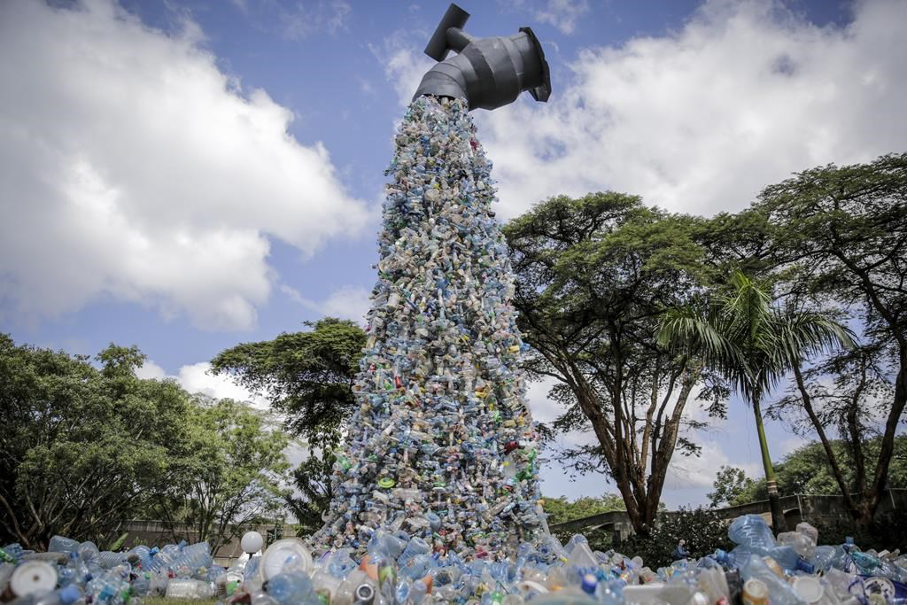
Oppositions that are also found in the negotiations on the Treaty to put an end to plastic pollution, which had a new episode in Ottawa this week. Negotiations threatened with paralysis, recounts Le Monde. Two blocs clash. A coalition chaired by Norway and Rwanda, comprising sixty-five members, including France, Germany, the United Kingdom, and the European Union (EU), defends a "high ambition" text. This group wants to act at the source and particularly emphasizes reducing plastic production. Non-governmental organizations (NGOs) go so far as to advocate for a 75% reduction in production by 2040. An ambition not shared by oil and plastic producing countries, which have assembled around the Gulf countries a coalition for plastics sustainability that includes Iran, Russia, Brazil, and India. Supported by petrochemical industry lobbies (143 representatives were accredited during the last round of negotiations in Nairobi), these countries are reluctant to any obligation to reduce plastic production and favor an approach based on recycling, which is currently capped below 10% globally. The United States and China, the two largest consumers of plastic, are not officially part of this coalition but are on the same page. For its part, an international coalition is trying to form to promote the EPR system (Extended Producer Responsibility). Citeo is at the forefront, wishing to place the "polluter-pays" principle at the heart of the fight against plastic pollution, as reported by L'Usine Nouvelle. The elephant in the room, to use the expression from Novethic, remains the question of production reduction, both in its principle and its volume. And according to Libération, " in any case, there is no miracle solution; we must turn off the plastic tap at the source ", as recycling solutions remain fragmentary.
We know that in this type of negotiation, a bit like in TV series, each episode brings its additional element of dramatization. Until the last episode, where the denouement is forced. Sometimes it ends badly. Let's keep our fingers crossed that this time we witness a happy ending. See you next round! In the end, a compromise will have to be found.
To begin our weekly sections, let's start for a change with some good news: after years of negotiations, about-faces, and other antics that Breaking (RE)NEWS has sometimes reported, European parliamentarians finally truly adopted the Corporate Sustainability Due Diligence Directive (CSDDD). A "legal revolution," asserts Novethic, which will soon, say around 2027 (the time it takes to be transposed into national laws – which promises further fierce battles), regulate respect for human rights and environmental rights by large and the largest medium-sized companies. The CSDDD, also known as CS3D (which is immediately clearer), establishes for large European companies or those operating in Europe an obligation to guarantee respect for human, social, and environmental rights throughout their value chain, including their suppliers and their suppliers' suppliers. Affected are firms with more than 5,000 employees or a turnover exceeding €1.5 billion, followed, from 2029, by those with more than 1,000 employees. This directive constitutes an extension of the French law of March 27, 2017 (Law No. 2017-399), the famous CSRD. But Louise Curran, a professor of strategy, points out in an opinion piece in Le Monde that the directive adopted on April 24 " goes much further " than the French law, which already gives cold sweats to some CSR directors who have not yet followed (RE)SET's webinars on this topic. To make a long story short and without spoiling upcoming training sessions on the subject, the CS3D will ultimately concern significantly more companies and, above all, non-compliance with the criteria will result in various types of sanctions, notably financial and dissuasive. It will also allow many lawsuits to thrive, where applicable… For example, the recent legal action launched by the Democratic Republic of Congo against Apple, accused of using "conflict minerals" in its iPhones, which Géraldine Poivert referenced this week on LinkedIn, would benefit from the CS3D already being in place.
The sector of the week is the maritime industry. Or could be. Because in the major article that Le Mondededicates to it, titled " The maritime industry is thinking about its green revolution ", the important word is ultimately " thinking ". In other words, the revolution is still far off, and to use a quote from the article: " For now, the decarbonization of maritime transport is mostly about marketing ". Ten years after cars and planes, boats, absent from the 2015 Paris Agreement on climate change, are just becoming aware of the effort they will have to make. It's never too late to do the right thing, but it's still quite late!

In another sector, tech, the awareness of the week concerns AI. Artificial intelligence is good, but it consumes energy that is anything but artificial, La Tribuneexplains. Creating an image via artificial intelligence consumes as much energy as fully recharging a smartphone! This is shown by a new study conducted by researchers at Carnegie Mellon University and the artificial intelligence (AI) startup Hugging Face. Very data-hungry, new generative AI models are quickly driving up the energy bill. The International Energy Agency thus forecasts that the amount of energy required to run AI will double by 2026. This inflation is explained in particular by the arrival on the market of new, more powerful chips to train and run large language models (LLMs), the pillars of generative AI.
In the automotive sector this time, the image of the week comes from China. In the photo below, thousands of electric cars are parked before being exported to the rest of the world. A parking lot that becomes problematic once these vehicles arrive at their place of sale, which do not necessarily have as much available space, especially as stocks explode. Thus, in Belgium, ports are overflowing with Chinese electric cars, where they sometimes sit for more than a year, as evidenced by this report from Le Monde.
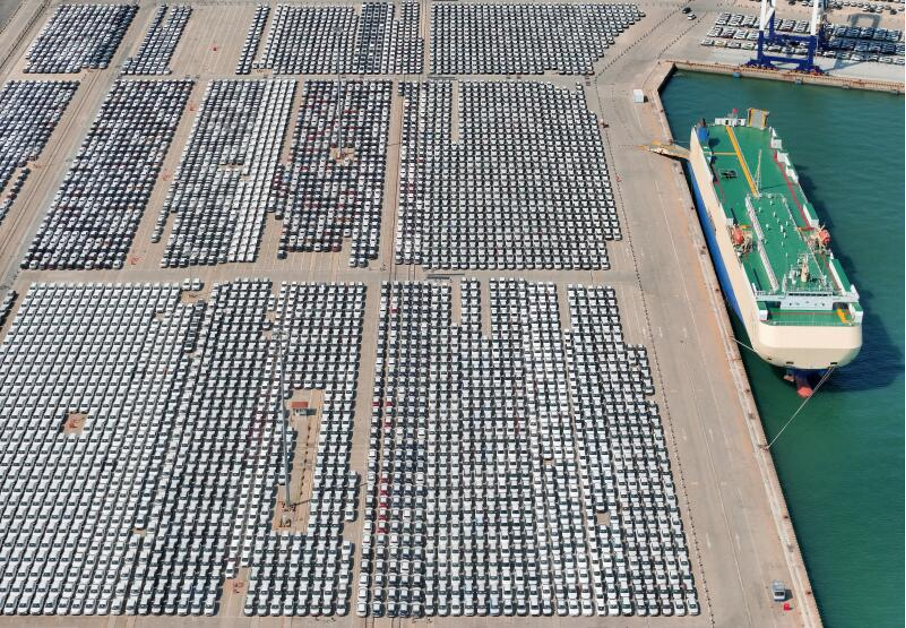
They are therefore very numerous, and consequently, the existential threat of the week, as the journalists of Le Mondesay, is posed by… the Chinese electric car. The newspaper recalls that the great affair of Jacques Calvet (1931-2020), the emblematic CEO of PSA from 1984 to 1997, was resistance to the Japanese invasion. His distant successor, Carlos Tavares, is fighting against the Chinese flood. Not a day goes by without him warning about the "red carpet" that Europe unrolls under the wheels of Chinese manufacturers. The editorialist of Le Monde nevertheless concludes on an optimistic note. The "Japanese invasion" did not prevent European manufacturers from developing, and the Chinese one gives the sector a new opportunity to show its capacity for reaction and adaptation… Let's believe it! But staying lucid, because a study by the American firm Rhodium, unveiled by the Financial Times on Monday, April 29, and taken up by Le Monde , shows the astonishing lead of the Chinese industry. According to these analysts, if Europeans decreed a 30% tax on Chinese electric vehicles, the latter would still make much more money than in China, where they sell their cars for half the price than in Europe. Tesla cars made in China would, for their part, be in the red starting from a 15% tax. A useful reminder for Elon Musk, traveling to Beijing. It will take much more than Comrade Li Qiang's smiles to stop the Chinese electric machine.

Change of sector again, with the destruction of the week which takes us to the agri-food industry. The bottled water sector is continually having to reinvent itself, faced with PFAS, pollution, … This time, the Nestlé group is again making headlines with its Perrier bottles. Nestlé thus had to destroy two million of its green bottles after the discovery of bacteria at its water capture site in Vergèze, Gard. The prefect ordered the group to no longer use water from this well until further notice, France Inforeports. For a long time, the mineral bubbles and natural freshness of Perrier were extolled. Until what Nestlé calls " a one-off microbiological deviation " occurred. For his part, the prefect of Gard has less terminological consideration, speaking instead of " fecal contamination". A related question, to which the author of these lines has no answer: were the "two million destroyed bottles" at least properly recycled?

Let's stay in water, but in its truly natural state this time, with the book of the week, dedicated to this resource that is dear to us at (RE)SET. A rich and dense essay, with a striking and definitive title: "The End of Water." Between floods and droughts, shortages and contamination, no country escapes water crises. The precious resource suffers the cumulative effects of climate change and agricultural and industrial pollution. Simon Porcher , a management science lecturer, has been interested for several years in the governance of what he designates simultaneously as a "common resource," a "market good," and a "public service." He paints a worrying picture, nevertheless accompanied by proposals for action. Including one provocative proposal concerning operators: to fight waste, why not " change the economic model " by remunerating operators not on the volume sold but according to their ability to reduce consumption and pollution, and to eliminate leaks in networks?

On the biodiversity side, the concern of the week concerns our forests, and thus our timber reserves, or pulp resource, for insiders. At least a third of European tree species would be unsuitable for global warming, according to a recent study, published in the journal Nature Ecology & Evolution and cited in Le Monde. For a given region, the number of native European species adapted now and until 2100 will be greatly reduced. Climate change presents a complex challenge for forest ecosystems. On average, according to the study's results, the number of species per square kilometer capable of surviving the century would decrease by about 33% compared to the current number of species, in the least severe scenario; by 38% in an intermediate scenario (nine species could be planted per square kilometer); and by 49% if the warming were even more severe. The impact differs by geographic area: Northern and Western Europe are expected to be more affected than the center and east of the continent. Mountainous regions would also be relatively spared.

Still on biodiversity, the study of the week, found in Libération, is both optimistic and pessimistic, showing that "the transition is complicated" (running gag). On the positive side, it turns out that conservation measures are useful and even globally effective. Defending biodiversity works! The conclusion of the latest study by Penny Langhammer, associate professor at the University of Arizona and vice-president of the NGO Re: Wild, published in the journal Science, is therefore pleasing to read. And it is a priori rather solid, since it is based on the analysis of the results of 186 studies evaluating the results of conservation actions around the world. But while conservation actions are effective, the overall efforts to halt the fall in biodiversity remain very insufficient. And biodiversity continues to degrade at a dizzying rate. The study estimates the necessary annual investment plan to counter these degradations at between 178 and 524 billion dollars. A cost far lower than the services provided by biodiversity, the article reminds us. Indeed, half of global GDP depends, more or less, on natural resources.
Biodiversity again, the little critter of the week that deserves to be hunted less is the fox. In an opinion piece in Le Monde, two specialists of the star of children's stories call on authorities to ban its hunting, which is currently unregulated. They take Switzerland as an example, where fox hunting has been banned since 1974, without any proliferation or harmful impact having been recorded. The fox, a graceful and discreet animal of our meadows, is the guardian of ecosystems and plays a crucial role in maintaining biodiversity. Its presence helps regulate small mammal populations and thus avoids the proliferation of diseases; a fragile balance that hunting compromises.

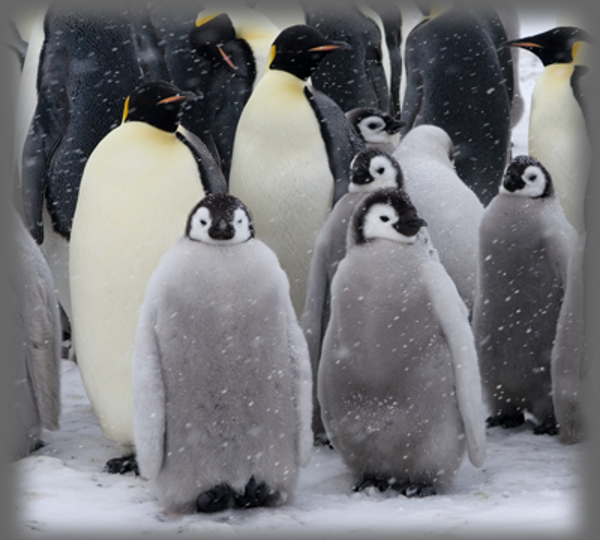
Finally, biodiversity, the other little critter of the week threatened is a chick. The melting of the Antarctic ice cap is decimating emperor penguin chicks, RTLalerts. The increasingly early disappearance of ice during the austral summer is causing the death of many chicks, reports a British study published April 25. Their juvenile plumage does not allow them to survive in the very cold waters. Some colonies have lost almost all their chicks.
The deadly danger of the week reminds us that it's not only animals that are being weakened. There are also journalists covering environmental issues. To be honest, this danger remains low in France, but globally, more than 70% of journalists from 129 countries covering these issues stated they have been victims of threats, pressure, or attacks, warns the United Nations Educational, Scientific and Cultural Organization (UNESCO) in a survey unveiled Friday, May 3, on World Press Freedom Day. UNESCO recalls that at least forty-four journalists covering environmental issues have been killed since 2009 in fifteen countries, including thirty in Asia-Pacific and eleven in Latin America or the Caribbean. About twenty-four survived murder attempts, and only five killings led to convictions, "a shocking impunity rate of nearly 90%," UNESCO insists. Tell your children to study design or become train drivers; it's less dangerous.
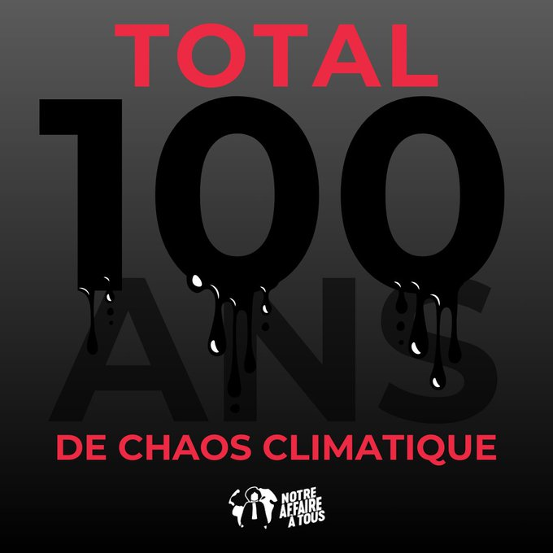
The birthday of the week is that of the author of these lines, which is quite anecdotal, we admit, so we will therefore prefer the 100th of Total/TotalEnergies, which sets some teeth on edge. "Pioneers for 100 years": that's the slogan chosen by our favorite oil company, to which some prefer "Total, 100 years of climate chaos." Indeed, the company, which threatened to expatriate its listing to New York to the great dismay of the Élysée, is, as Novethicreminds us, a champion of lawsuits of all kinds: it's hard to keep track of the cases brought against it. Recourse for misleading commercial practices, claim for damages for human rights violations in Uganda and Tanzania, criminal complaints, procedures under the duty of vigilance, senatorial commission of inquiry, … All this does not prevent the "major" from continuing its merry way and even amplifying its efforts, since the company approved the most oil and gas projects in 2022 in 53 countries. It is thus involved in 33 climate bombs, super-emitter projects of more than one billion tonnes of CO2, which will seriously jeopardize the 1.5°C target. " This is undoubtedly what History will remember ", concludes Novethic…
The cheating of the week concerns the oil majors, who have found a way to fool satellite vigilance. Libération, reporting The Guardian, explains why emissions and leaks related to methane (CH4), the origin of invisible atmospheric oil slicks around the world, still have good days ahead. According to an investigation by The Guardian, conducted with the American NGO Earthworks, oil and gas industry players are now investing in equipment that prevents scientists from accurately detecting the greenhouse gases and pollutants generated by CH4 combustion. Concretely, the flare system, visible by satellite, is gradually being replaced by closed combustors, increasingly installed in the United States and Europe, notably in the United Kingdom, Germany, and Norway, invisible from the sky. However, the NGO specifies, " if the emissions generated are not detectable by today's technologies [CO2 peaks are less easily identifiable than methane peaks, ed.], they will be by tomorrow's: hyperspectral satellite programs are underway. It's a game of cat and mouse. For those who cheat, it's only a respite of a few years. »
The audacity of the week comes to us from the company TEFAL, which in a new advertising campaign supported by its website informs us that there is no more TEFLON in its pans [good thing, it has been formally banned for years, after decades of struggle by its promoters, including TEFAL, to delay this ban] and that they only contain PTFE, which "has everything going for it ". As a reminder, PTFE is part of the PFAS family and its safety is debated by a growing number of scientific studies, as rightly pointed out by Agence France Presse : « As health agencies and experts explained to AFP, data on this PTFE is incomplete and/or outdated. However, based on current knowledge, there is no "warning sign" and authorities consider its health impact "negligible". Scientists recall that if misused, the substance's safety is no longer guaranteed, and PTFE is very persistent in the environment. " In short, potential lawsuits in sight. Well, it's becoming complicated to buy a pan.

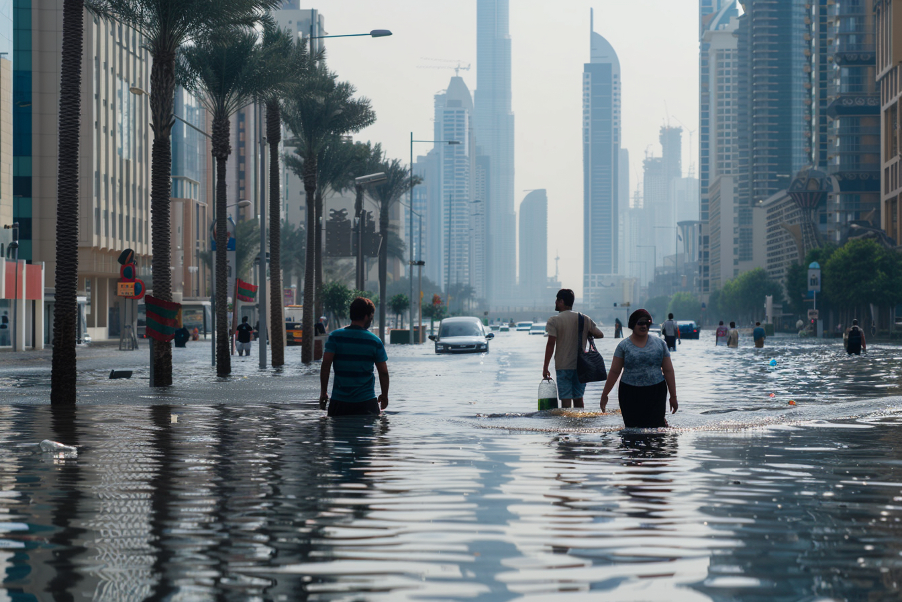
The riddle from last week leaves us with our feet in the water. Where could this photo have been taken? The clue was that it's generally very hot and… horribly dry there. The answer was easily found, because the rarity of the phenomenon gave it unprecedented media coverage: Dubai, of course! Where the equivalent of two years of rain fell in a few hours… Official services claimed that the planes seeding clouds to condense rain, operational there those days, were not responsible. We hope to be able to believe them.
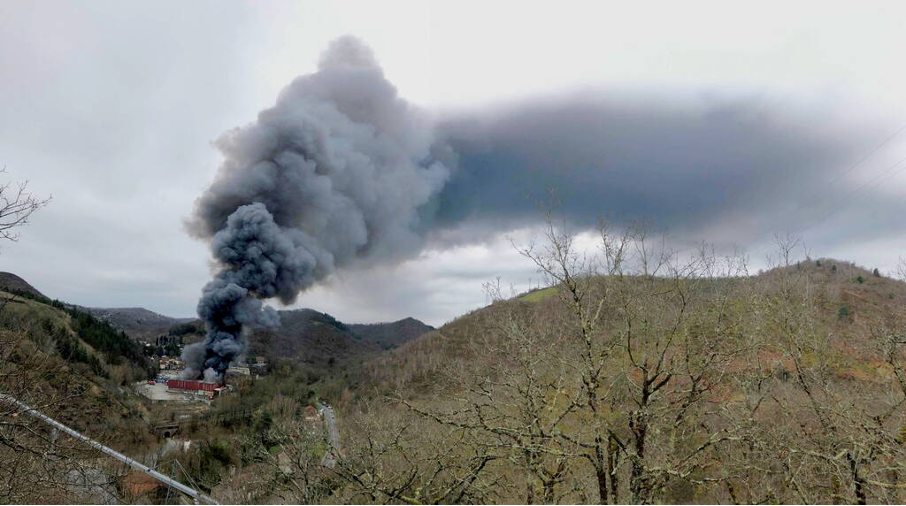
This week's riddle is also a photograph; you are asked to guess which moment it freezes on film, as we said when there was still film. The clue: no, this is not in Ukraine!
Happy reading and have a good weekend! [As a reminder, (RE)SET, founded in 2019, is the first independent consulting firm dedicated to economic and environmental transition and built for action. "(RE)SET: resources to win environmental and economic battles!" Inevitably partial, sometimes biased, always committed, this media review with its often spirited, even impertinent tone, in no way commits (RE)SET in its consulting activities, but it paints a picture we find interesting of the state of the transition as it appears in the press and research. A snapshot of the debate, of the forces at play, the oppositions, the convergences, which we hope is useful for your decisions and for building your transition strategies.]