Attentive readers of August's Breaking (RE)NEWS would not have missed our little dystopian series, in the form of references to films or distant predictions. A premonitory reminder because "the dystopian future is already here!" according to the United Nations High Commissioner for Human Rights, Volker Türk, who hammered on Monday that "climate change is plunging millions of people into famine," causing "devastating fires, floods, and heatwaves," all developments that "are pushing a growing number of migrants to flee." This reality does not seem to have impressed the G20 leaders much, meeting in New Delhi, who did not deem it useful to mention the necessary objective of phasing out fossil fuels in their final communiqué. A summit " without major results", to quote Le Monde, even "insufficient" for Emmanuel Macron, part of whose speech you can watch here. "I'm alerting everyone, we are not there," insisted the French president at a press conference, adding: "For my part, I am very concerned about the spirit that is beginning to prevail, including among G20 members, on the climate issue," less than three months before COP28. He said he hears "a too easy discourse that is settling in among some emerging countries to say that only the richest countries have a responsibility." Emmanuel Macron called to "get out of coal very quickly and much faster than today," as early as 2030, but also "as soon as possible from oil," "well before 2050." "The richest countries must make the effort; we are doing it, it costs us," the head of state recognized, while asking emerging countries, particularly oil producers, to now also do their part.
With luck, the President will be heard, at least by those who will read the first "Global Stocktake," expected to be published for the opening of COP 28. What is it? The first global assessment of efforts undertaken since the Paris Agreement to meet its objectives. Also, to denounce those who have strayed from them or made no progress. But this exercise, moreover provided for in the Paris Agreement itself, is intended to be constructive, with the establishment of "roadmaps," express recommendations to "help" progress. The Global Stocktake is expected as a critical moment for climate action.
As we often say at (RE)SET, carbon emissions are a problem, but they are not the only one and probably even (alas!) not the most important in the long run. A good illustration of this analysis is given by the new report from the University of Stockholm, more precisely the Stockholm Resilience Center, which for the first time presents in a homogeneous and as complete a manner as possible the state of the "9 planetary boundaries" it has defined. This illustration needs almost no comment as it is so illuminating:
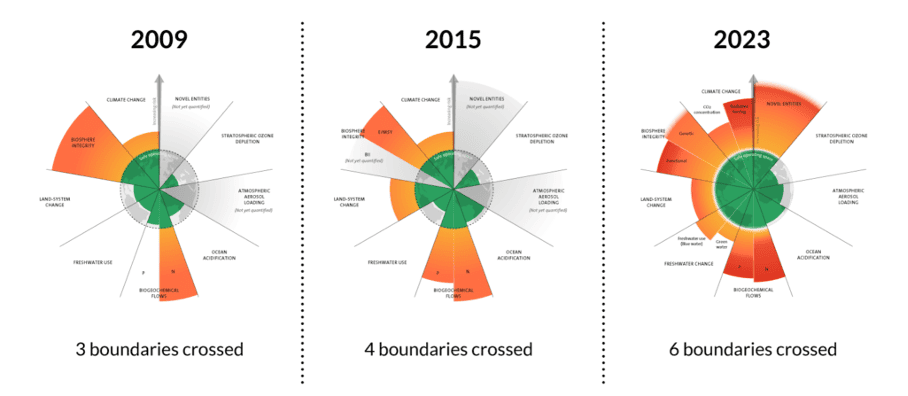
Thus, we observe that 3 limits had been crossed in 2009, 4 in 2015, and… 6 in 2023. A small semantic digression to clarify the concept: in English, it's not the term "limit" that is used, but rather "boundary." It's not as if, once the 9 limits are crossed, the planet will burst or dissolve. It's rather that when you cross these boundaries, you enter the unknown: we do not know, technically, scientifically, what the precise consequences will be. We nevertheless suspect they will not be good! The novelty of the report is also the crossing of "water boundaries." Green water (that which is invisible, in the ground, notably) and blue water (that which we see, our lakes, rivers, and streams) are no longer sufficient, in quantity and quality. We suspected it a bit, now the global figures are there. This is precisely why at (RE)SET we offer global resource diagnostics (several possible methods, risk matrix, CSRD, planetary boundaries, …). The important thing is to ask the thorny question of the resources we consume, their recyclable or renewable nature, and their availability.
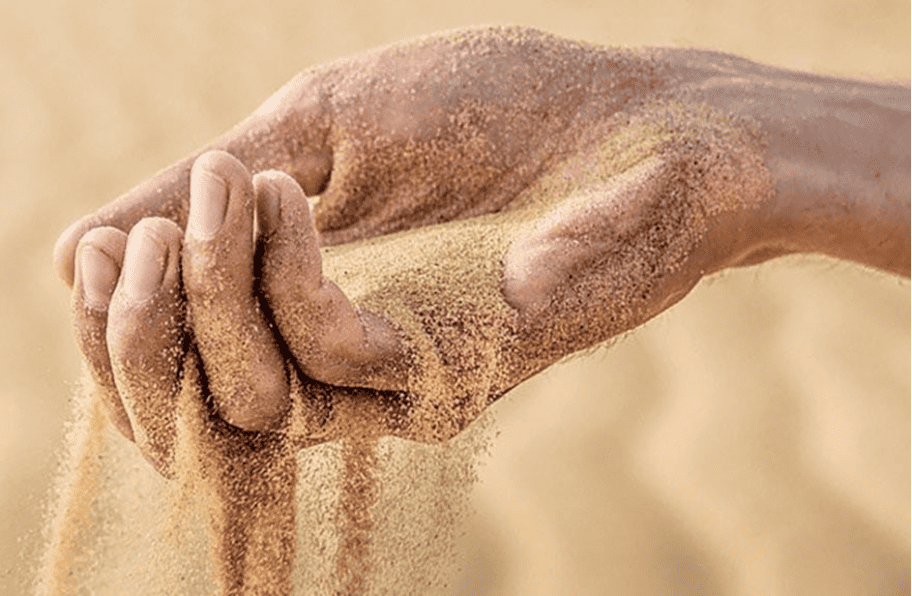
To our weekly sections, in continuation of water, another resource of the week, problematic, already mentioned last week, but the importance of the subject allows repetition: sand! Faced with the looming shortage, the United Nations Environment Programme (UNEP) has just published an unprecedented platform capable of "making the invisible visible." Called Marine Sand Watch, it tracks and monitors sand dredging in the marine environment using AIS (Automatic Identification Systems) data. As a reminder, a city like Paris is built every five days in the world, in terms of equivalent sand consumption…
Let's continue with resource problems, this time food, with the shortage of the week, which concerns one of the main foods consumed in the world, particularly in Asia: rice. The global surge in rice prices prefigures climate-related food risks, asserts Le Monde.
The opinion piece of the week, co-signed by Valérie Masson-Delmotte and published by Le Monde, has a title that almost speaks for itself: The Paris Agreement is not enough! A vitriolic attack against TotalEnergies and its shareholders, notably concerning its giant oil pipeline project between Tanzania and Uganda, which "threatens sensitive ecosystems and whose development has already contributed to proven human rights violations and, if exploited, would substantially contribute to the increase in global greenhouse gas emissions, according to the Climate Accountability Institute." The other opinion piece of the week warns of the risk for France of soon finding itself in "second division" worldwide in terms of its R&D capacities and results, and therefore innovation (behind Finland and Switzerland, for example…). It is Louis Gallois (former head of Airbus) and Pierre Papon (former director of CNRS) who say so, so we can believe them! They particularly consider it "imperative" to reach a budget equivalent to 3% of GDP before 2030. Somewhat in the same spirit, the third and last opinion piece of the week returns to the delays accumulated by Europe and particularly France in electric vehicles, where China is decidedly far ahead, including in terms of technology.
The quote of the week is to be found in the daily La Croix, with this formula from Géraldine Poivert well highlighted on LinkedIn : "Torn between the profitability demands of their shareholders, consumption standards that are evolving little, and their own mental straitjacket, [bosses] are the embodiment of the contradictory injunctions we all face." At (RE)SET, we are here to help entrepreneurs ask themselves the right questions in order to find the right solutions 😉.
The number of the week : 12 billion euros by 2027. This is the amount that Spain will mobilize to counter the effects of water scarcity in this country subject to increasingly intense droughts in a growing number of its regions. The other number of the week is more modest but also revealing: 1 billion euros. This is only R&D spending, but still a tidy sum: it's the amount Germany intends to invest in research into nuclear fusion, a grail sought by scientists for a few decades and which should not be reached for many more, specialists say.
The "green geek" moment of the week will interest all iPhone owners: at last, the European obligation awaited for a few decades to ensure compatibility of the cabling of our cherished IT tools is beginning to produce effects, with the end of "Lightning" in favor of the USB-C connector. A few fewer cable problems in (RE)SET's offices 😊.

On the side plant biodiversity, the headline of the week undoubtedly goes to Libération with its " Alert for the pond's teeth ", which refers to cyanobacteria, freshwater cousins of green algae, called blue-green algae, which are now proliferating in France thanks to intense drought periods.
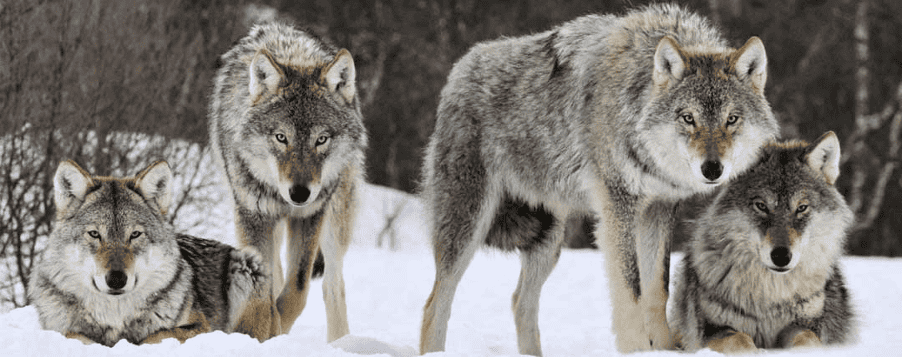
On the side animal biodiversity, this week's predator was the wolf, the object of all the attention of the European Commission. It is again this week, as things are becoming clearer against it: Marc Fesneau, Minister of Agriculture, announced it to Le Parisien: "We must act quickly on the predator." To the point that a new " Wolf Plan" should be presented on September 18. The objective? To protect farmers, which marks a change in philosophy since before the aim was to protect above all… the wolves.
The video of the week transports us high above the Amazon River, high in the sky, with this million seeds thrown by … an activist parachutist. Not sure it's enough to counter deforestation, even sure it's not, but we salute the gesture and its symbolism!
Last week's riddle asked you what this pretty flower was doing in Breaking (RE)NEWS and gave you as a clue the figure of 423 billion dollars per year. It was, of course, the water hyacinth, one of those invasive exotic species that constitute a serious global threat. According to IPBES (the equivalent of the IPCC but for biodiversity), which has just published its report on this subject, these plants already cost 423 billion dollars per year! A figure that is increasing exponentially.

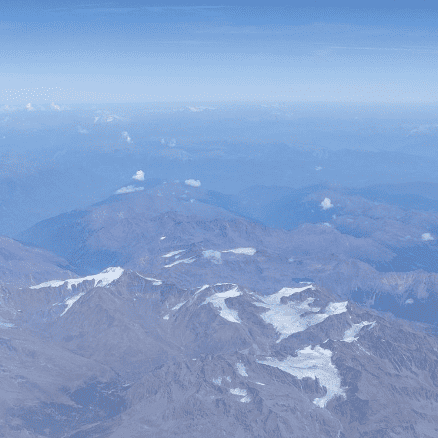
The week's riddle is aimed at LinkedIn enthusiasts (there are many!), one of whose members has published this photo below, taken by him a few days ago with an insightful comment. But who could it be? Clue: this person particularly masters their subject! "This is the Forni Glacier, the second largest glacier in the Italian Alps, in the Cevedale massif (Stelvio National Park), one of the world's glaciers that has been closely studied since the end of the 19th century. In this region, glaciers have lost 40% of their surface area since the 1950s, and this retreat has accelerated over the last 20 years. The lack of fresh snow, the dark surface (low albedo) clearly visible in this photo are among the factors contributing to an increase in the ablation season and, through a negative mass balance, to this disintegration of glaciers."