The Easter truce is over for Breaking (RE)NEWS! Especially since the transition knows no truce. The extension of trends continues, both at the climate level – we are in France at the 14th consecutive month of temperatures above normal reference averages – and at the level of small successive legislative and regulatory retreats, French and European, while the State, businesses, and individuals are only making their transition at a very measured pace. Or even going backwards, in some cases. In short, the numbers don't add up, and scientists and other Nobel Prize-winning economists continue to sound the alarm, multiplying bold concrete proposals that are hardly audible in the pre-election period. To quote the editorialist of Le Monde : "It is as if climate and environmental issues were being hit by short-term political and electoral anxieties. »
There are nevertheless things moving in the right direction. After 30 years of legal and scientific battles, the war on PFAS seems to have begun. In France, the bill banning the use of PFAS in a certain number of products – but not in food utensils, following SEB's intervention [GP1] – was passed almost unanimously. Pending decisions at the European level that could prove even more drastic, provided they are definitively adopted. And in the United States, in a decision deemed "historic," quantitative limit thresholds for forever chemicals in tap water have just been set. Most Americans, who had never heard of per- and polyfluoroalkyl substances (PFAS), have just learned both of the existence of these toxic chemical substances and of the first regulation ever issued in the United States to limit their circulation in the water that 100 million of them drink every day. In a decision that has sparked enthusiasm among public health specialists, the federal Environmental Protection Agency (EPA) published, in mid-April, the first binding standard concerning these non-biodegradable pollutants used since the 1950s in the manufacture of pans resistant to grease and heat, outdoor clothing, toys, or pizza boxes, and now present in the soil, tap water, and the bodies of Americans. The EPA hopes to prevent " thousands of premature deaths and tens of thousands of serious illnesses ", including certain cancers, as well as limit the impact of these products on the immune system and the development of young children, affirmed Michael Regan, the agency's administrator. " We have come significantly closer to definitively closing the tap on forever chemical pollutants ", he states. According to the US public health agency, the Centers for Disease Control and Prevention (CDC), the presence of PFAS is measurable in the blood of virtually all Americans. As with all Europeans.
In fact, they are even found in Nestlé's so-called mineral waters, according to a confidential ANSES note! " Fortunately ", as L'Usine Nouvelleputs it, drinking water management specialists, starting with Suez and Veolia, have already found solutions. Veolia has been working in the United States since 2019 on the detection and elimination of these pollutants. The country is a pioneer in the fight against PFAS: an awareness triggered by the release of the film "Dark Waters," directed by Todd Haynes, in 2019, continues L'Usine Nouvelle. In a press release, the global leader in environmental services recalled that "to date, the group has treated more than 8 million m3 of water there, using nearly 450 tonnes of granular activated carbon and other materials to separate regulated PFAS and other contaminants from water, reducing their levels below regulatory thresholds. " So Veolia has been tackling PFAS in water for five years… in the United States. Let's hope they tackle it in France too.
To begin our weekly sections, let's start with our favorite classic: the weather. We know that 2023 concluded the hottest decade ever recorded, but 2024 promises to be even stronger. Thus, the absolute record of the week concerns our oceans: it has now been over a year that ocean temperatures, major climate regulators covering 70% of the Earth, are warmer than ever before recorded. March 2024 thus sets a new absolute record, all months combined, with an average of 21.07°C measured at the surface (excluding areas near the poles) by Copernicus. Heat on land, heat at sea, evaporation everywhere, one of the consequences of all this is water scarcity and its cascading repercussions. Among recent illustrations, severe water shortages are hitting Vietnam, Catalonia, and southern Africa: after Malawi and Zambia, 2.7 million people are threatened with famine in Zimbabwe, which has declared a state of national disaster. Bogota has just rationed drinking water, and fear of shortages looms over the electoral campaign in Mexico. Conversely, Russia, Brazil, and France have experienced remarkable floods. The influence of climate change on each event remains to be proven by scientific studies. But it is established that global warming, by increasing evapotranspiration and increasing potential humidity in the air, intensifies the intensity of certain precipitation events.

It is in this context that our whistleblowers of the week are speaking out. First, a collective of more than 260 French scientists, including climatologist Jean Jouzel, signed an opinion piece in Le Mondewith an explicit title: " A growing distrust is settling in our scientific community towards political power ". And they hammer the point home: " For years, like many of our fellow citizens, we have observed the gap between announcements and public (in)action (…) As scientists, we believe that not participating in legitimizing discourse disconnected from reality is an ethical responsibility." The message is clear. Another alert, also in Le Monde, launched by French Nobel Prize-winning economist Esther Duflo: " We need to offer compensation to the world's poorest citizens and help them adapt to climate change ". Invited to the G20 held this week in Brazil, she presented two recommendations. The first is the creation of a minimum tax on large multinationals, on which countries have already agreed at a rate of 15%, which could be raised by two or three points. The second is the adoption of the proposal from the EU Tax Observatory research center for an annual 2% tax on the world's 3,000 richest billionaires, which was taken up at the G20 as a central proposal of the Brazilian presidency. Together, these two avenues would raise more than 450 billion euros. A minimum to offset the "moral debt" of developed countries, primarily responsible for the climate crisis, while the poorest will bear the brunt of its consequences. Esther Duflo explains that " by combining an estimate of the cost of a lost year of life, the expected effect of a tonne of CO2 on temperatures, and the effect of temperatures on climate, researchers have calculated the monetary value of the effect of each tonne of carbon on future mortality: 37 dollars. Each year, the emissions of Europe and the United States therefore impose a cost of 485 billion euros, in lost lives alone, on the poorest countries. This is our moral debt. »
Regarding large numbers, the one of the week has many zeros: 38,000 billion dollars! That is the economic impact of climate change on incomes by 2050, according to a new unprecedented study published Wednesday, April 17 in the journal Nature by researchers at the Potsdam Institute for Climate Impact Research (PIK) in Germany. This amount is six times greater than the mitigation costs needed to limit global warming to 2°C. It's always useful to compare the cost of inaction with the cost of action, to put the latter into perspective!
Let's return to Europe and talk "transition in daily life" with the collection of the week : it concerns PET, with encouraging figures at the European level. Between 2020 and 2022, the collection rate for polyethylene terephthalate (PET) packaging rose from 45 to 60% in Europe, according to a study by the firm Icis, carried out in partnership with professional associations Petcore Europe, Plastics Recyclers Europe, and Natural Mineral Waters Europe, and reported by L'Usine Nouvelle. This represents a volume of 3 million tonnes, of which 2.8 million tonnes for bottles alone. The category champion is Germany, with a rate of 95%. Followed by Finland, Lithuania, and Belgium (92%), Norway (88%), Estonia, Sweden, and Croatia (86%). France has a rate of 47%. Greece brings up the rear with a rate of 28%. For the study's authors, the main explanation lies in the effects of the European directive on single-use plastic products (SUP). At the same time, the mechanical recycling capacity of the material amounts to 3 million tonnes. Here again, Germany is on the top step of the podium with a capacity of 630,000 tonnes. Behind it, Spain and Portugal can each process some 500,000 tonnes. Italy, France, and the United Kingdom follow. The extrusion capacity for recycled PET flakes (rPET) is around 1.4 million tonnes. And packaging is the primary outlet for secondary material, consuming 48% of volumes for bottles – 50% more than in 2020 – and 25% for sheets that will then be transformed into trays. Bottles thus contained, on average, 24% rPET in 2022. Finally, polyester fibers recover 15% of recycled volumes.

Regarding recycling and reuse, the "score" of the week is an eco-score, and it concerns textile products: the Ministry of Ecological Transition presented its calculation method in early April, which should allow companies, within a few months, to display the "environmental cost" of their textile products. In theory, displaying such an indicator has been mandatory since 2021 and the promulgation of the Climate and Resilience Act. The culmination of a long process developed with the Agency for Ecological Transition (Ademe), the subject of numerous consultations with " about sixty actors ", specifies the Ministry of Ecology, including " a wide diversity of brands " in clothing, ranging from "fast fashion or ultra-fast fashion to luxury brands, including traditional fashion brands." The Minister's teams cite notably Decathlon, Sandro, Maje, and Kiabi. The government is targeting " a supervised and voluntary implementation in autumn 2024 " and a possible obligation in 2025, recounts Libération.

The desert of the week that won't be one, we hope, concerns insurance against climate risks: the government intends to prevent the development of "insurance deserts," Les Echosexplain, by forcing insurers not to leave those areas particularly threatened by floods, droughts, and other extreme weather events, where they have little to gain financially. A bonus-malus system is under study, with deserving insurers being rewarded, to the detriment of those tempted to leave a "high-risk" region.
The sector of the week is indisputably that of the electric car, which is experiencing significant upheavals. Unless you are a Parisian and thus, de facto, car-free and not interested in the subject, you will have noticed that questions are multiplying these days regarding the electric car. If there is one certainty that nevertheless generates consensus among scientists and states, from the IPCC to the SGPE, it is the recognition that the electrification of the car fleet is the most urgent and effective measure to fight global warming. Yet, it is a fact that electric car sales are growing less rapidly than expected, everywhere in the world, as The Economistindicates, despite an encouraging start and budgetary efforts made to motivate drivers. The announcement by Tesla of a 10% reduction in its global workforce, leading Chinese manufacturers worrying about their overcapacity, Germany and other European countries doing everything to delay the regulatory deadline for the end of the internal combustion engine: the signs are multiplying, all pointing towards a slower pace of fleet electrification. A growth crisis, therefore, reminiscent of others and raising questions that indeed concern innovation in general. We realize once again that there is no "one size fits all". We need small electric cars, light and cheap, as well as big ones, depending on where you live and whether you have access to public transport alternatives. We need regulation to motivate manufacturers and consumers, but not too much, to avoid blockages. We need budgetary support to kickstart the pump, but remain aware that its withdrawal should not be abrupt, otherwise we risk stopping the machine entirely. The transition is decidedly the art of "doing both simultaneously"!
The conviction of the week concerns Switzerland, but it's a warning shot for all European states: the ECHR (European Court of Human Rights), better known for its decisions on torture and other abusive extraditions, has declared itself competent and therefore ruled, for the first time in its history, on a subject of climate responsibility. The reasoning is quite complex and the plaintiffs ultimately lost, but, Le Mondeexplains, the judgment is historic because, in essence, the court considered that states must further reduce their emissions to defend human rights. This opens the way for many procedures…

Still on justice, the suspension of the week is that of the decree banning, in France, the use of the terms "plant-based meat". In a decision rendered on April 10, the Council of State therefore suspended the decree banning these terms. The judges express "serious doubts" about the decree's compatibility with European legislation, and point out "a serious and immediate harm" to the interests of the plant-based sector. Published by the government at the end of February, at the request notably of the meat and livestock sector, this decree prohibited French plant-based agri-food actors from marketing products under the names "plant-based ham," "plant-based milk," or "vegan sausage." The Council of State's decision allows companies marketing plant proteins to use these terms again. This is good news for the ecological transition of food, which is one of the keys to the ecological transition in the agri-food sector, according to IPCC reports. Le Monde recalls that this decree was passed urgently to calm farmers during the revolt at the Agricultural Show. Urgency is often a bad advisor to the Prince…
Still in the agri-food sector, the front page of the week takes us back to mineral water, with this nice find, once again, from Libération:

It's not only mineral water that poses a problem; there is also simply drinking water. And here we are no longer talking about PFAS but just about resource scarcity. The resource of the week is again water, with a report from France Stratégie, the Matignon forward-planning service, which states: with a decreasing resource and increasing consumption, tensions will rise in France. France Stratégie details the pressures on water resources, the sharing of which will increasingly be a major adaptation challenge to climate change. France Stratégie has not yet ventured to make recommendations on savings based on usage. " We will not pronounce on what should be done. A sufficiency effort from all sectors will have to be undertaken ". This caution speaks volumes about the importance of the issue.
Resource still, mineral this time, the "race against time" of the week is that of intensifying research in our subsoil. Last week, Bruno Le Maire visited the site of a geothermal plant in Seine-Saint-Denis. To achieve carbon neutrality by 2050 on time, the government wants to simplify mining law and accelerate the exploitation of its resources in the service of the climate transition. The subsoil is an essential ally, whether to extract essential metals like lithium or copper, draw decarbonized energy via geothermal power, or store residual carbon from industrial processes that cannot be decarbonized. All these resources are present in the French earth's crust. However, " to find them, we also need to explore our subsoil ", the minister noted, quoted by Les Echos. The ongoing modernization of the Mining Code specifically aims to accelerate this phase by reducing the processing time for exclusive research permits to 6 to 9 months, compared to 16 to 18 months today.
Theinfographic of the week is offered to us by Novethic and concerns the galloping inflation of electrical and electronic waste worldwide. Based on the latest UN report on the subject, fed by data from the Global e-Waste Monitor 2024, it is quite telling to avoid commenting on it. Let's simply specify that in Europe, France ranks fourth among the most e-waste producing countries per capita, behind Norway, Great Britain, and Switzerland, with 22 kg per French person per year. This figure includes smartphones, electronic cigarettes, hair dryers, tablets, and cookers, as well as washing machines and photovoltaic panels. While waste is exploding, recycling is not keeping pace. Only 22.3% of discarded equipment was collected and recycled in an environmentally sound manner, rising from 8 million tonnes in 2010 to 13.8 million in 2022. French figures are slightly better. According to ADEME, the collection rate was already over 44.3% in 2020.

On the biodiversity preservation side, the jacuzzi for whales of the week goes by the name of Deception Island, the only place in the world where you can sail inside an active volcano. This Antarctic oddity is an active, navigable volcanic caldera. A strange place, discovered in 1815, which bears the name of Deception Island because its internal cavity is not visible from the outside. The volcano's heat makes it an oasis in the Antarctic glacial desert. A jacuzzi for whales, therefore, with a black sand beach heated by magma. But the first commercial cruise ship arrived there in January 1966, a renowned scientific base developed there, and over time, the island has become the most visited site on the entire ice continent. We are now reaching nearly 1,000 new travelers per year. So, if there is one site that needs to be protected from the massification of Antarctic tourism, it is Deception Island. For now, expeditions are still expensive, but the question of sustainable tourism now arises on every continent. The author of these lines takes this opportunity to thank and congratulate Maxime Blondeau who on LinkedIn delights us with his commented images, successfully combining visual pleasure and effective pedagogy!

The wink of the week, which we hope has nothing to do with our subjects, concerns a science fiction film soon to be on our (wide) screens, with an evocative name: RESET. A near future, a dystopian world shaped by the policies of an authoritarian government from the Eastern Bloc where a nightmarish digital dictatorship reigns, with citizen cards dictating access to public services and individual liberties vanished. The first images of this feature film will be presented during the next Cannes Film Festival. An opportunity to have fun with all these recent or old film posters that all put "reset" in the spotlight:


We at (RE)SET, the real one, the one with RE in parentheses, do everything we can to avoid the advent of those worlds, which are hardly exciting for the most part.
The riddle from last week (in the broad sense) brought us back to France. On this map, what could these little dots ranging from pale green to dark red represent? There are more of them than elsewhere in Ardèche, Pyrénées-Orientales, Hautes-Alpes, and Corsica (that was the clue).

The answer is in the captions (showing that reading the captions is always essential…) here:

So these were the French municipalities most affected by drinking water leaks, mapped by Libération. In these times of increasing water scarcity, we know where to start acting quickly…
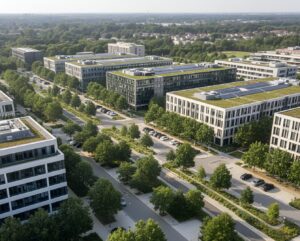
This week's riddle keeps our feet in the water. Where could this photo have been taken? The clue: it's generally very hot there and… horribly dry.

Happy reading and have a good weekend!
[As a reminder, (RE)SET, founded in 2019, is the first independent consulting firm dedicated to economic and environmental transition and built for action. "(RE)SET: resources to win environmental and economic battles!" Inevitably partial, sometimes biased, always committed, this media review with its often spirited, even impertinent tone, in no way commits (RE)SET in its consulting activities, but it paints a picture we find interesting of the state of the transition as it appears in the press and research. A snapshot of the debate, of the forces at play, the oppositions, the convergences, which we hope is useful for your decisions and for building your transition strategies.]