Under normal temperature and pressure conditions, hydrogen is a colorless and odorless gas, lighter than air. So let's start with it and this excellent news: France holds a hidden treasure in its subsoil. More precisely in Moselle, in Folschviller. Libération investigated this discovery of a potential mega-deposit of 46 million tonnes of "white hydrogen." That's more than half of the world's annual production of industrial hydrogen! Hydrogen in its natural state is a dream come true for any lover of decarbonized energy. Unlike current "gray" hydrogen (obtained by "cracking" hydrocarbons downstream of refineries), or "green" and "yellow" hydrogen (which can be produced by water electrolysis using renewable or nuclear electricity), "white" hydrogen is a "primary" energy source, so to speak "ready to use." A car equipped with a fuel cell can travel 650 km on a full tank, emitting only water vapor as exhaust. But unlike conventional electric vehicles, these vehicles are only being commercialized in dribs and drabs by a handful of Japanese or Korean manufacturers. And for good reason: hydrogen stations are rare; France currently has only about fifty… The chicken-and-egg dilemma: no mass market, no distribution network. But with what would be the world's largest deposit of this high-potential decarbonized energy gas, we can disprove the old slogan of the oil shock: now in France, we have plenty of hydrogen and, hopefully, ideas to make it the fuel of the long-awaited green revolution. Libération recalls that this marvelous discovery is thanks to two scientists, who acknowledge "a stroke of luck," specifying that "this was not what we were looking for, [which was] the methane resource potential." However, there are still one or two snags, Libération recalls: it needs to be extracted, and this enormous hydrogen reservoir "does not have the characteristics of a gas or oil deposit. Here, the hydrogen is dissolved in water […]. We need to invent new systems to exploit it." Studies will be conducted until 2027. The news did not escape Emmanuel Macron. The head of state subsequently announced "massive funding to explore white hydrogen": for him, "France can become one of the pioneering countries in this energy of the future." But before France becomes the Saudi Arabia of hydrogen, Libération recalls, it will require political will comparable to that which, in the midst of the oil shock, gave birth to the French nuclear program. With tens and tens of billions of investments at stake. It will also require industrialists to play along. But for once we have a treasure under our feet, why deprive ourselves? A sort of early Christmas gift 😊.
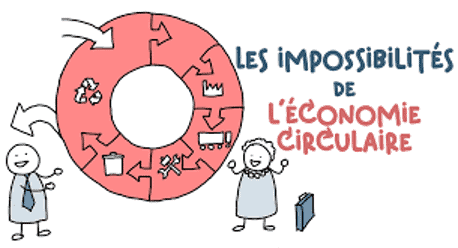
Let's start our weekly sections, still lightly, with the comic strip of the week, which is resolutely circular… or not? In a meritorious educational exercise, this work, available in an abridged form in French here, describes the paradoxes and difficulties of circularity in economics and, in particular, why making the economy circular initially requires a lot of energy and materials… A subject we know a little about at (RE)SET 😉.
The not-so-eco sport of the week, but one that is healing, is indoor climbing! 25,000 climbing holds made of polyurethane and polyester resin concrete, therefore non-recyclable, are produced each day in Europe and deployed in climbing gyms. And to date, there is no action to collect them comprehensively. Based on this observation, Benoît Jacquot-Bertrand, industrial manager and co-founder of Ghold, explains to L’Usine Nouvelle that he found the solution to avoid these thermoset holds, whose production is partly outsourced to Eastern Europe: Ghold develops its own models of mono-material, recyclable TPU holds and has established a deposit system. Let's admit it outright: at (RE)SET we are very relieved because many of our consultants are fans of indoor climbing!
The entrepreneurs of the week were selected by Capital magazine, which presents " the ten who are changing the face of the economy ". Executives, CSR managers, start-up creators, here are personalities rolling up their sleeves and innovating to engage their companies in the ecological transition and social responsibility. Result of the first #NewDeal/Capital ranking: Bel, Nexans, Axa Climate, and others, including the leaders of the startup "Ma Petite Maison Verte," which offers these charming recyclable cardboard homes (seven times!):

The joke of the week that isn't oneis BlackRock, that well-known reference point for eco-leftist hippies 😉 – and the world's number one asset manager – being sued by the State of Tennessee because its pro-climate activism jeopardizes competition and the interest of financial product consumers. Yes, it's true, and Les Echos are reporting it. Republicans are on the front line in this so-called "anti-woke" crusade (!), which we can hope will calm down after the next presidential elections… or not, depending on who wins! (RE)SET has already spoken publicly on this "competition and transition" subject, more strategic than it seems.

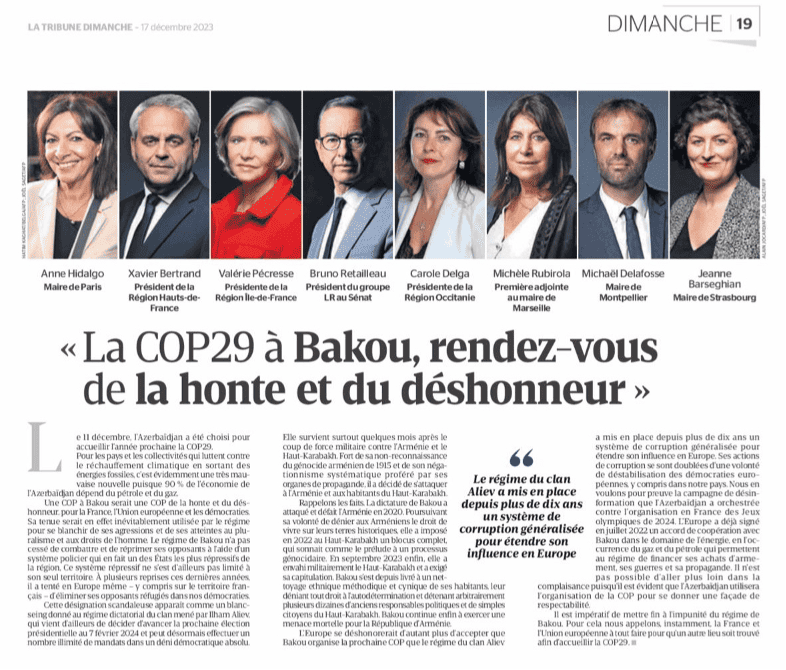
The political consensus of the week that is pleasing (especially since political consensuses are rare right now) is the realization that holding the next COP, the 29th in Baku, the capital of the petro-gas dictatorship of Azerbaijan, may not be such a great idea after all. That said, getting over 190 countries to change their minds and agree on another destination will not be easy…
The jungle of the week is that of textile logos, which perplex some manufacturers and many consumers. Les Echos return to this subject and say it better than we do. Their names are Oeko-Tex, GOTS ("Global Organic Textile Standard"), Origine France Garantie, or Ecocert… Labels are multiplying in the textile sector, illustrating a phenomenon affecting all everyday consumer products. A confusing jumble, while these labels aim, in theory, to "inform the consumer," according to the industry's union. "Not all are equal," says Emily Spiesser, a responsible consumption expert at ADEME, the national ecological transition agency. "Not all necessarily analyze the full life cycle of the product" and "not all have a multi-impact approach," she says. This jungle is all the more dense because these labels do not have the same specifications, the same objectives, or the same guarantees. Some refer to geographical areas; others, to processes. Some are certified by third-party organizations, but sometimes companies certify themselves. Further blurring the landscape, some labels are based only on declarative statements… Since the beginning of the year, the anti-waste law (known as the AGEC law) has required textile products to be more transparent in terms of traceability and to detail the last three stages of manufacturing, because before assembly there is also spinning, knitting, and finishing. For now, it only applies to companies with a turnover of at least 50 million euros that place 25,000 products on the French market. In 2024, the bar will drop to 20 million euros and 10,000 products.
Les Echos again, sometimes playful, also conducted the investigation of the week by testing the reality of "labeled" repairability of electronic products. Missing repairer, labeled repairer who was unaware of it, unlabeled repairer on the list of labeled ones, repairer of electronic products except for the main electronic products, non-repairable electronic products (thanks Apple 😉), the list of misadventures of the journalist who wanted to repair his computer's motherboard with the state subsidy is long. Still, even imperfect, the system exists and will continue to improve.
The conviction of the week concerns Monsanto. What, you said "again"? Some companies have more substantial "legal fees" budgets than others… The American agrochemical giant, a subsidiary of the German giant Bayer, was ordered on Monday to pay $857 million (€783 million) in damages to volunteers at a school in Washington State, in the northwestern United States, who were exposed to hazardous chemicals. These five former students and two former parents had sued, claiming that their exposure to PCBs (polychlorinated biphenyls) contained in the lighting caused them health problems. This industrial chemical, both highly toxic, polluting, and persistent, has been banned in France since 1987. The court ruled in their favor. In addition, the agrochemical group faces other legal actions related to the effects of PCBs. And has already paid out $820 million for legal disputes related to this forever pollutant…
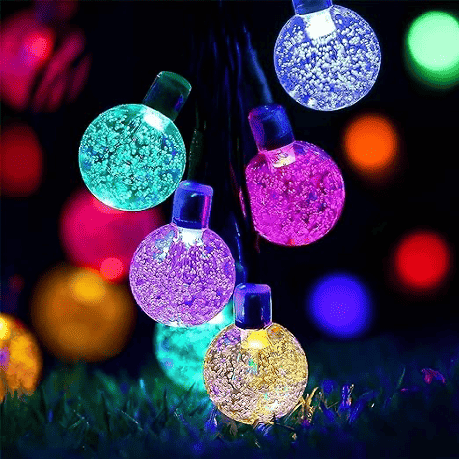
The low energy consumption of the week is obviously that of Christmas lights! Nice-Matin tells us all about this timely subject. To make a long story short: go ahead without fear, please your (potential) children, your garlands consume little, very little. Well, turn them off at night anyway, especially if you want to avoid setting your interior on fire.
The riddle from last week questioned you about animal biodiversity and its top predator (outside of humans, of course, the out-of-category champion). The clue was that the answer would not please Instagram enthusiasts… The domestic cat, since it is him, achieves the feat of being both the undisputed star of this social network – for those who share this addiction, we can only recommend this list of cat influencers, followed by thousands of … cats? – and a super-predator! By hunting birds, small mammals, insects , or reptiles, cats threaten the disappearance of about thirty protected species, reports a study published in the journal Nature Communications in early December. According to the scientific journal, more than 2,000 animal species would be consumed by cats, " of which 16.6% are of concern for biodiversity " To not lead you to believe that we "have a bone to pick" with cats, preferring dogs, know that the latter are harmful to the climate. Especially large ones, which eat meat, since it comes from livestock farming, whose greenhouse gas emission potential we know! In short, as François Gemenne, IPCC member, says, "the cat is a disaster for biodiversity, the dog is a disaster for the climate"! Moral: if you feel lonely, rather invest in an aquarium or better, a parrot – plus, it will talk back to you!




The week's riddle is imposed by the calendar! What color is Santa Claus? Because at (RE)SET we never hesitate to help you shine in society, we give you the answer right away, to discuss around the tree: no, Santa Claus is not all dressed in red, contrary to a persistent urban legend. He is historically absolutely green and traces of him can be found, under his previous names (Old Man Winter, King Frost, Winter King, …) in the 5th and 6th centuries, as told here . Proof in the image: